Humidity At Home: Measure First, Then Fix Damp or Dry Air
Indoor humidity problems usually start with a simple question: is the air too wet, too dry, or changing by season?
Humidity At Home helps homeowners measure indoor humidity, understand what the numbers mean, and choose the right next step before buying a humidifier, dehumidifier, sensor, or larger home humidity solution.
No scare tactics. No contractor funnel. No promise that one machine fixes every house. Start with the room, the reading, and the symptom.
First Step: Get a Humidity Reading
Humidity is easy to guess wrong. A room can feel cold and damp even when humidity is not the main issue. A house can feel dry because of winter air leaks, not because it needs a much larger humidifier. A basement can smell musty because of hidden moisture, poor airflow, or stored materials.
A simple humidity meter gives you a number before you start buying equipment. Check the problem room, then compare it with another room that feels normal.
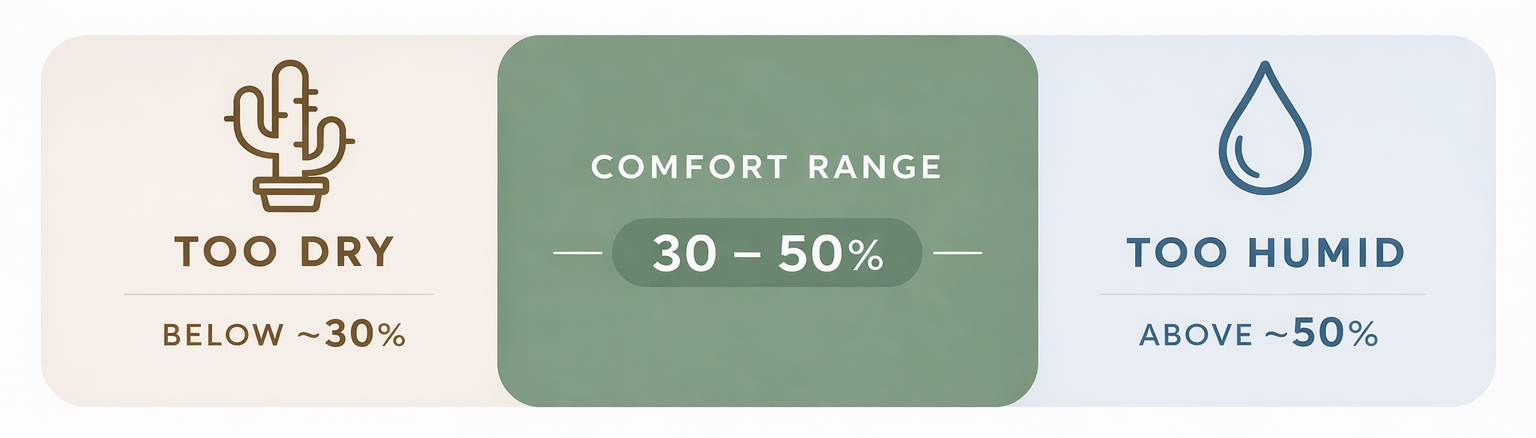
- Winter dry-air range: many homes feel better around 30% to 45% RH.
- Damp or musty areas: below about 50% to 55% RH is usually the practical target.
- Watch closely near 60% RH and above: especially in basements, crawlspaces, closets, and storage rooms.
Choose the Path That Matches Your House
Most home humidity problems fall into one of two lanes. Some homes have both, but usually at different times of year.

My House Feels Damp
Use this path if the house feels heavy, sticky, clammy, musty, or slow to dry.
- Musty basement smell
- Condensation on windows
- Damp closets, crawlspaces, or storage areas
- A dehumidifier that runs but does not seem to catch up

My House Feels Dry
Use this path if the house feels sharp, staticky, uncomfortable, or extra dry during heating season.
- Static shocks
- Dry-feeling rooms in winter
- Wood trim, floors, or furniture shrinking
- A humidifier that runs but does not improve comfort
Already Know You Need Equipment?
Use the sizing path when you already know whether the problem is damp air or dry air and need help choosing the right size.
Dehumidifier Sizing
For damp rooms, basements, apartments, crawlspaces, garages, and large open areas.
Humidifier Sizing
For dry rooms, apartments, bedrooms, open living areas, and larger home zones.
When Equipment Is Not the First Fix
A humidifier or dehumidifier can help when the problem is indoor air moisture. It should not be used to ignore water damage, active leaks, unsafe conditions, or repairs the house actually needs.
A dehumidifier does not fix foundation leaks, standing water, plumbing leaks, roof drainage problems, or grading issues. A humidifier does not fix major air leaks, poor insulation, or heating problems by itself.
Measure first, identify the source, then choose equipment only when equipment makes sense.
Common Damp-Air Spaces
Damp air does not affect every space the same way. A finished basement, unfinished basement, crawlspace, garage, apartment, and coastal home can all need different decisions.
Basements
Basements often need more than a square-footage estimate. Drainage, airflow, runtime, and placement all matter.
Small Spaces
Bathrooms, closets, bedrooms, and small enclosed rooms need realistic expectations. Tiny units are not the same as full compressor dehumidifiers.
Garages and Crawlspaces
These spaces are harder than normal rooms because outdoor air, ground moisture, storage, and temperature swings can change the load.
What This Site Covers
Humidity At Home focuses on practical homeowner decisions:
- How to tell whether indoor air is too wet or too dry
- How to measure humidity before buying equipment
- How to size humidifiers and dehumidifiers by room, basement, apartment, or whole-home need
- When one portable unit is enough, and when multiple units or whole-house options make more sense
- When equipment helps and when a moisture source, drainage issue, air leak, or house condition needs attention first
The goal is not to make every answer complicated. The goal is to help you avoid the wrong simple answer.
Transparency
Some pages include affiliate links to products that fit the sizing, measuring, or troubleshooting advice being discussed. If you buy through those links, Humidity At Home may earn a small commission at no extra cost to you.
Affiliate links do not decide what topics are covered or how information is presented. The site explains the problem first, then points to equipment only when equipment makes sense.