
Garages are not normal indoor rooms.
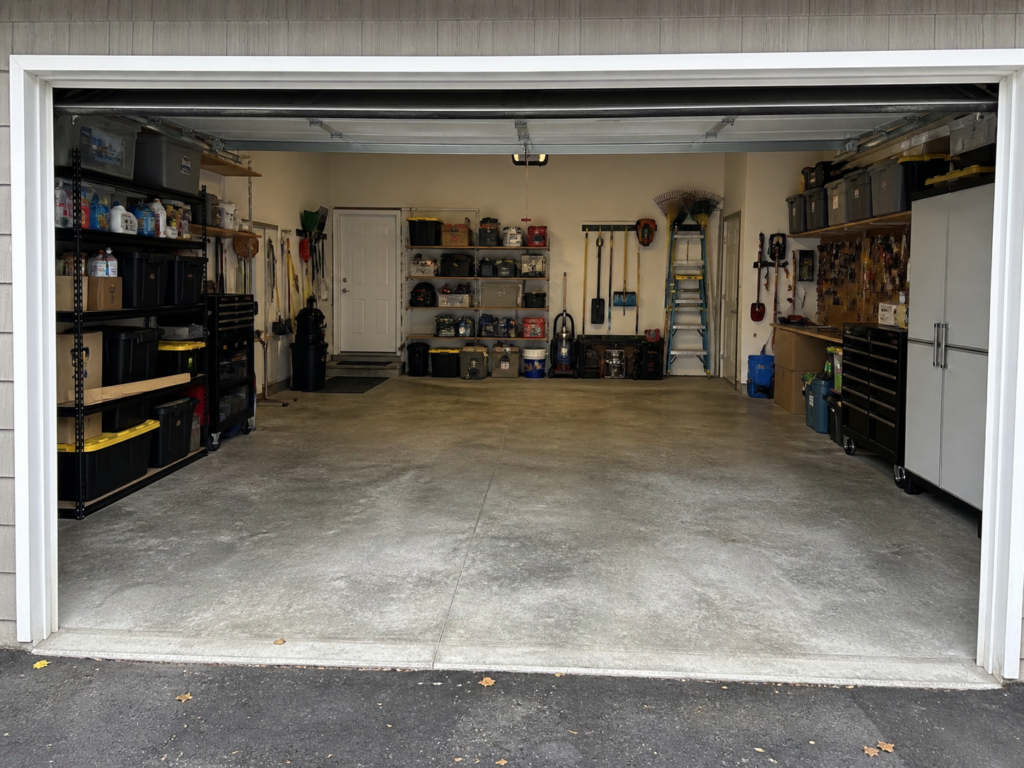
They open to outside air, store vehicles, collect damp gear, and swing in temperature more than the rest of the house. That makes garage dehumidifier sizing less exact than sizing a bedroom, basement, or finished living space.
For a garage, the right dehumidifier depends on two things: how large the garage is and what you are trying to protect.
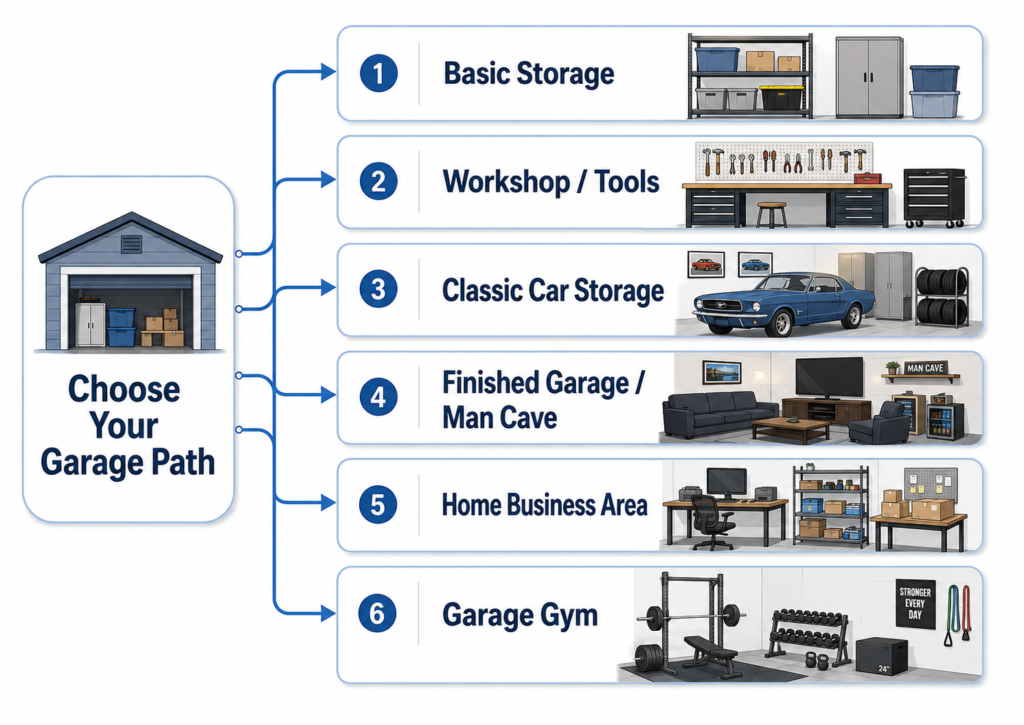
A basic storage garage, a classic car garage, a home workshop, a garage gym, a finished man cave, and a home-based business space do not all need the same answer.
Use this page as the garage humidity starting point. First, get the size range. Then adjust based on how the garage is actually used.
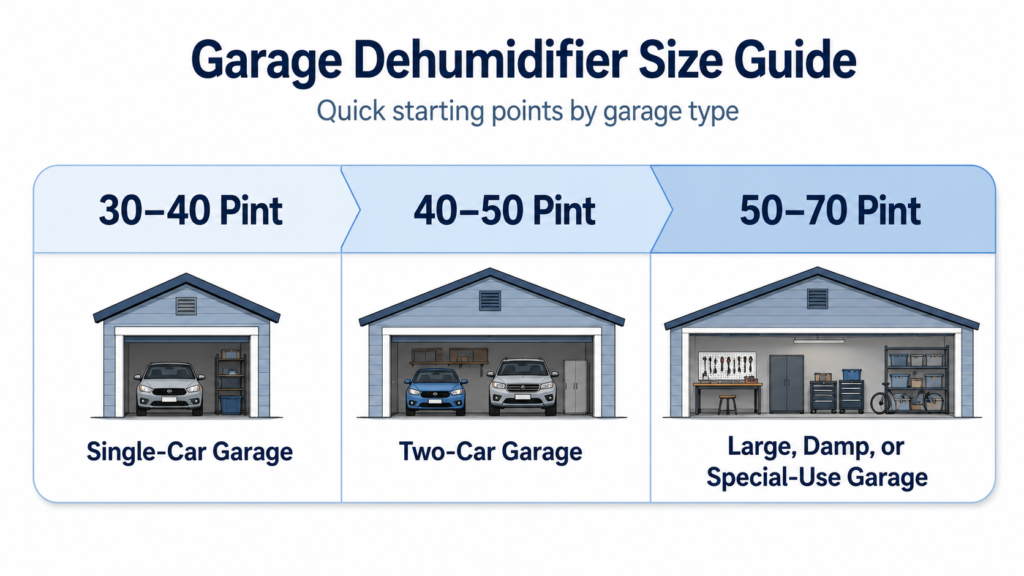
Quick Garage Dehumidifier Size Guide
Garage square footage does not capture the whole moisture load. Opening a large door exchanges indoor and outdoor air quickly; wet vehicles add water; and temperature swings change RH and dehumidifier performance. Treat any size recommendation as a starting range, not a promise of rated daily water removal. Technical references: EPA moisture and mold.
Start with the garage size, then adjust upward if the garage is damp, leaky, heavily used, or protecting valuable items.
| Garage type | Starting size range | Use this when |
|---|---|---|
| Single-car garage | 30–40 pint | The garage is reasonably enclosed and only mildly to moderately humid. |
| Standard two-car garage | 40–50 pint | The garage has normal seasonal moisture, stored items, tools, or occasional dampness. |
| Large garage, workshop, gym, or humid-climate garage | 50–70 pint | The garage stays damp, stores sensitive items, has rust risk, or needs more reliable control. |
Fast answer: a one-car garage usually starts around 30–40 pints. A normal two-car garage usually starts around 40–50 pints. A large, damp, workshop, garage gym, classic car, or humid-climate garage usually moves toward 50–70 pints, especially if continuous drainage is available.
Shop by Garage Size
If you already know the garage size and humidity problem, these ranges give you a practical place to start shopping. Move toward the larger range when the garage stays musty, regularly exceeds about 60% RH, protects tools or vehicles, or has frequent outdoor-air exposure.
Affiliate disclosure: HumidityAtHome may earn a commission from qualifying purchases made through affiliate links, at no extra cost to you.
30–40 Pints
Best starting range for: single-car garages that are reasonably enclosed and only mildly to moderately damp.
40–50 Pints
Best starting range for: standard two-car garages with seasonal humidity, stored items, tools, or mild musty air.
50–70 Pints
Best starting range for: large or persistently damp garages, workshops, gyms, humid climates, and spaces protecting sensitive items.
Not sure the garage actually needs a dehumidifier? Measure the humidity before buying. A larger unit also cannot compensate for standing water, active leaks, or a garage that remains open to humid outdoor air for long periods.
If you are still deciding whether the garage is actually too humid, measure it first. Start with how to measure humidity in your home, then compare the garage to the rest of the house.
For the broader house-sizing framework, use how big of a dehumidifier you need for your home.
Why Garages Need a Different Humidity Answer
A garage usually has more outside-air exposure than the rest of the house. Even an attached garage may have poor air sealing, bare concrete, limited insulation, and a large door that opens directly to outdoor air.
That means a garage dehumidifier may face a heavier and less predictable moisture load than the same unit would inside a finished room.
Common garage humidity factors include:
- Garage doors opening often
- Wet vehicles after rain or snow
- Concrete floors holding moisture
- Poor air sealing around doors and walls
- Limited insulation
- Stored cardboard, tools, wood, gym gear, or business inventory
- Seasonal temperature swings
- Outdoor humidity entering every time the door opens
This is why garage sizing should not stop at square footage. Square footage gives the starting point. The way the garage is used tells you how much margin you need.
What Are You Protecting in the Garage?
The best garage dehumidifier choice depends on the reason humidity matters in that space.
A garage that only stores a mower and holiday boxes can tolerate more discomfort than a garage holding woodworking tools, classic cars, business inventory, electronics, instruments, or finished living-space furniture.
| Garage use | Main humidity concern | What matters most |
|---|---|---|
| Basic garage storage | Musty air, damp cardboard, stored items feeling wet | General moisture control and reasonable capacity |
| Tool storage or workshop | Rust, wood movement, equipment wear | Consistent humidity control and drainage |
| Classic car storage | Rust, interior moisture, long-term preservation | Stable humidity and less frequent high-RH swings |
| Finished garage or man cave | Comfort, noise, livability | Quiet operation and right-sized capacity |
| Home-based business area | Inventory, equipment, packaging, customer-facing space | Reliable control, drainage, and less downtime |
| Garage gym | Sweat odor, stale air, damp mats, comfort | Moisture control plus airflow and cleaning habits |
Garage size still matters, but the value and sensitivity of what sits in the space can justify more consistent humidity control, better drainage, or a larger capacity range.
Single-Car Garage
A single-car garage usually starts in the 30–40 pint range.
That range works best when the garage is reasonably enclosed and only moderately humid. If the garage door opens constantly, the concrete stays damp, or the space gets wet after every rainstorm, move toward 40 pints instead of the smallest option.
A small unit can help in a one-car garage, but it may run constantly if the space has a heavy moisture load or steady outdoor-air leakage.
Use 30–40 pints when: the garage is small, mostly closed, not soaking wet, and used for normal storage or light hobby use.
Two-Car Garage
A standard two-car garage usually starts in the 40–50 pint range.
This is the practical middle range for normal garage humidity control. It gives enough capacity for seasonal moisture without jumping straight to the largest portable units.
For many homeowners, this is the default starting point unless the garage is unusually large, wet, or used for sensitive storage.
If the garage stores tools, sports gear, bikes, cardboard, paints, finishes, seasonal items, or hobby equipment, do not size only for comfort. Size for the things sitting in that air every day.
Use 40–50 pints when: the garage is a normal two-car space with seasonal humidity, stored items, tools, or mild musty air.
Large Garage, Workshop, Gym, or Humid-Climate Garage
A large garage, workshop, garage gym, or humid-climate garage usually moves into the 50–70 pint range.
Move into this range if:
- The garage stays above 60% relative humidity for long periods
- Tools or metal items show rust
- Stored items smell musty
- The garage doubles as a workshop
- The garage is used as a home gym or finished hangout space
- The garage protects a classic, antique, or rarely driven vehicle
- The garage stores business inventory, equipment, supplies, or packaging
- The space is in a humid coastal, rainy, or warm-weather climate
- The door opens often during damp weather
At this size, continuous drainage becomes much more useful. Emptying a bucket every day gets old fast, and a full bucket means the dehumidifier has stopped removing moisture.
Do not ignore drainage. In a damp garage, a larger dehumidifier without a practical drain path may become a daily bucket-emptying chore.
Special Garage Uses Need Different Priorities
Some garage uses deserve more than a generic size answer. These are still garage humidity problems, but the buying decision changes when you are protecting valuable equipment, vehicles, inventory, or a space people regularly use.
Classic car storage
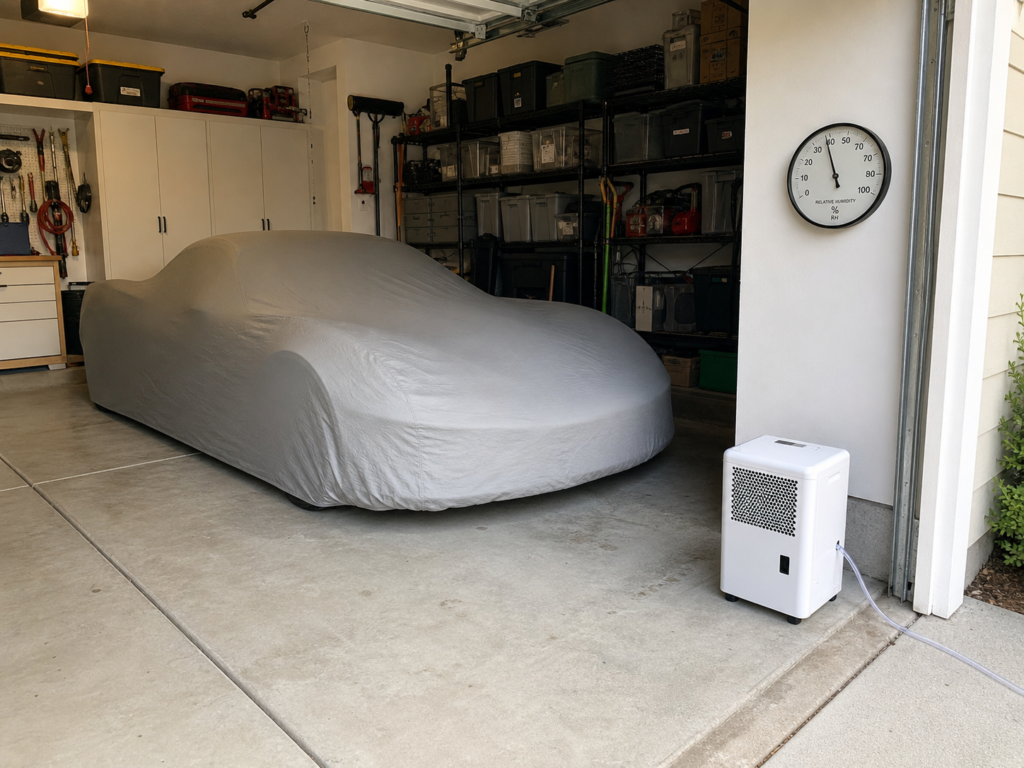
If the garage protects a classic, antique, collector, or rarely driven vehicle, humidity control is not just about comfort. The concern is long-term exposure: rust, interior dampness, musty smells, and moisture swings during storage season.
A dehumidifier can help control the garage air, but the setup may also need better sealing, careful storage habits, air movement, and a drainage arrangement that allows the unit to operate consistently.
Garage workshop or tool storage
For a workshop, humidity is not just a comfort issue. It can affect tools, metal surfaces, wood, finishes, machines, clamps, fasteners, and stored project materials.
A workshop usually benefits from enough capacity to maintain control during damp weather, steady drainage, and airflow that keeps corners and storage zones from staying humid.
Finished garage or man cave
If the garage is a finished hangout space, comfort matters more. A large dehumidifier that controls moisture but sounds annoying may not be the best fit.
For a man cave, game room, or finished garage, look at moisture control, noise, drainage, heat output, placement, and whether the space is sealed well enough to behave like a normal room.
Home-based business area
A garage used for a home-based business has a different risk profile. The concern may be inventory, packaging, tools, instruments, machines, supplies, customer-facing space, or equipment that should not sit in damp air.
In that kind of garage, reliable humidity control and practical drainage may matter more than choosing the lowest-cost unit.
Garage gym
A garage gym has moisture from outdoor air plus moisture and odor from people using the space. A dehumidifier can reduce dampness, but it does not replace cleaning, airflow, and drying wet mats, towels, and gear.
For a garage gym, think about humidity, air movement, noise, filter access, drainage, and whether the unit can run without being in the way.
Choose a Garage Dehumidifier by Size, Dampness, and Temperature
Affiliate disclosure: This page includes affiliate links. HumidityAtHome may earn a commission if you buy through those links, at no extra cost to you.
For most garages, choose by size and moisture load:
- Single-car garage: small dehumidifiers, 30–40 pint
- Standard two-car garage: medium dehumidifiers, 40–50 pint
- Large or damp garage: large dehumidifiers, 50–70 pint
For a typical two-car garage with seasonal humidity, a 40–50 pint unit is usually the clean starting point.
If humidity stays above 60% for long periods, move toward 50–70 pints and use continuous drainage if possible.
If the garage is protecting a classic car, business inventory, tools, instruments, or a finished hangout area, do not buy only by garage size. Buy for the risk you are trying to reduce.
Garage Dehumidifier Reality Check
A dehumidifier can manage garage air moisture. It cannot fix every garage moisture problem.
It will not solve:
- Rainwater entering under the garage door
- Roof or wall leaks
- Poor exterior drainage
- Standing water
- An unsealed garage that constantly exchanges outdoor air
- Wet items being stored without drying
- A garage door left open for long periods in humid weather
If the garage is open to damp outdoor air all day, the dehumidifier will keep fighting new moisture. That does not mean it is useless, but it does limit what one portable unit can do.
Fix water first. If rainwater, leaks, or standing water are entering the garage, deal with those before expecting a dehumidifier to carry the whole problem.
Match Garage Dehumidification to the Space and Operating Conditions
For a garage, start with the basic size range, then adjust for how the garage is used.
A single-car garage usually starts around 30–40 pints. A standard two-car garage usually needs 40–50 pints. A large, damp, workshop, gym, classic car, home-business, or humid-climate garage usually moves into the 50–70 pint range.
The right choice is not always the largest dehumidifier. Capacity, drainage, noise, garage sealing, outdoor-air exposure, and what you are protecting all matter.
Where to Go Next
If the whole garage is damp
Use the main dehumidifier sizing guide to compare garage sizing against normal room sizing.
If you are not sure yet
Measure the garage before buying, especially if the problem changes by season or weather.
If you need a size chart
Use the chart if you want to compare pint sizes against square footage and moisture level.