
If a humidifier is too large for the room, it can add moisture faster than the space can handle. That can lead to window condensation, damp surfaces, heavy-feeling air, and humidity readings that climb above the level you actually want.
A slightly oversized humidifier is usually manageable if it has good controls. A badly oversized humidifier is harder to control, especially in a small bedroom, apartment, nursery, office, or any room where the door stays closed.
Fast answer:
A humidifier that is too large can overshoot the target humidity, make windows wet, create damp surfaces, short cycle, and make one room feel clammy while nearby rooms stay dry. Lower the setting first, measure the room, and only replace the unit if it cannot run gently enough for the space.
Before blaming the humidifier size, measure the room. Use a humidity meter away from the mist stream, windows, vents, and exterior walls. The guide on how to measure humidity in your home explains how to check the room instead of guessing.
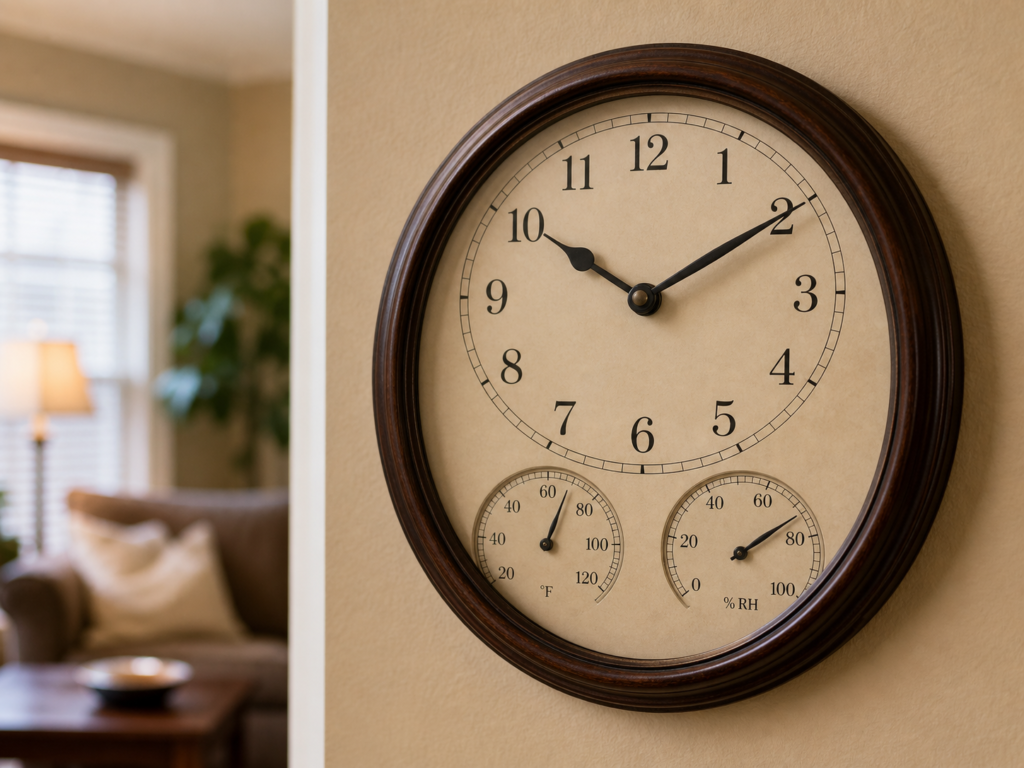
Signs a Humidifier Is Too Large
Too much added moisture can show up as condensation on windows, damp surfaces, or persistent high meter readings. Lower or stop humidifier output if condensation develops and investigate any ongoing dampness. There is no single RH setting that guarantees condensation-free conditions in every house. Technical references: EPA humidifier care ASHRAE Psychrometrics.
The clearest signs are not subtle. The room starts moving from dry to damp instead of dry to comfortable.
| Sign | What it usually means |
|---|---|
| Window condensation | Humidity is too high for the window temperature and room conditions. |
| Damp window frames | Moisture is collecting on cold surfaces. |
| Heavy or clammy air | The room may be over-humidified. |
| Humidity rises very quickly | The humidifier output may be too strong for the room volume. |
| Unit turns on and off repeatedly | The humidifier may be reaching the set point too fast. |
| One room feels wet but nearby rooms stay dry | The unit is too strong for the room but air is not spreading through the home. |
If you see these signs, do not immediately buy a different humidifier. Start by lowering the set point, reducing output, and checking the room with a separate meter.
Window Condensation Is the Big Warning Sign
Window condensation is the most visible sign that indoor humidity may be too high for the room.
When warm indoor air holds too much moisture and reaches cold glass, water can form on the window. That does not always mean the humidifier is defective. It usually means the humidity level is too high for the outdoor temperature, window temperature, and room conditions.
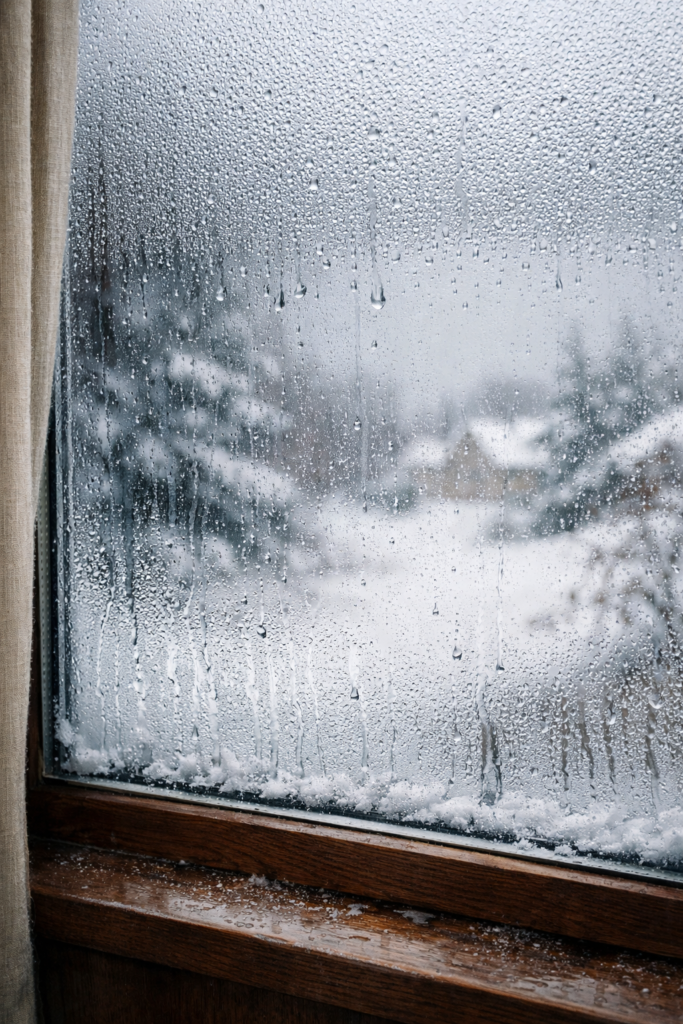
Cold-weather caution:
A humidity level that works in mild weather may be too high during a cold snap. If windows start fogging or dripping, lower the humidifier setting and watch the glass.
Why Bigger Is Not Always Better
A larger humidifier does not automatically humidify more of the home. It only helps if moisture can move through the space.
If a large humidifier sits in a closed bedroom, it may make that bedroom too humid while the hallway and living room stay dry. That is not a size problem only. It is also an airflow and layout problem.
| Room condition | What can happen with an oversized humidifier |
|---|---|
| Small bedroom | Humidity rises too quickly and windows may fog. |
| Closed nursery or office | Room may feel damp before nearby spaces improve. |
| Apartment bedroom | Bedroom may over-humidify while living space stays dry. |
| Open living area | A larger unit may work if air can move freely. |
| Divided home | One large unit may not distribute humidity evenly. |
For apartment sizing, see what size humidifier for an apartment. For one-bedroom layouts, see humidifier for a one-bedroom apartment.
Rapid Humidity Increase
One of the first signs of oversizing is humidity rising too quickly after the humidifier turns on.
You may notice:
- Humidity climbing above the set point
- The room feeling damp or heavy
- Condensation forming on cold windows
- Moisture collecting near the humidifier
- The meter reading jumping quickly after startup
A humidifier should raise humidity gradually. If the room jumps from dry to damp quickly, the humidifier may be too large, set too high, or placed in a room with poor air mixing.
Short Cycling
An oversized humidifier may turn on, reach the target quickly, shut off, and restart soon after. That repeated on-off pattern is short cycling.
Short cycling can happen when:
- The humidifier output is too high for the room
- The humidity sensor is too close to the mist or discharge
- The room is small and enclosed
- Doors stay closed
- Air does not mix well
- The unit is trying to control a room smaller than its rating
Steadier operation is usually better. The goal is not to blast the room with moisture, shut off, and repeat that pattern all day.
Damp Surfaces and Heavy Air
Too much humidification can make a room feel uncomfortable in the opposite direction.
Instead of dry air, you may get damp bedding, wet window frames, a clammy room, or a stale feeling indoors. In small spaces, the area near the humidifier may feel much wetter than the rest of the home.
Common signs include:
- Damp-feeling bedding or furniture
- Moisture near the humidifier
- A room that feels stuffy
- Condensation on windows or mirrors
- Humidity readings staying above the target range
- Musty odor near cold exterior walls or curtains
If the room feels wet instead of comfortable, reduce output and measure again.
Slight Oversizing Is Usually Manageable
A humidifier that is only slightly larger than needed is usually not a major problem if it has good controls.
Modern portable humidifiers often include adjustable mist output, humidity settings, timers, or automatic shutoff. If the unit is only a little oversized, lowering the set point or output level may solve the issue.
| Oversizing level | Usually manageable? | What to try first |
|---|---|---|
| Slightly oversized | Usually yes | Lower output or humidity setting. |
| Moderately oversized | Sometimes | Use lower setting, better placement, and open doors. |
| Very oversized for a small room | Often no | Use a smaller humidifier or move the unit to a larger open area. |
| Oversized with poor controls | Often no | Replace if it cannot run gently enough. |
Oversizing becomes a real problem when the humidifier adds moisture faster than the room can absorb and distribute it.
How to Correct an Oversized Humidifier
Start with settings before replacing the humidifier.
Try this sequence:
- Measure the room with a separate humidity meter.
- Lower the humidity set point.
- Reduce mist or output level.
- Move the humidifier away from windows, bedding, electronics, and exterior walls.
- Keep doors open if you are trying to humidify a larger connected area.
- Watch windows during cold weather.
- Replace the unit only if it cannot run gently enough for the space.
Do not rely only on how the air feels. Use measured humidity and visible signs like condensation.
For sizing reference, compare the room to what size humidifier you need for your home and the humidifier size chart by square footage. You can also use the humidifier size calculator.
When to Replace It
Replace the humidifier if it cannot operate gently enough for the room.
That usually means the room still gets too humid even at low output or moderate settings. A large humidifier in a small bedroom may technically work, but it may never feel stable.
A smaller unit may be better if:
- The room is small and enclosed
- Condensation keeps forming
- Humidity rises too quickly
- The unit cycles on and off constantly
- You cannot lower output enough
- You only need bedroom-level humidification
For small spaces, start with best humidifier for a small apartment. For broader product-type decisions, see portable vs whole-house humidifier.
What Not to Do
Do not keep adding moisture just because the house felt dry before. Once windows are wet or the room feels damp, the problem has changed.
- Do not run the humidifier at maximum output just to reach a number faster.
- Do not place the unit directly beside a window or exterior wall.
- Do not assume one large unit will humidify rooms behind closed doors.
- Do not ignore condensation during cold weather.
- Do not size by the full house if you are only treating one bedroom.
Measurement path:
A good result is steady humidity without wet windows, damp surfaces, or constant cycling. Measure before buying, then measure again after the humidifier runs for a few days.
Reduce Output Before Condensation Becomes a Problem
If a humidifier is too large, it can make the room too humid, cause condensation, short cycle, and create damp surfaces.
Lower the output first. Check the room with a humidity meter. Watch the windows. If the humidifier still cannot run gently enough for the space, replace it with a smaller unit or move it to a larger open area.
The best humidifier is not the biggest one. It is the one that can hold a steady humidity level without making the room wet.
Related Guides
- What happens if a humidifier is too small?
- What size humidifier do I need for my home?
- Humidifier size chart by square footage
- What size humidifier for an apartment?
- Humidifier for a one-bedroom apartment
- Why are my windows wet?