
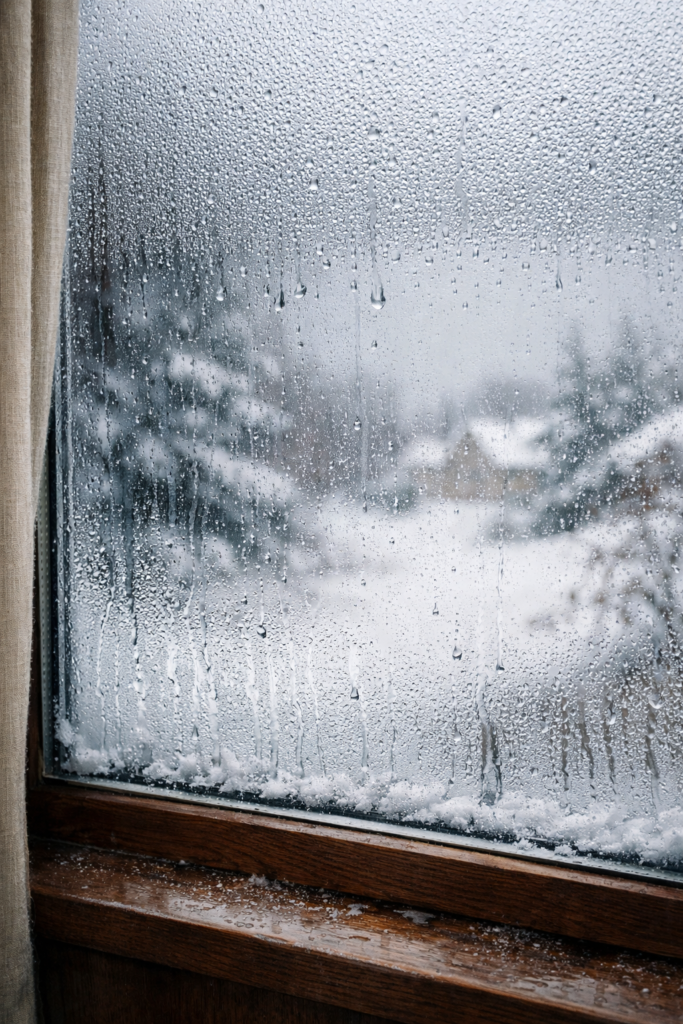
Wet windows usually mean condensation, not a leak. The short version is simple: moist air is touching glass that is cold enough for water to form on the surface.
That can happen in winter when indoor humidity meets cold glass. It can also happen in summer when hot, humid outdoor air touches cool air-conditioned glass. The important part is figuring out whether the water is normal condensation, a humidity warning, or actual water getting into the window assembly.
Why Wet Windows May Mean Condensation or a Leak
Warm, humid indoor air can condense when it contacts glass or framing cold enough to reach its dew point. Water on or around a window can also come from a leak, so check where the water appears and whether it coincides with rain. Reducing indoor moisture may help condensation; it will not repair a leaking window assembly. Technical references: ASHRAE Psychrometrics EPA moisture and mold.
Windows get wet when moisture in the air condenses on cold glass. If the water is mostly on the glass and wipes away cleanly, it is usually condensation. If water appears after rain, collects at one corner, stains trim, bubbles paint, or softens wood, treat it like a possible leak.
If the condensation happens often, measure indoor humidity before buying anything. Wet windows can mean the indoor air is too humid for the outdoor temperature and window surface temperature.
What window condensation is
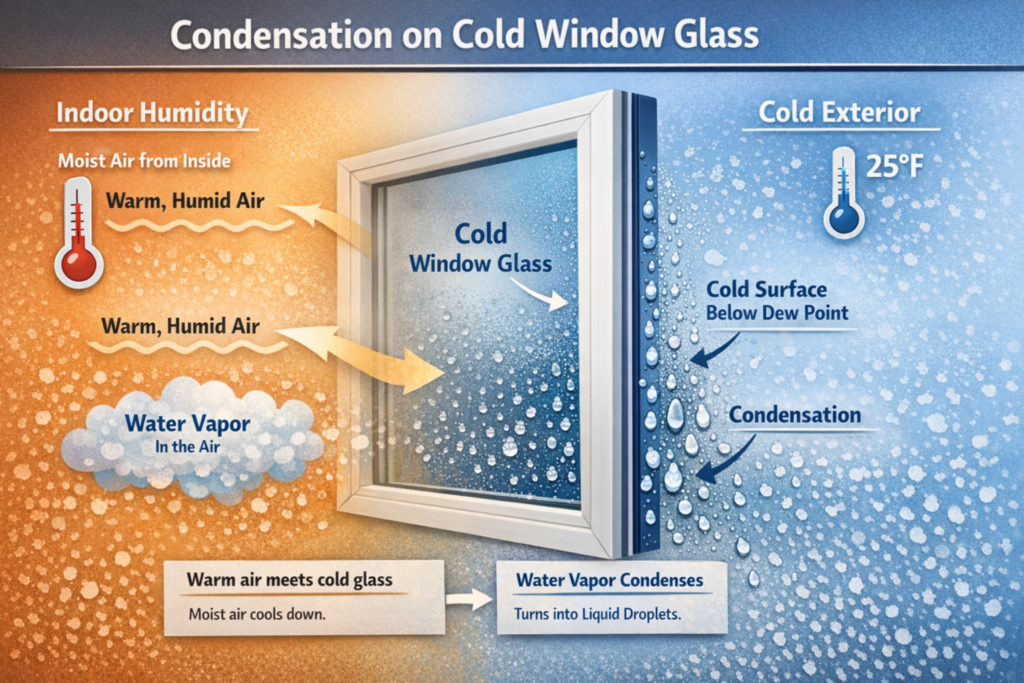
Condensation forms when moist air touches a surface that is cold enough for water vapor to turn into liquid water. Windows are one of the first places this shows up because glass often gets colder than walls, furniture, or the air in the room.
The same thing happens when a cold drink sweats on a warm day. The drink is not leaking. Moisture from the surrounding air is collecting on the cold surface.
That is why wet windows are not automatically a window defect. They are often a clue about indoor humidity, surface temperature, airflow near the glass, or outdoor weather.
Condensation or a leak?
Start here before changing humidity settings or shopping for equipment. Condensation and leaks can both make a window area wet, but they usually behave differently.
| What you see | Most likely cause | What to do next |
|---|---|---|
| Water is spread across the glass | Condensation | Measure indoor humidity and look for cold-weather patterns. |
| Water wipes off cleanly and does not return right away | Condensation | Watch when it happens: overnight, during cold snaps, after showers, or while cooking. |
| Water appears after rain | Possible leak | Inspect the frame, flashing, caulk, trim, and wall area. |
| Water collects at one corner or edge | Possible leak or frame issue | Look for staining, bubbling paint, soft trim, or repeated wet spots. |
| Moisture is between glass panes | Failed insulated glass seal | This is usually a window unit issue, not room humidity. |
| Water pools on the sill every morning | Heavy condensation | Measure humidity and reduce indoor moisture before damage starts. |
If the water is on the room-side surface of the glass, humidity and cold glass are the likely problem. If the water is inside the wall, around the frame, between panes, or tied to rain, do not treat it as a simple humidity issue.
Do not diagnose every wet window as humidity
A dehumidifier can help with excess indoor moisture. It will not fix a roof leak, bad flashing, failed window seal, rotten trim, or water entering around the frame.
If the water appears after rain or leaves damage around the window, handle the water-entry problem first. Humidity control comes after the house is staying dry from the outside. See humidity problems a dehumidifier will not fix for the line between moisture control and a repair problem.
Why windows get wet in winter
Winter condensation is the common version. The outdoor air is cold, the glass cools down, and the indoor air is warmer. If the indoor air carries enough moisture, water forms on the cold glass.
Several normal household habits can add moisture indoors:
- Cooking
- Showers and baths
- Laundry drying indoors
- Many people or pets in the home
- Humidifiers set too high
- Closed windows and low ventilation during cold weather
The colder the glass gets, the less moisture the air near that glass can tolerate before condensation forms. That is why windows may be dry on a mild day and wet during a cold snap, even if nothing inside the house changed.
Why windows can get wet in summer
Summer condensation is usually a different pattern. If the air conditioner keeps the glass cool and outdoor air is hot and humid, moisture may form on the outside of the window.
Exterior window condensation is usually harmless. It often means the outside air is humid and the glass is cooler than the outdoor dew point. That can happen with efficient windows and strong air conditioning.
Interior summer condensation is more concerning. If the inside of the glass, window trim, or nearby wall stays damp during warm weather, check indoor humidity, bathroom ventilation, kitchen ventilation, and whether the air conditioner is removing enough moisture.
What wet windows say about indoor humidity
Wet windows are not a perfect humidity meter, but they are a useful warning sign. They tell you the air near the glass has reached a point where moisture can no longer stay invisible.
Why windows can be wet when the house feels normal
A house can feel comfortable and still have condensation on one or two windows. Condensation depends on the temperature of the glass, not only the humidity reading in a hallway or another room. When the glass surface falls below the dew point of the nearby air, water forms even when the home’s average humidity looks normal.
That window may be colder because of the outdoor temperature, older or lower-performing glass, frame air leakage, or its location on the house. Closed blinds, heavy curtains, nearby furniture, closed bedroom doors, and weak room airflow can also trap colder, moister air against the glass. One consistently wet window usually points toward a local glass, window-performance, or airflow issue. Many wet windows point more strongly toward a whole-house humidity or ventilation pattern.
Measure before changing equipment
If windows are wet often, check the room humidity with a digital humidity meter. One reading is useful, but a few days of readings are better. Check morning, evening, after showers, after cooking, and during cold weather.
As a rough guide, indoor humidity above about 50% during cold weather can make window condensation more likely. If readings stay above 55% to 60% for long periods, treat it as a damp-air problem and review what causes high humidity in a house before assuming the window is the only issue.
What to check when windows are wet
Use the window as a clue, not the whole diagnosis. The goal is to figure out whether moisture is coming from normal living, poor ventilation, high indoor humidity, cold glass, or actual water intrusion.
| Check | Why it matters | What it tells you |
|---|---|---|
| Indoor RH reading | Confirms whether the air is actually humid. | High RH points toward moisture control or dehumidification. |
| Outdoor temperature | Colder glass condenses more easily. | Condensation during cold snaps may be seasonal. |
| Time of day | Morning condensation is common after overnight cooling. | Daily wet glass may mean indoor RH is too high for the season. |
| Bathroom and kitchen fans | Showers and cooking add moisture fast. | Poor exhaust can push moisture toward nearby windows. |
| Curtains and blinds | They can trap cold, still air near the glass. | Condensation may improve with more airflow. |
| Water location | Glass, frame, sill, wall, and between-pane water mean different things. | Water away from the glass may need leak or window inspection. |
If the humidity reading is normal but one window is always wet, look closer at that window, that wall, and airflow around that area. If many windows are wet, the problem is more likely a whole-house humidity or ventilation pattern.
Why new windows can still condense
New windows can still get wet. In some homes, they make condensation more noticeable because the house is tighter and less drafty than before. Less uncontrolled air leakage can mean more indoor moisture stays indoors.
That does not automatically mean the windows are bad. It may mean the home needs better humidity control, better ventilation during moisture-heavy activities, or lower humidifier settings during cold weather.
Moisture between panes is different. If fogging or water is trapped inside the insulated glass unit and cannot be wiped from either side, that usually points to a failed window seal rather than indoor humidity.
When window condensation becomes a problem
Occasional light condensation is common. Persistent water is different.
Take wet windows more seriously when:
- Water pools on the sill or runs down the wall.
- Condensation appears daily for long stretches.
- Wood trim stays damp.
- Paint bubbles or stains appear near the frame.
- Several rooms show the same pattern.
- Indoor humidity readings stay above 55% to 60%.
At that point, the window is not just annoying. It is showing that moisture is sitting on building materials long enough to matter.
What to do next
If the window is only lightly fogged during cold mornings, start with measurement and ventilation habits. If indoor humidity is high across the home, move into damp-air diagnosis and dehumidifier sizing. If the water appears after rain or damages trim, treat it as a leak or window issue first.
FAQ
Are wet windows always caused by high humidity?
No. Wet windows can be caused by high indoor humidity, very cold glass, poor airflow near the window, or a combination of those things. Water after rain, staining, or wet trim may point to a leak instead.
Is condensation on the inside of windows bad?
Light occasional condensation is common. Heavy or repeated condensation can become a problem if water pools on sills, wets trim, or keeps nearby materials damp.
Why are my windows wet in the morning?
Windows often get colder overnight. If indoor air carries enough moisture, water can form on the glass by morning. Morning condensation is especially common during cold weather.
Should I use a dehumidifier for wet windows?
A dehumidifier may help if indoor humidity readings are high. It will not fix rain leaks, failed window seals, bad flashing, or water entering around the frame.
What humidity level causes window condensation?
There is no single number because condensation depends on glass temperature, outdoor temperature, airflow, and indoor humidity. As a practical homeowner check, readings above about 50% in cold weather make condensation more likely, and sustained readings above 55% to 60% deserve attention.