
Why Homes Hold Moisture or Let Water In
Start by identifying where the water is coming from. Rain or groundwater entering through the building, plumbing or sump failures, moisture produced indoors, and humid outdoor air entering the house call for different fixes. A dehumidifier can remove moisture from the air, but it does not stop liquid-water entry or replace drainage repair. Technical references: EPA moisture and mold.
Too much moisture in your home can show up as damp air, musty smells, wet windows, clammy rooms, basement humidity, mildew, or stored items that never seem to stay dry.
The important first question is not “which dehumidifier should I buy?” It is this: is the problem moisture in the air, water entering the house, or both?
A dehumidifier can help when the issue is indoor air moisture. It will not fix leaks, standing water, bad drainage, wet drywall, or damp building materials by itself.
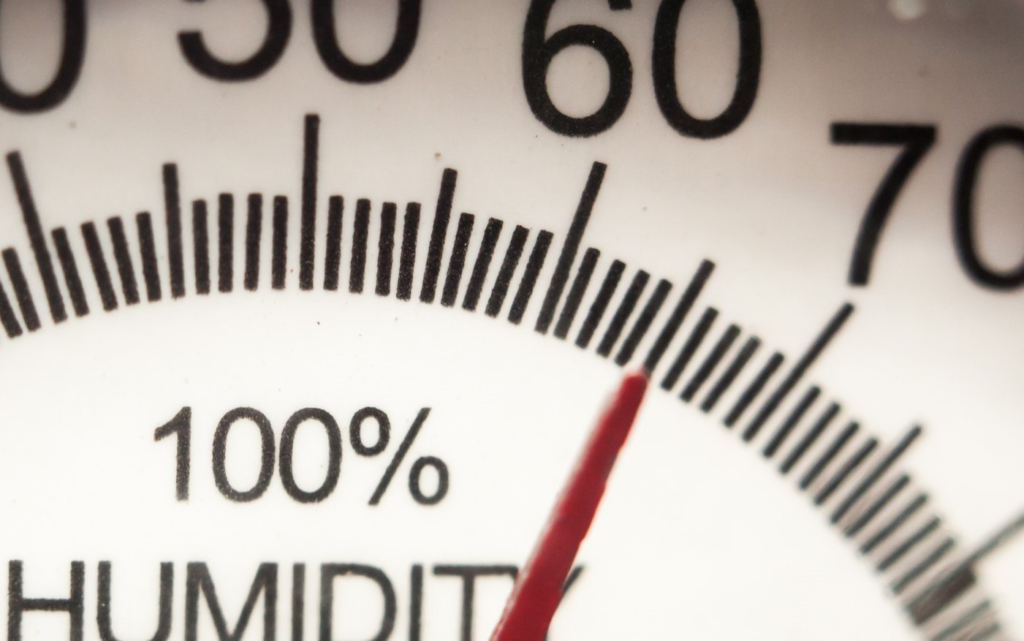
Fast Answer: What to Check First
If your home feels damp, start with three checks before buying equipment.
- Measure the air: check relative humidity in the problem room and one normal room.
- Look for water: check for leaks, staining, standing water, wet materials, or recent storm-related seepage.
- Watch the pattern: a short spike after a shower or storm is different from high humidity that lasts for days.
For many homes, indoor humidity is usually more comfortable around 30% to 50% RH. Damp areas that keep sitting near or above the mid-50s deserve attention, especially basements, crawlspaces, closets, garages, and storage rooms.
How Excess Moisture Usually Shows Up
Homes with too much moisture usually develop a pattern. One sign by itself does not always prove a humidity problem. Several signs showing up together are more useful.
Air and comfort signs
- Air feels heavy, damp, sticky, or clammy
- Rooms feel stale even when temperature seems normal
- Basement or lower-level air feels cool and damp
- Towels, laundry, or fabrics take too long to dry indoors
Surface and storage signs
- Musty smells return after cleaning
- Condensation forms on windows, walls, or cold surfaces
- Stored items smell musty or feel soft
- Mildew or mold appears in corners, closets, or near exterior walls
If you want to confirm the actual level, start with how to measure humidity in your home.

Why Moisture Builds Up Indoors
Moisture enters a home in normal ways. Cooking, showers, laundry, breathing, houseplants, outdoor air, and normal air movement all add some moisture to the air.
Problems begin when moisture enters faster than the home can dry out. That can happen even when there is no obvious leak.
- Outdoor humidity stays high for long periods.
- Basements or crawlspaces stay cooler than the rest of the house.
- Air movement is limited in closets, corners, lower levels, or storage rooms.
- Bathrooms or laundry areas are poorly vented.
- Ground moisture moves upward through lower parts of the house.
- Doors and windows bring in humid outdoor air during warm weather.
- The HVAC system does not run long enough to remove moisture.
Coastal homes can stay damp for the same reason, with extra pressure from humid outdoor air, salt exposure, wind-driven rain, crawlspaces, and frequent door use. For beach houses, rentals, and homes near the water, see the guide to choosing a dehumidifier for coastal homes.
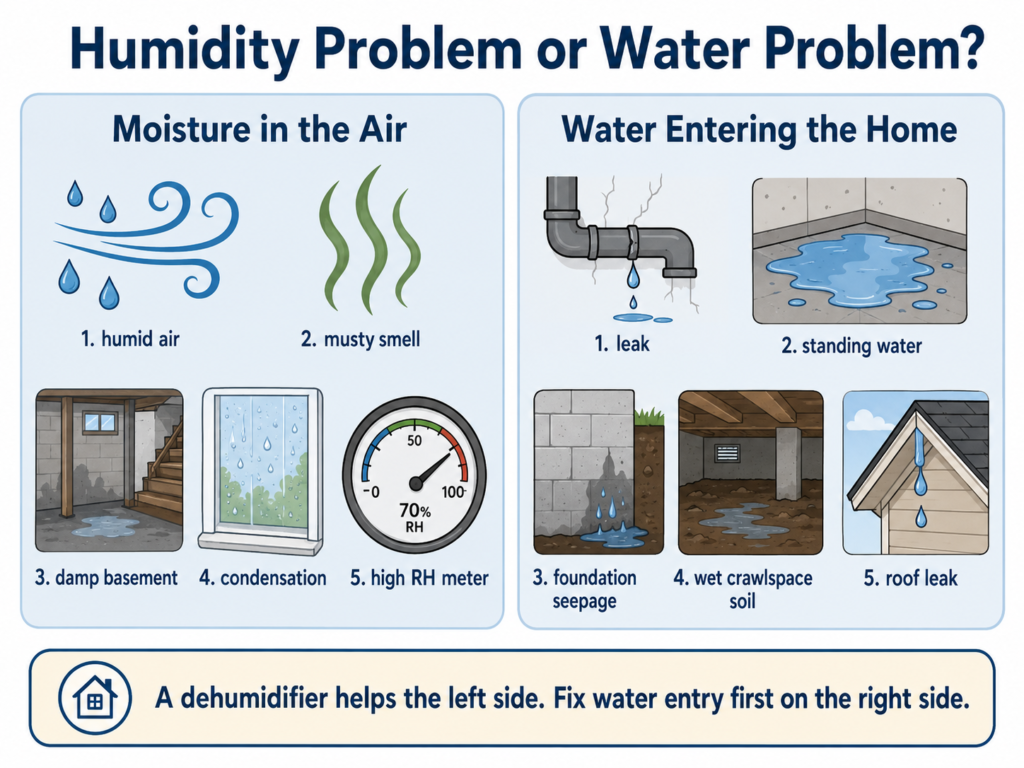
Humidity Problem or Water Problem?
This is the decision point that matters most. A dehumidifier removes moisture from the air. It does not stop water from entering the house.
| What you see | More likely problem | First move |
|---|---|---|
| Air feels damp, but no visible leak | High indoor humidity | Measure RH and watch the pattern |
| Musty basement smell returns every summer | Seasonal damp air or basement humidity | Measure and size a basement dehumidifier |
| Standing water, seepage, or wet flooring | Water entry | Fix the source before relying on equipment |
| Wet drywall, soft trim, or stained ceiling | Leak or wet building material | Find and correct the water source |
| Window condensation only during cold weather | Humidity plus cold glass | Measure RH and improve air movement |
| Entire house feels sticky in humid weather | Whole-home moisture load or HVAC issue | Measure multiple rooms and diagnose pattern |
When the Problem Is Water, Not Humidity
Not every wet-house problem is a dehumidifier problem. Equipment alone will not fix plumbing leaks, roof leaks, flashing leaks, foundation seepage, standing water, poor exterior drainage, wet crawlspace soil, missing vapor barriers, or wet drywall, insulation, carpet, or framing.
If water is entering the structure, correct that source first. A dehumidifier may still help afterward, but it should not be treated as the primary fix while water is still coming in.
For a deeper boundary check, see humidity problems a dehumidifier will not fix.
If a leak or flood has already occurred, use our flood and water-leak dehumidifier guide to separate safety, drying, and equipment limits.
When High Humidity Is the Main Problem
High humidity is more likely to be the main problem when the home feels damp but there is no active water intrusion.
That usually looks like damp air without visible leaks, musty smells in lower levels, seasonal humidity that returns every year, rooms that feel clammy at normal temperatures, or a humidity meter showing elevated readings over time.
Short spikes happen. A single high reading after a shower, storm, or humid day does not automatically mean the home needs equipment. A pattern matters more.
If humidity stays high for days or weeks, especially in the same areas of the home, active moisture control may be needed.
Common Wet-Air Situations
Moisture problems often show up in predictable parts of the home. The same humidity number can mean different things depending on where it appears.
Basements
Basements are common trouble spots because they are cooler, lower, and closer to ground moisture. Drainage, airflow, placement, and runtime matter.
Crawlspaces
Crawlspaces can affect the rooms above them. A crawlspace may look dry but still push humid air into the house.
Windows and rooms
Wet windows can be caused by high humidity, cold glass, poor air circulation, or all three. Clammy rooms can also happen at normal humidity.
What to Check Before Buying Equipment
Before buying a dehumidifier, confirm what kind of moisture problem you have. This prevents two common mistakes: buying a dehumidifier for a water-entry problem, or buying the wrong size unit because the space and moisture load were never identified.
- Measure humidity in more than one room.
- Check whether the problem is seasonal or constant.
- Look for leaks, stains, standing water, or wet materials.
- Notice whether the issue is strongest in basements, crawlspaces, garages, bathrooms, or closed rooms.
- Check whether windows, walls, or floors are collecting condensation.
- Watch whether humidity stays high for several days, not just a few hours.
Where a Dehumidifier Fits
A dehumidifier makes sense when the issue is excess moisture in the air. It can help with damp basement air, seasonal indoor humidity, musty lower levels, humid garages or storage rooms, dry-but-humid crawlspaces, and rooms that stay clammy even when temperature feels normal.
A dehumidifier is not the first step when water is actively entering the home. Once leaks, drainage, or wet materials are controlled, a dehumidifier may help stabilize the space and keep humidity from staying elevated.
If You Already Know Moisture Control Is Needed
If the problem is clearly humidity, the next question is size. A small damp room and a large wet basement should not be treated the same way.
Use the dehumidifier size calculator for a quick estimate, or use what size dehumidifier do I need? for the full sizing guide.
Measure Humidity and Fix Water Sources Before Buying Equipment
Too much moisture in a home can come from humid air, water entering the structure, or both.
A dehumidifier helps when the home is holding too much moisture in the air. It does not fix leaks, standing water, poor drainage, or wet building materials by itself.
Start by measuring humidity. Then look for patterns. If the issue is air moisture, move toward dehumidifier sizing. If the issue is water entering the structure, fix that source first.
Next step: Start with how to measure humidity in your home. If the readings show a real damp-air pattern, use the dehumidifier size calculator.