
High humidity in a house usually comes from a mix of outdoor weather, daily moisture, ventilation limits, lower-level dampness, and how air moves through the home.
It is not always one dramatic problem. More often, several small sources add up. A humid week outside, long showers, cooking, laundry, a damp basement, or poor airflow can make the house feel heavy, clammy, or stale.
The goal is to find the strongest moisture source before deciding what to fix. Some humidity problems need better ventilation. Some need a dehumidifier. Some are really water-entry problems that need repair first.
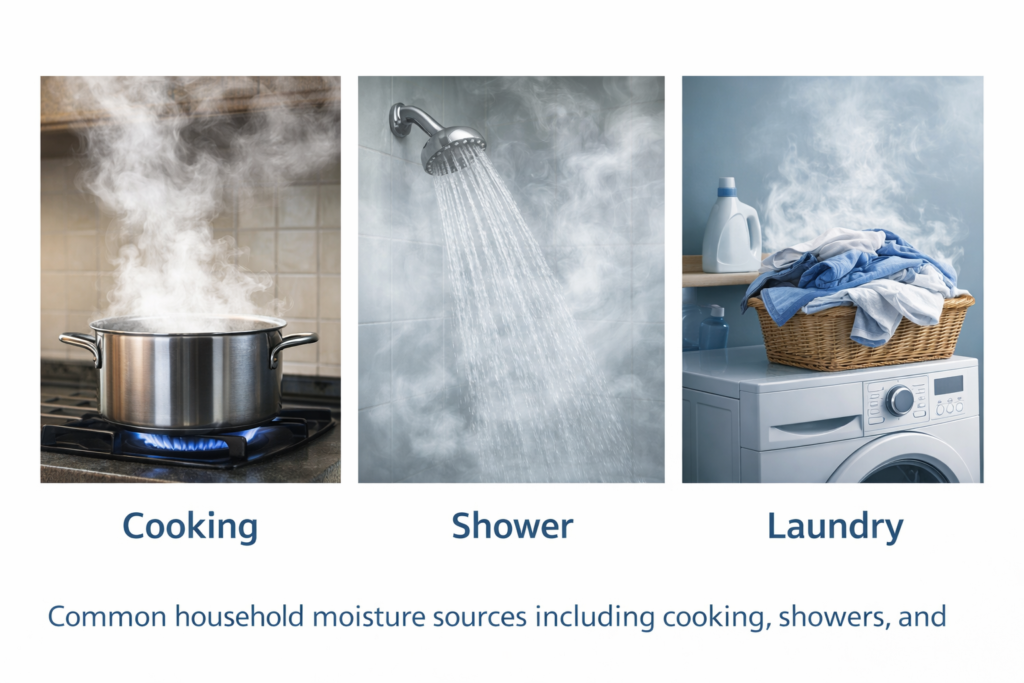
What high humidity means indoors
High indoor RH can result from indoor activities, humid outdoor air, poor moisture removal, or water entering the building. First check for gutter, foundation, plumbing, and drainage problems. Brian has encountered situations where equipment was asked to compensate for a water-entry defect; the transferable lesson is to fix the source rather than expect a dehumidifier to repair the building. Technical references: EPA moisture and mold.
Humidity is the amount of moisture in the air. When indoor humidity stays too high, the house may feel damp, sticky, or stale even when the temperature looks normal.
High humidity can also show up as musty odors, slow-drying towels, condensation on windows, damp-feeling rooms, or a basement that never feels quite dry.
One damp moment does not always mean the house has a serious humidity problem. A shower, a pot of boiling water, or an open window on a muggy day can cause a short spike. The concern is when humidity stays elevated or keeps coming back.
Measurement note: Measure the rooms that actually feel damp. Check more than once, especially after rain, showers, cooking, laundry, and HVAC operation. A repeated pattern matters more than a single reading.
If you are not sure whether the air is actually humid, start with how to measure humidity in your home.
Outdoor weather can raise indoor humidity
Outdoor air is one of the most common causes of indoor humidity. When warm, humid air enters the home, the house has to manage that moisture.
That outside air can enter through open windows, doors, normal ventilation, bathroom and kitchen exhaust replacement air, and small gaps in the building shell.
This is why a house may feel worse during muggy weather, rainy stretches, warm humid nights, or seasonal changes. Opening windows may help on a dry day, but it can make the house more humid when outdoor air is already damp.
For that comparison, see indoor vs outdoor humidity.
Daily household activities add moisture
Normal household activity adds water vapor to the air. In a well-ventilated home, that moisture may clear quickly. In a tighter, poorly ventilated, or already humid home, it can linger.
- Showers and baths
- Cooking, boiling, and simmering food
- Dishwashing
- Laundry and indoor drying
- Wet towels, damp rugs, and slow-drying fabrics
- Houseplants, aquariums, and other indoor water sources
These sources are normal. They become a problem when moisture does not clear, spreads to nearby rooms, or repeats every day.
Bathrooms, kitchens, and laundry rooms are common sources
Rooms that use water need a way to get rid of moisture. Bathrooms, kitchens, and laundry rooms are often where indoor humidity starts.
A bathroom without a working exhaust fan can hold steam long after a shower. A kitchen without effective exhaust can let cooking moisture move into nearby rooms. A laundry room can stay damp if wet clothes, dryer problems, or poor airflow keep moisture trapped.
If the humidity problem starts in one of these rooms, fix the source room first. Do not assume the whole house needs equipment because one room dries poorly.
Basements and crawlspaces can feed humidity into the home
Lower areas of a house often behave differently than upstairs rooms. Basements and crawlspaces are closer to soil, concrete, masonry, cooler surfaces, and drainage issues.
A basement can feel humid even without standing water. It may smell musty, feel cooler and damp, or stay humid while upstairs readings look normal.
Moisture can come from damp soil, porous materials, small seepage paths, poor drainage, or air that does not move well through the lower level.
If the basement is the main problem, use basement dehumidifier size. If the issue is below a crawlspace, use crawlspace dehumidifier size.
Air leaks and poor sealing can bring moisture inside
Small openings in the home can let humid outdoor air enter. This is more noticeable in older homes, leaky homes, or homes with ducts, utility penetrations, attic connections, or crawlspace connections.
Air leaks are not always visible. The clue is often a room that changes with the weather. If a room feels damp every time outdoor humidity rises, outside air may be part of the problem.
- Gaps around doors and windows
- Unsealed pipe or wiring penetrations
- Leaky ductwork in humid spaces
- Attic, crawlspace, or basement air connections
- Rooms that react strongly to outdoor weather
Ventilation and airflow affect how long moisture stays
Moisture becomes more noticeable when it cannot leave the room or mix with the rest of the house.
Closed doors, blocked vents, weak exhaust fans, poor return airflow, and stagnant rooms can all let humidity linger. This is why one room may feel damp while another room feels normal.
Before blaming the entire house, compare rooms. A room-specific humidity problem often points to airflow, ventilation, or a local moisture source.
HVAC and AC behavior can leave the house clammy
Air conditioning can remove some moisture while it cools, but it is not always enough to control humidity by itself.
If the AC runs briefly, airflow is weak, rooms are closed off, or the damp area does not get enough circulation, the house can feel cool but still clammy.
This is a common comfort problem: the thermostat says the temperature is fine, but the air still feels heavy. In that case, check humidity readings, airflow, filter condition, and whether the dampness is whole-house or room-specific.
Condensation is a clue, not the whole diagnosis
Condensation happens when moist indoor air reaches a cold enough surface and water vapor turns into droplets.
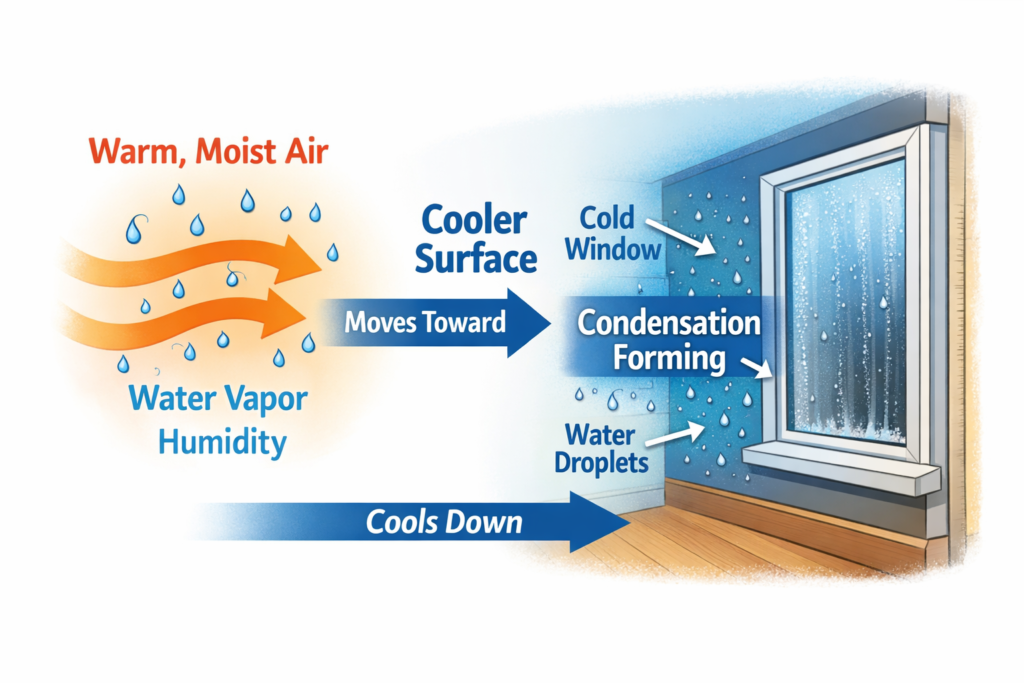
Windows are the most obvious place to see condensation, but they do not always prove the whole house is too humid. Cold glass, poor airflow near the window, indoor moisture spikes, and room temperature can all affect whether condensation appears.
If wet windows are the main clue, start with why are my windows wet?.
When high humidity is really a water problem
Some humidity problems are not just damp air. They are water-source problems.
If water is entering the home, a dehumidifier may help dry the air, but it will not fix the source. Leaks, seepage, standing water, wet materials, or poor drainage need to be handled first.
Fix water first: If you see active leaks, standing water, wet flooring, foundation seepage, roof leaks, plumbing leaks, or repeated water entry during rain, solve that source before relying on humidity equipment.
For that distinction, see humidity problems a dehumidifier will not fix.
How to narrow down the cause
Start with where the problem is strongest. A damp bathroom, damp basement, and whole-house humid feeling do not point to the same fix.
- If the whole house rises during humid weather, compare indoor and outdoor readings.
- If the bathroom spikes after showers, check ventilation and drying time.
- If the basement stays humid while upstairs is normal, treat it as a lower-level problem.
- If one room is different from nearby rooms, check airflow and meter placement.
- If water is visible, fix the water source first.
- If humidity readings are normal but the house feels bad, check airflow, temperature, and stale air.
Bottom line
High humidity in a house is usually caused by a mix of outdoor weather, everyday moisture, poor ventilation, lower-level dampness, air leaks, HVAC behavior, or water entering the structure.
Measure the rooms that feel damp, then look for the pattern. If the issue is damp air, ventilation or dehumidification may help. If water is entering the home, fix the water source first.