
Use this humidifier size chart by square footage to choose a practical output range for a bedroom, office, nursery, apartment, living room, or other connected indoor area.
Start with the square footage that one portable humidifier can realistically serve. Then adjust for the current humidity, desired humidity, ceiling height, heating season, outdoor temperature, air leakage, open doors, and refill burden.
Quick Answer: What Size Humidifier Do You Need?
- Measure the room or open connected area. Do not automatically use the square footage of every room in the home.
- Find the starting output range in the chart. The ranges describe approximate moisture output per day, not the size of the water tank.
- Adjust for the actual conditions. Move higher for very dry air, high ceilings, open stairs, or a drafty layout. Stay lower when the room is closed, mildly dry, or already shows condensation.
Humidifier Size Chart by Square Footage
Use this chart as a starting point for portable room humidifiers. The output ranges are approximate gallons of moisture added per day under ordinary residential conditions.
| Space size | Starting output range | Typical use |
|---|---|---|
| Under 300 sq ft | 0.5–1 gallon per day | Small bedroom, nursery, office, or compact closed room |
| 300–800 sq ft | 1–1.5 gallons per day | Bedroom, larger office, living room, or small apartment zone |
| 800–1,200 sq ft | 1.5–2 gallons per day | Open living area, larger room, or connected apartment space |
| 1,200–1,500 sq ft | 2–2.5 gallons per day | Large open area, loft, or connected main-floor space |
| 1,500–2,000 sq ft | 2.5–3 gallons per day | Large open zone with good air movement |
| 2,000–2,500 sq ft | High-output portable unit or multiple units | Large open layout where air can mix freely |
| 2,500–3,000 sq ft | Upper portable range or multiple units | Very large open space, not a divided whole house |
Important: The chart is for a room or open connected zone. One portable humidifier usually cannot maintain even humidity across several closed bedrooms, separate floors, long hallways, and divided living areas.
Above about 3,000 square feet, compare multiple portable units or a system-level solution rather than expecting one room humidifier to serve an entire home.
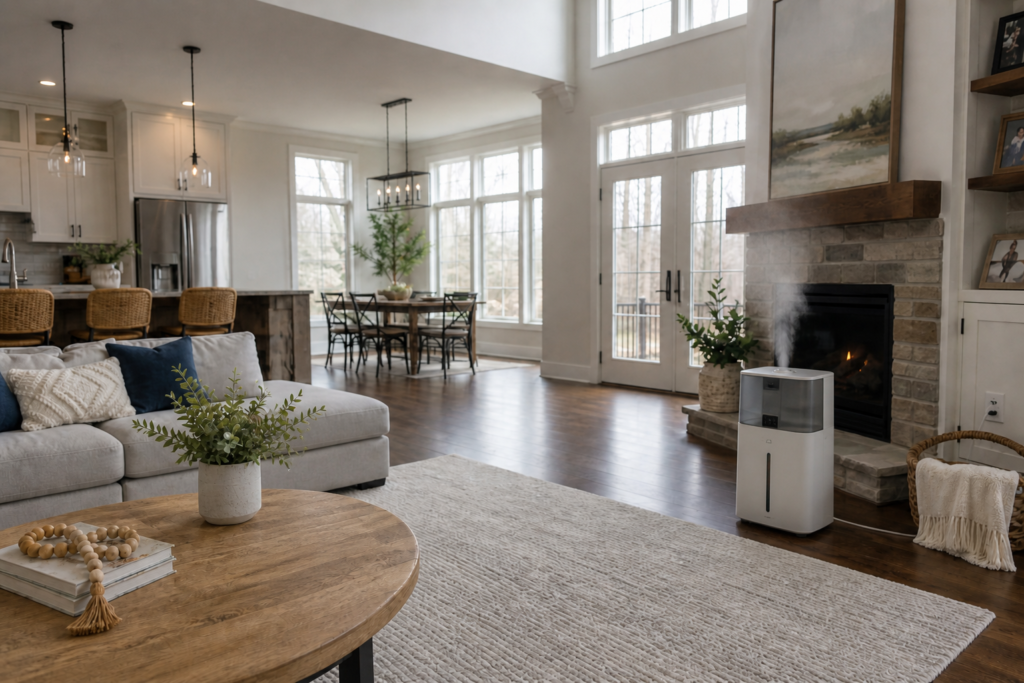
Room, Connected Space, or Whole House?
| Sizing situation | Square footage to use | What to expect |
|---|---|---|
| Closed bedroom, nursery, or office | That room only | One portable unit can usually serve the defined room when the door is mostly closed. |
| Open living room and kitchen | Total connected area | Use the combined area when air moves freely between the spaces. |
| Apartment with open common area | Open common area plus rooms that remain open | Closed bedrooms may need separate treatment. |
| Two floors connected by stairs | Do not assume even coverage | Moisture may rise or remain concentrated near the unit rather than distributing evenly. |
| Divided whole house | Do not use total house area for one portable unit | Use multiple room units or review a central humidification solution. |
For broader house sizing, use What Size Humidifier Do I Need for My Home?
Adjust the Chart for Current Humidity and Target Humidity
Square footage establishes the starting output. The difference between the current humidity and the target humidity determines how hard the unit must work.
| Indoor condition | How to use the chart |
|---|---|
| Below 25% RH | Use the upper end of the range and review drafts, air leakage, and heating conditions. |
| 25% to 30% RH | Use the middle-to-upper end of the range. |
| 30% to 35% RH | Start near the middle of the range. |
| 35% to 40% RH | Stay near the lower end unless the room still feels dry and no condensation is present. |
| Above 40% RH | A humidifier may not be needed. Confirm the reading and inspect for condensation before adding moisture. |
A practical winter target is often around 30% to 40% RH, but the correct setting depends on outdoor temperature, window performance, insulation, and whether condensation appears on cold surfaces.
Do not keep increasing output solely because the room has not reached a high target. During very cold weather, the safer indoor target may need to be lower.
Condensation limit: Reduce the humidity setting or output when moisture appears on windows, exterior walls, or other cold surfaces. More humidity is not automatically more comfortable or safer for the home.
Use Why Are My Windows Wet? when condensation is already present.
Ceiling Height, Doors, and Layout Adjustments
The chart assumes ordinary residential conditions and approximately 8-foot ceilings.
Move higher when
- Indoor humidity regularly falls below 30% RH.
- The room has 9-foot, 10-foot, vaulted, or cathedral ceilings.
- The area opens to stairs, a loft, or another large room.
- The home is drafty or poorly air sealed.
- The heating system runs for long periods.
- The unit cannot raise RH after several hours of normal operation.
Stay lower when
- The room is small and closed off.
- Humidity is only mildly low.
- The unit runs in a bedroom, nursery, or office.
- Windows already show condensation.
- The home has mild winter weather.
- The unit reaches the target quickly and remains off for long periods.
Heating Season and Outdoor Temperature
Humidifiers are most commonly used during the heating season. Cold outdoor air contains less moisture, and heating that air indoors lowers its relative humidity further.
The colder the outdoor temperature becomes, the more likely moisture is to condense on windows, exterior walls, and other cold surfaces. A setting that works during mild winter weather may be too high during a severe cold spell.
Use the chart to select equipment capacity, but use the home’s actual condensation response to set the operating target.
In a mild or already-humid climate, a humidifier may not be needed. Start with Air That’s Too Dry at Home before buying equipment solely because it is winter.
Daily Output Is Not the Same as Tank Size
The chart uses approximate daily moisture output. This is different from the amount of water the tank holds.
| Specification | What it tells you |
|---|---|
| Gallons per day | Approximate moisture the humidifier can add over a day under stated conditions. |
| Tank capacity | How much water the unit can hold before it needs a refill. |
| Runtime | How long the unit may operate at a particular output setting before the tank empties. |
| Coverage claim | A manufacturer estimate that may assume an open layout and favorable conditions. |
A humidifier can have a large tank but modest output, or a smaller tank that needs frequent refilling while producing more moisture. Compare both output and refill burden before choosing.
Measure Before You Move Up a Size
Measure humidity in the room where the unit will operate. A thermostat reading in a hallway or another floor may not represent the actual problem area.
- Place the meter away from the humidifier’s mist or discharge.
- Keep it away from windows, exterior doors, supply vents, and direct sunlight.
- Allow the reading to stabilize.
- Check morning and evening readings for several days.
- Compare the problem room with another area of the home.
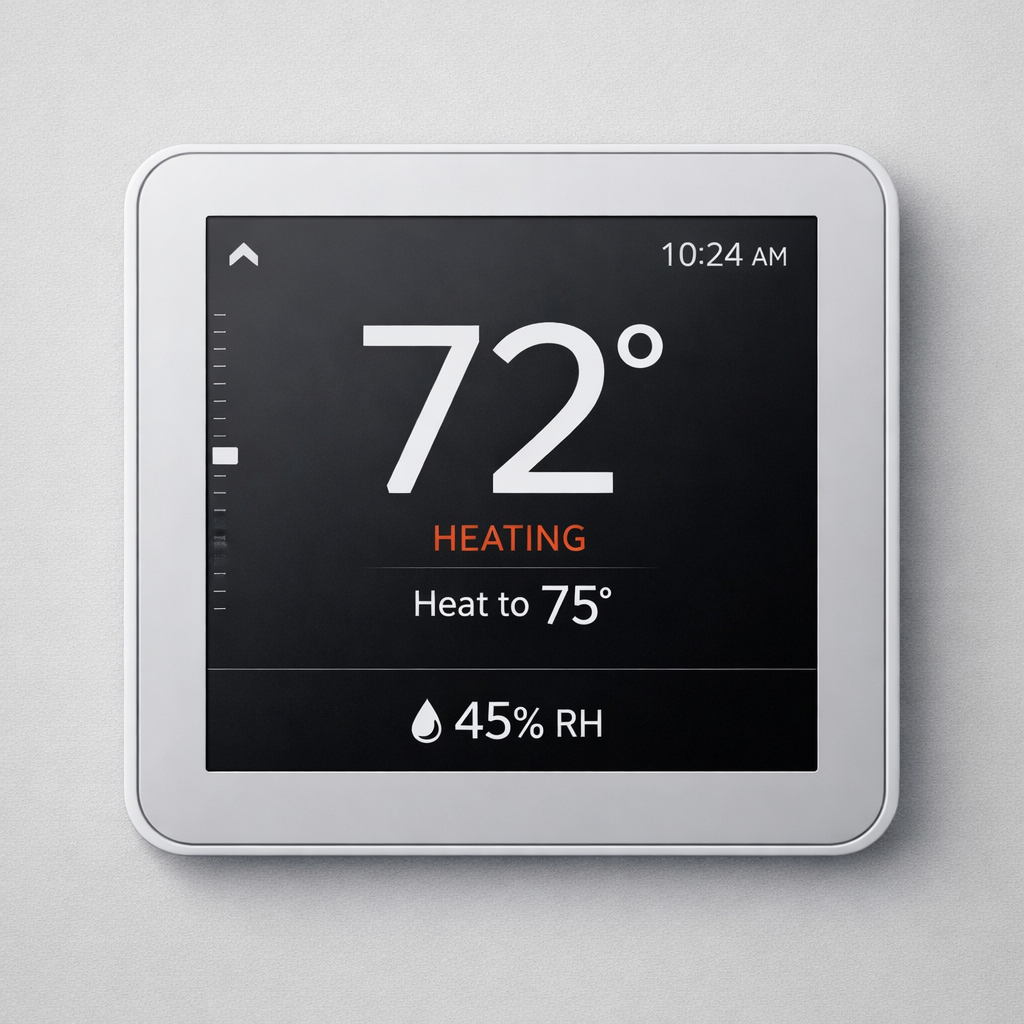
Use How to Measure Humidity in Your Home for the complete measurement method.
When One Portable Humidifier Is Not Enough
Increasing output does not solve every distribution problem. One large unit may humidify the room around it while leaving closed bedrooms or another floor dry.
Consider separate room units or a system-level solution when:
- The home contains several closed bedrooms.
- The target area spans multiple floors.
- One end of the home remains dry while the area around the humidifier reaches the target.
- Air does not circulate through the full space.
- Several portable units require constant refilling.
For apartment-specific layout guidance, use What Size Humidifier for an Apartment?
Disclosure: This page may include affiliate links. If you buy through those links, HumidityAtHome may earn a small commission at no extra cost to you.
As an Amazon Associate I earn from qualifying purchases.
Product Paths by Room Size
Use the chart first. Then compare output, tank size, refill frequency, cleaning access, noise, controls, and the size of the room or connected area.
Indoor Humidity Meters
Use a meter when the home feels dry but the actual humidity has not been confirmed.
Small Room Humidifiers
Use for bedrooms, offices, nurseries, and smaller closed rooms where excessive output can cause condensation.
Bedroom and Medium Room Humidifiers
Use for larger bedrooms, living rooms, small apartments, and medium connected spaces.
Large Room Humidifiers
Use for open living areas, larger apartments, lofts, and dry spaces where a small tabletop unit would need frequent refilling.
Smart Humidity Monitoring
Use phone-app trends or alerts to see whether humidity remains low overnight, rises too far, or changes sharply with outdoor weather.
Humidifier Sizing Guides by Square Footage
Smaller and medium spaces
Bottom Line
Use the room or connected-space square footage to select the starting output range. Then adjust for the measured humidity, desired humidity, ceiling height, layout, heating season, outdoor temperature, and air leakage.
Choose the smallest output range that can maintain a reasonable humidity level without constant refilling. Move higher only when the space is very dry, open, tall, or drafty. Stay lower when the room is closed, mildly dry, or showing condensation.
A larger humidifier cannot correct poor insulation, major air leakage, uneven heat distribution, closed-room airflow, or a whole house that loses moisture as quickly as one portable unit adds it.
Last reviewed: PH4 July 11, 2026.