
If a humidifier is too small for the room, it can run for hours and still fail to raise humidity enough to matter. The air may feel slightly better near the unit, but the rest of the room, apartment, or open area may stay dry.
An undersized humidifier usually does not create the same risk as an oversized one. It normally will not make windows wet or surfaces damp. The main problem is that it works constantly while delivering a weak result.
Fast answer:
A humidifier that is too small may run constantly, empty its tank quickly, barely raise humidity, and only improve the air close to the unit. Measure the room first. If humidity stays low after several hours of steady operation, the humidifier may be undersized for the actual space, ceiling height, layout, or winter dryness level.
Before replacing the humidifier, confirm the actual indoor humidity. The guide on how to measure humidity in your home explains how to check the room with a basic humidity meter instead of guessing by feel.
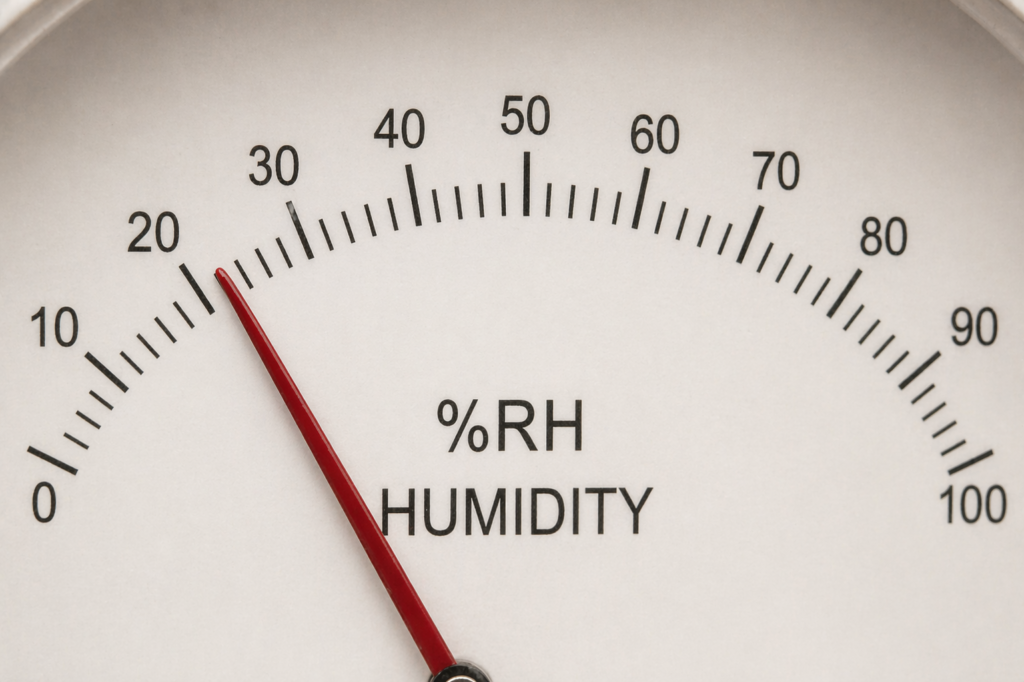
Signs a Humidifier Is Too Small
A unit can be too small for the moisture demand of a room even when it runs continuously. Check whether measured RH changes, how quickly water is consumed, and whether the door and airflow isolate the space. Published output ratings and room-size labels are starting information, not a promise of performance. Technical references: EPA humidifier care ASHRAE Psychrometrics.
The most obvious sign is effort without enough result. The unit may be working, but it cannot add moisture faster than the room is losing it.
| Sign | What it usually means |
|---|---|
| Humidifier runs constantly | The unit cannot reach the target humidity. |
| Humidity barely increases | The output may be too low for the room volume. |
| Tank empties quickly | The unit is working, but the space may need more capacity. |
| Air feels better only near the humidifier | Moisture is not spreading through the full area. |
| Dryness returns quickly | The room may be leaky, open, or larger than the unit can handle. |
| Unit never reaches set point | The humidifier may be undersized or poorly placed. |
A too-small humidifier can still help a little. It just may not be enough to control the whole intended space.
Constant Runtime
The most common sign of an undersized humidifier is nonstop operation.
You may notice:
- The unit rarely shuts off
- The fan runs most of the day
- The water tank empties quickly
- Humidity readings barely move
- The room still feels dry after hours of operation
Continuous runtime means the humidifier is adding moisture, but not enough to get ahead of what the space is losing.
That does not always mean the unit is broken. It often means the space is larger, drier, leakier, or more open than the humidifier can handle.
Slow or No Humidity Increase
A humidifier that is too small may raise humidity slightly, then stall.
For example, a room may start at 24% relative humidity and climb only a few points after several hours. That is improvement, but it may not be enough to make the room comfortable.
This is more common in:
- Large open layouts
- Homes with high ceilings
- Very cold winter climates
- Drafty rooms or apartments
- Spaces connected to hallways or stairwells
- Rooms with doors left open to larger dry areas
Square-footage ratings usually assume standard ceilings, average dryness, and a reasonably defined space. Real homes are not always that neat.
Why the Unit May Be Too Small Even If the Box Rating Looks Right
A humidifier rating is only a starting point. The real load depends on room size, ceiling height, layout, air leakage, heating type, and how dry the air is before the unit starts.
| Condition | Why it matters |
|---|---|
| High ceilings | The humidifier is treating more air volume than square footage suggests. |
| Open floor plan | Moisture spreads beyond the intended room. |
| Drafty space | Dry outdoor air keeps replacing the humidified air. |
| Forced-air heat | Air movement may spread moisture unevenly or dry the space faster. |
| Very low starting humidity | The unit has to work harder before comfort improves. |
| Doors left open | A bedroom unit may be trying to humidify a hallway or larger zone. |
For a broader sizing path, use what size humidifier you need for your home and the humidifier size chart by square footage. You can also use the humidifier size calculator.
Uneven Comfort
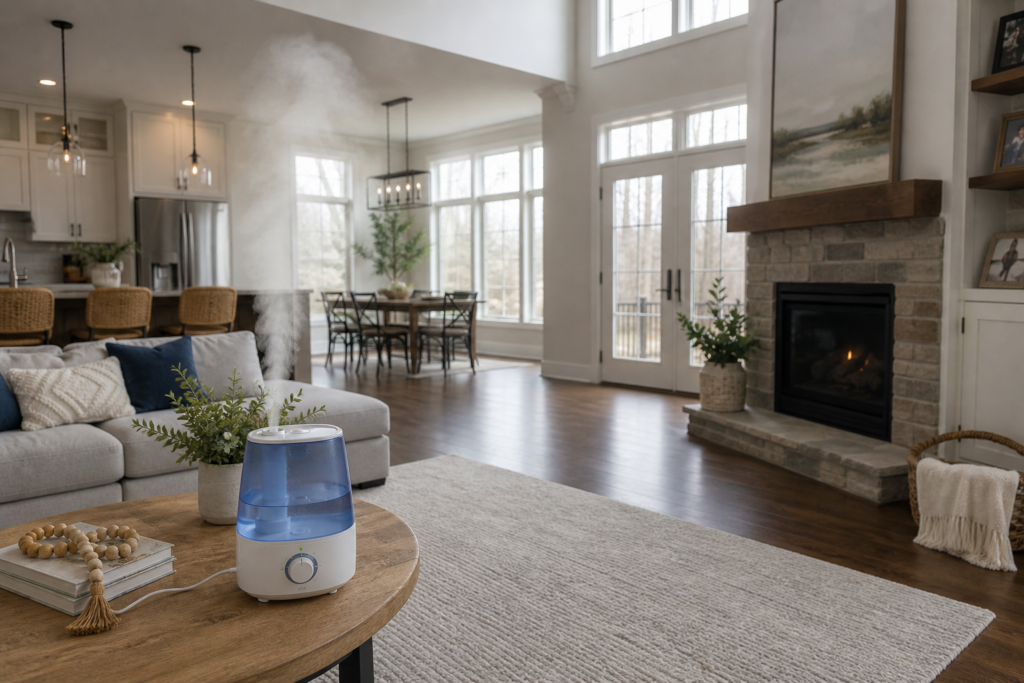
An undersized humidifier may help the air close to the unit while the rest of the space stays dry.
You might notice that the area near the humidifier feels better, but the far side of the room, hallway, or bedroom still feels dry. That happens because moisture follows airflow.
Uneven comfort is more likely when:
- The room is larger than the unit rating
- The layout opens into other rooms
- Air circulates beyond the intended area
- The humidifier is placed in a corner
- Doors stay open to a larger dry space
- The unit is trying to treat an apartment zone instead of one room
A small humidifier cannot control a large connected zone just because it is running continuously.
Frequent Refilling Without Much Change
A small humidifier can still use plenty of water.
If the tank empties quickly but humidity barely improves, the unit may be working hard without enough output capacity. That usually means the added moisture is being diluted across too much air or lost through air leakage.
This can happen in apartments, open living rooms, and homes with forced-air heat.
A larger tank alone does not always fix the problem. Tank size affects convenience. Output capacity affects whether the unit can raise humidity in the first place.
Increased Wear and More Maintenance
Running at maximum output all the time can shorten the useful life of the unit and make maintenance more annoying.
Constant full-load operation can lead to:
- More frequent refilling
- More frequent cleaning
- More filter or wick replacement
- More fan and motor wear
- More noise exposure
- More frustration for the person maintaining it
A properly sized humidifier should be able to cycle, slow down, or reduce output once the room reaches the target range. If it never gets there, the unit is doing maximum work for limited return.
How to Check Whether the Humidifier Is Actually Too Small
Do not judge by feel alone. Check the room with a humidity meter placed away from the humidifier mist or discharge.
Let the humidifier run for several hours with windows closed, then compare the starting and ending readings.
| Test result | Likely meaning |
|---|---|
| Humidity rises steadily and holds | The humidifier is probably large enough. |
| Humidity rises slightly, then stalls | The unit may be undersized or the space may be too open. |
| Humidity barely changes | The humidifier is likely too small, poorly placed, or not operating correctly. |
| Humidity improves only near the unit | Air mixing or coverage is the issue. |
| Humidity drops quickly after shutoff | The space may be leaky, very dry, or larger than expected. |
The humidifier may be too small if:
- Humidity stays below 30%
- The unit runs constantly
- The tank empties but the room barely improves
- Dryness returns quickly after the unit shuts off
- The room is larger than the unit’s rated coverage
- The space has high ceilings or open airflow
Measurement path:
A too-small humidifier usually shows up as low humidity that does not rise enough after several hours. Measure before buying a larger unit, then measure again after changing size, placement, or settings.
Slight Undersizing Is Usually Manageable
A slightly undersized humidifier may still help.
It may not reach the target quickly, but it can make a bedroom, office, or small living area less dry. That may be good enough if the goal is modest comfort improvement rather than full-space humidity control.
Mild underperformance is usually less risky than major oversizing. Too much humidity can cause window condensation and damp surfaces, especially in cold weather.
For the opposite problem, see what happens if a humidifier is too large.
When to Move Up in Size
Move up one capacity tier if the unit runs constantly and still cannot bring humidity into a reasonable range.
That is usually enough. Do not jump several sizes larger unless the current unit is far below the real load.
| Problem | What to try |
|---|---|
| Unit runs constantly but humidity rises a little | Improve placement, close the treated zone, or move up one size tier. |
| Room is larger than expected | Size for the actual connected area, not just the room name. |
| Open layout pulls moisture away | Use a larger multi-room unit or treat a smaller defined zone. |
| High ceilings increase air volume | Size up from the square-footage chart. |
| Very dry winter air keeps winning | Move up one tier and check windows for condensation. |
| Only one bedroom needs help | Use a room-sized humidifier instead of trying to treat the whole home. |
For apartments, use the more specific guide on what size humidifier for an apartment. For a one-bedroom layout, see humidifier for a one-bedroom apartment.
When the Problem Is Not Size
Sometimes the humidifier is not too small. The setup is wrong.
Before replacing the unit, check for simpler problems:
- The humidifier is placed in a corner with poor air mixing
- The door is open to a much larger dry area
- The built-in humidity sensor is reading incorrectly
- The filter or wick needs replacement
- The tank is not feeding water properly
- The mist or discharge is aimed poorly
- The space is draftier than expected
If the unit is dirty, clogged, poorly placed, or trying to humidify more space than intended, a bigger humidifier may not be the first fix.
Reality Check
A humidifier can only add moisture at the rate it was designed for.
If the space loses moisture faster than the unit adds it, the humidity level will stay low. That does not mean humidification is useless. It means the unit is mismatched to the room, layout, or climate.
A common winter comfort range is moderate indoor humidity, often around 30% to 50%. The right level depends on outdoor temperature, window performance, insulation, and how the home reacts.
Measure first. Size second.
Confirm Undersizing Before Moving Up One Capacity Tier
If your humidifier is too small, it may run constantly, empty the tank quickly, and still leave the room dry.
Check humidity with a meter. Confirm the actual space being treated. Look at ceiling height, layout openness, and winter dryness. If the unit is clearly undersized, move up one capacity tier rather than jumping straight to the largest model.
The right humidifier should improve the intended area, not just the air immediately around the machine.
Related Guides
- What happens if a humidifier is too large?
- What size humidifier do I need for my home?
- Humidifier size chart by square footage
- What size humidifier for an apartment?
- Humidifier for a one-bedroom apartment
- Portable vs whole-house humidifier