
Wet windows are common in many homes, and they are often misunderstood.
In most situations, foggy or wet windows are caused by condensation, not leaks and not rain getting inside. Condensation is a normal physical process that becomes visible when indoor moisture meets a cold surface.
Understanding what is happening helps homeowners separate normal condensation from a real moisture problem.

What Window Condensation Is
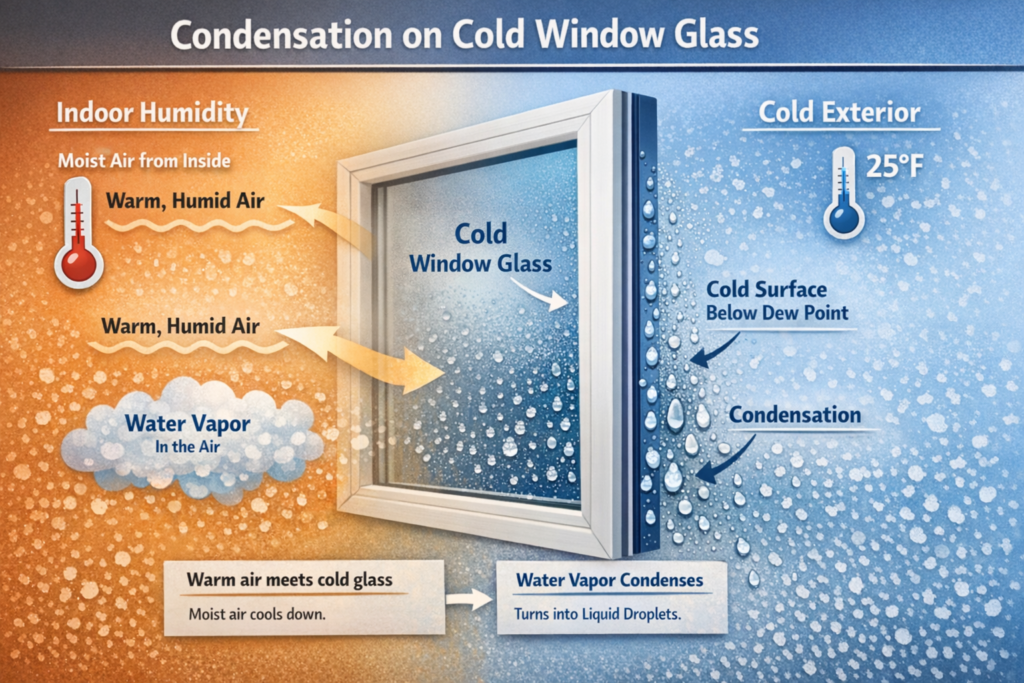
Condensation forms when warm, moist indoor air touches a colder surface.
Windows are usually the coldest surface in a room. When the glass temperature drops below the air’s ability to hold moisture, water forms on the surface of the glass.
The effect is similar to a cold drink sweating on a summer day. Moisture in the surrounding air condenses on the colder surface.
This process is normal physics, not necessarily a defect in the home.
Why It Happens More in Winter
Condensation becomes most noticeable during cold weather.
Outdoor temperatures drop and cool the window glass, while indoor heating keeps the air warm. Warm air can hold more moisture than cold air, so when that moisture touches cold glass it condenses.
Several everyday factors can increase the effect. Indoor air may contain moisture from cooking, showers, laundry, and simply from people breathing and living in the home. When windows remain closed during winter, ventilation decreases and that moisture stays inside longer.
The colder the window surface and the wetter the indoor air, the more visible condensation becomes.
Why It Can Also Happen in Summer
Condensation is not limited to winter.
During warm months it may appear when indoor air is heavily air-conditioned while outdoor air is hot and humid. When warm, humid outdoor air touches cooler glass or window frames, moisture can form.
In summer this condensation often appears on the outside of windows. When moisture forms on the exterior glass, it is usually harmless and simply indicates that the indoor air is cooler than the outdoor air.
Condensation vs a Leak
It is important to distinguish condensation from water intrusion.
Condensation usually appears evenly across the glass and often changes with weather conditions or time of day. The moisture disappears when the glass is wiped and does not typically cause staining around the frame.
Water intrusion behaves differently. Leaks often appear after rain rather than temperature changes. Moisture may collect at a specific corner or edge of the window, and signs such as staining, bubbling paint, or soft wood may develop around the frame.
If moisture only appears on the glass and disappears when wiped away, the cause is almost always condensation.
What Condensation Says About Indoor Humidity
Condensation is a symptom rather than the underlying problem.
It usually indicates that indoor air contains more moisture than the cold window surface can handle. Limited air movement near the window or a large temperature difference between the room and the glass can also contribute.
Condensation does not automatically mean your home has excessive humidity. However, repeated or heavy condensation suggests that indoor moisture levels deserve attention.
If humidity levels are unclear, it helps to start by measuring humidity in your home.
Why New Windows Can Still Condense
Even newer or energy-efficient windows may show condensation.
Improved sealing can trap indoor moisture that older drafty homes once allowed to escape. When insulation improves elsewhere in the building envelope, the window glass may become the coldest surface in the room.
Because of this, condensation on new windows does not necessarily indicate a defect or installation problem.
When Window Condensation Becomes a Problem
Occasional condensation is normal. Persistent condensation is not.
Moisture becomes concerning when water begins pooling on sills or frames, when dampness appears daily for long periods, or when nearby materials such as wood, paint, or drywall remain wet.
Mold or mildew forming around the window area is another signal that indoor moisture levels may be too high.
When condensation becomes frequent or heavy, it may be worth evaluating what causes high humidity in a house or determining whether you need a dehumidifier for your home.
Summary
Wet windows are usually caused by condensation rather than leaks.
Condensation forms when moist indoor air meets cold glass. It is common during winter and can also appear during summer under certain conditions.
Understanding the difference between condensation and water intrusion helps homeowners focus on the real cause of the problem and avoid unnecessary repairs.