
Choosing the right humidifier size matters more than the brand.
A unit that is too small will not noticeably improve comfort. A unit that is too large can create condensation and make the air feel heavy instead of balanced.
Humidifier sizing is about matching moisture output to your space and climate rather than simply buying the largest machine available.
This guide provides a practical starting point.
First: What Humidity Range Are You Aiming For?
Most homes feel comfortable when indoor humidity stays between 30% and 45% during winter.
You do not need to hit an exact number. Comfort usually improves once humidity moves out of the very dry range.
Before choosing a humidifier, it helps to confirm your current humidity level. Start by measuring humidity in your home.
If you are not sure whether dry air is actually the problem, review the signs on do I need a humidifier for my home.
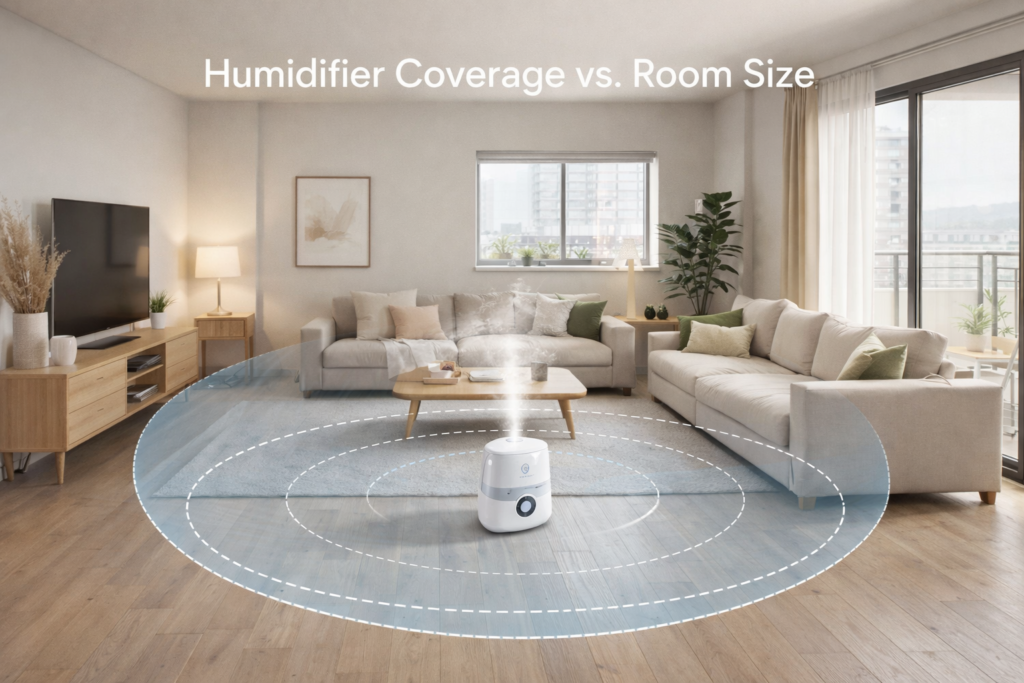
Two Basic Humidifier Types (Sizing Starts Here)
Humidifier sizing depends on the type of system you are using.
Portable (Room-Based) Humidifiers
Portable humidifiers treat a single room or limited area.
They are often the right choice when dry air affects specific spaces rather than the entire house.
Portable humidifiers work well when:
- Dryness is limited to bedrooms or living areas
- You want a simple solution without HVAC changes
- Refilling and cleaning tanks is manageable
Sizing is based on room square footage, not the entire home.
Whole-House Humidifiers
Whole-house humidifiers connect to the HVAC system and humidify most or all of the home.
They are commonly used when dryness affects several rooms every winter.
Whole-house humidifiers are best when:
- Dry air affects multiple areas of the house
- Symptoms repeat every winter
- You want automatic humidity control with minimal daily maintenance
These systems are sized according to total home square footage and climate conditions.
Portable Humidifier Size Guide (By Room)
When humidifying one room at a time, room size provides the starting point.
Small Rooms (Up to ~300 sq ft)
Bedrooms, nurseries, and small offices usually fall into this range.
Look for humidifier units designed for small room coverage.
Medium Rooms (300–600 sq ft)
Large bedrooms, living rooms, and shared spaces often require medium-capacity units.
Choose a humidifier unit rated for medium sized rooms.
Large Rooms (600–1,000 sq ft)
Open-concept living areas or finished basements used as living space may require high-output portable humidifiers.
These require large room or multi-room high-output portable humidifiers.
Do not assume one small portable unit can treat multiple closed-off rooms.
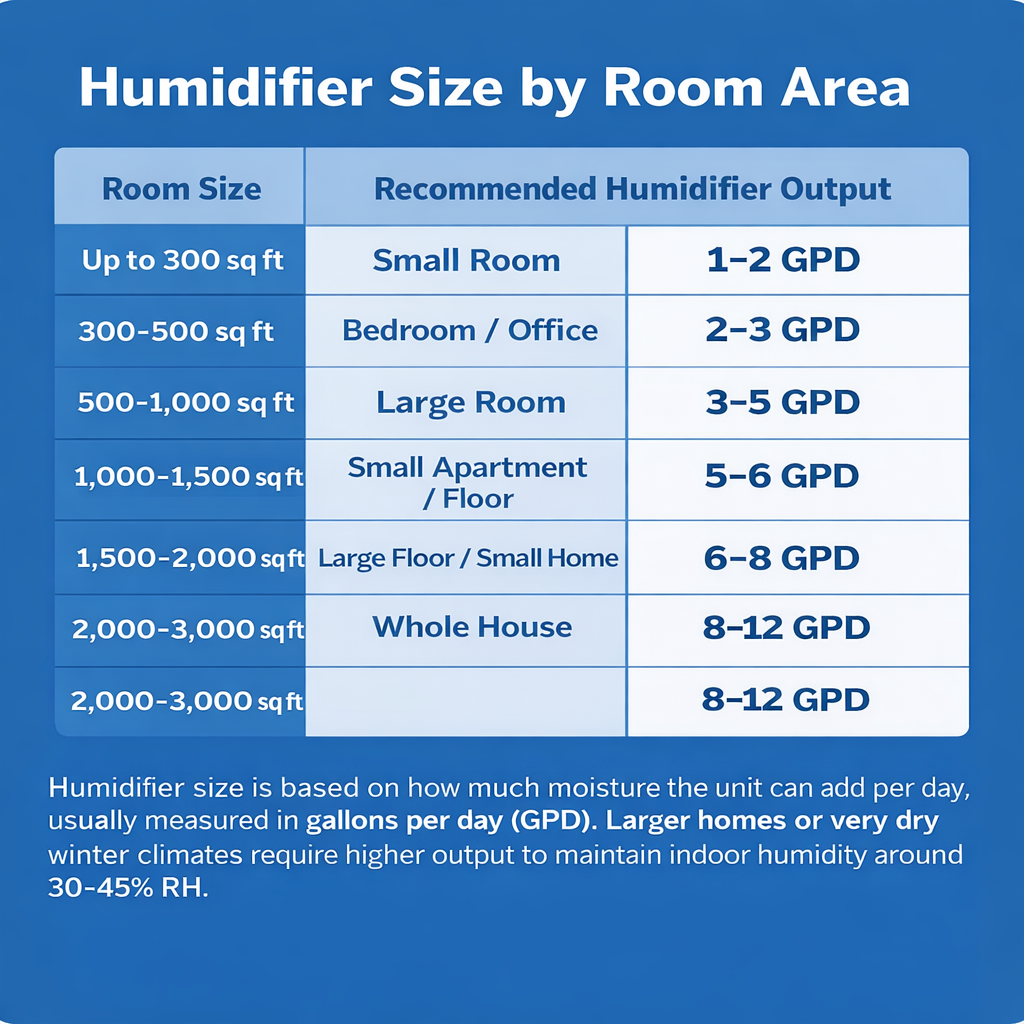
Whole-House Humidifier Size Guide
Whole-house humidifiers use a different sizing approach.
They are typically rated based on:
- Total home square footage
- Climate severity
- Heating system type
As a general rule, larger homes or colder climates require higher moisture output.
Installation and setup matter as much as the equipment size. Oversized systems can create condensation problems inside ductwork if not configured properly.
Residential - Whole House Humidifier
Common Home Sizes
If you plan to humidify most of your home, start with the page closest to your square footage.
- What size humidifier for a 1000 square foot home
- What size humidifier for a 1500 square foot home
- What size humidifier for a 2000 square foot home
- What size humidifier for a 2500 square foot home
- What size humidifier for a 3000 square foot home
- What size humidifier for an apartment
For a quick reference overview, see humidifier size chart by square footage.
When Going Bigger Helps … and When It Doesn’t
Choosing a slightly larger unit can help when doors stay open between rooms or when dry air persists for long periods.
A larger unit may also help if a humidifier runs continuously without improving comfort.
However, increasing humidifier capacity does not solve every problem.
Going larger will not help when windows begin showing condensation, when surfaces feel damp, or when indoor air already feels heavy.
Humidity problems caused by air leaks, insulation gaps, or ventilation issues require different solutions.
Common Sizing Mistakes to Avoid
Many humidifier problems come from incorrect expectations rather than equipment failure.
Common mistakes include buying the smallest unit just to test it, assuming one portable humidifier can treat an entire home, ignoring maintenance requirements, or adding moisture without measuring indoor humidity first.
Understanding the size of the space and the severity of dryness usually prevents these issues.
Bottom Line
Humidifier sizing is about balance.
Portable humidifiers work well for individual rooms, while whole-house systems make sense when dryness affects most of the home.
When properly matched to the space, a humidifier should improve winter comfort without creating condensation problems.