
Quick answer: A small dehumidifier can help in a bathroom when the problem is mild leftover humidity after showers. It is not a replacement for a working exhaust fan, safe ventilation, or fixing leaks. Use the fan first, keep the unit outside the splash zone, plug it into a GFCI-protected outlet, and choose a model designed for bathrooms, damp rooms, or wet spaces when possible.
A small dehumidifier for a bathroom can help with leftover damp air after showers, especially in a small bathroom that stays humid longer than the rest of the house.
It is not the first line of defense. A bathroom fan, open door, open window, or corrected ventilation problem should handle the heavy steam first. A mini dehumidifier is better as a support tool for the moisture that remains after the worst steam has cleared.
The key is matching the tool to the problem. A small bathroom dehumidifier may help with mild post-shower dampness. It will not fix active leaks, standing water, wet trim, a broken exhaust fan, or a whole-home humidity problem.
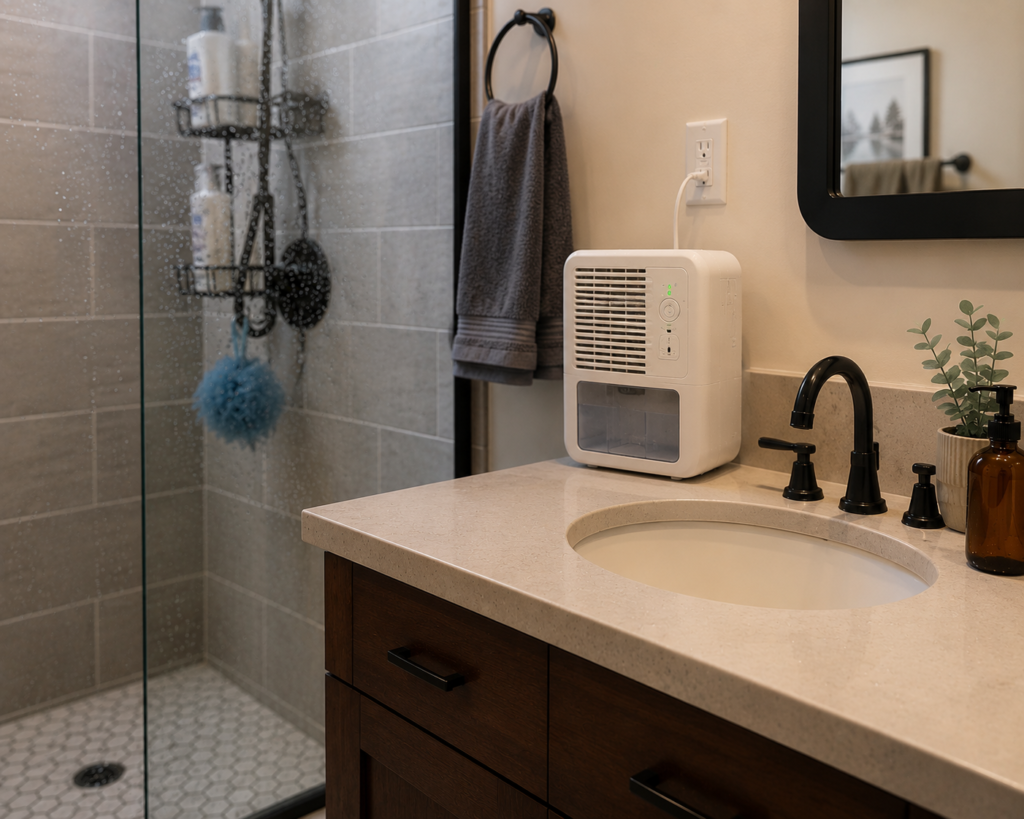
When a small bathroom dehumidifier helps
Run the bathroom exhaust fan during showers and confirm that it exhausts outdoors; also investigate leaks and persistently wet surfaces. A small dehumidifier may help with residual airborne moisture, but it does not replace working ventilation or repair a water source. Judge usefulness by measurements after the underlying moisture sources are addressed. Technical references: ENERGY STAR bath ventilation EPA moisture and mold.
A small unit is most useful when the bathroom is small, the moisture load is temporary, and the room mostly dries out after the shower.
That usually means the mirror fogs during a shower, the air feels damp afterward, and towels or surfaces stay damp longer than expected. If the exhaust fan works but feels weak, a small dehumidifier may help finish the job after the fan has done what it can.
A small unit may help when:
- The bathroom is small and mostly enclosed.
- The mirror fog clears, but the room still feels damp afterward.
- Towels stay damp longer than expected.
- The exhaust fan works but feels weak.
- You rent and cannot easily change the fan, ducting, or bathroom layout.
- The humidity problem seems limited to the bathroom.
When a mini bathroom dehumidifier is the wrong answer
A mini dehumidifier should not be used to cover up a bigger moisture problem. If the bathroom has active water, soft trim, wet drywall, a musty smell that never goes away, or humidity that spreads into nearby rooms, the problem is probably larger than a small countertop unit can handle.
Do not use a small dehumidifier as a bandage for water problems. If there is a leak, standing water, wet flooring, swollen trim, or a bathroom that never dries, fix the water source and ventilation problem first. A small dehumidifier can remove some moisture from air, but it cannot solve a wet building problem.
- Skip the mini unit if the exhaust fan does not work at all.
- Skip it if water sits on walls, floors, trim, or cabinets.
- Skip it if the bathroom smells musty all day.
- Skip it if the nearby bedroom, hallway, or apartment also feels humid.
- Skip it if there is no safe dry place to plug in and operate the unit.
Why bathrooms stay humid after showers
Bathrooms create short, heavy moisture spikes. Hot showers add water vapor quickly, and small bathrooms do not have much air volume to absorb it. If the fan is weak, the door stays closed, or wet towels and shower walls remain wet, the room can stay humid long after the shower ends.
That does not always mean you need a large dehumidifier. It means you need to separate a normal shower moisture spike from a bathroom that is staying too humid for too long.
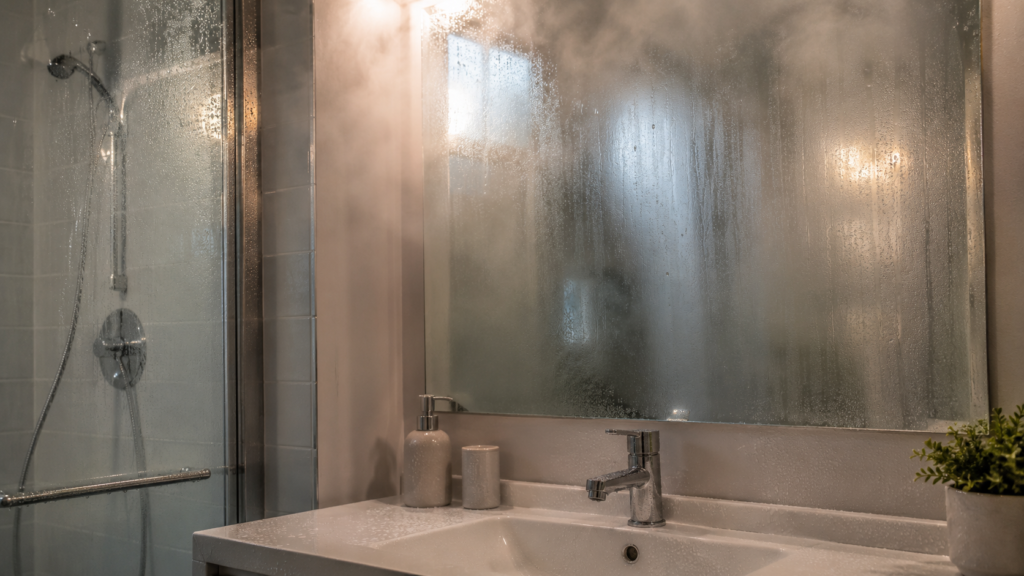
A humidity meter helps. Check the bathroom before a shower, shortly after the shower, and again 30 to 60 minutes later. If the reading drops back near the rest of the house, the room may simply need better ventilation habits. If it stays high, a small dehumidifier may help with leftover moisture.
| Bathroom reading pattern | What it suggests | Next move |
|---|---|---|
| Humidity spikes after shower, then drops within 30–60 minutes | Normal shower moisture pattern | Use fan/door habits first. |
| Humidity drops slowly but eventually returns near the rest of the home | Lingering bathroom moisture | Small dehumidifier may help. |
| Humidity stays high for hours | Ventilation or moisture load problem | Check fan, wet surfaces, and nearby rooms. |
| Nearby rooms are humid too | Not just a bathroom problem | Size the larger damp area. |
| Surfaces stay wet or trim feels soft | Possible water problem | Fix the water source first. |
Bathroom fan first, dehumidifier second
A small dehumidifier should not be your first bathroom moisture tool. The exhaust fan or open-air path should remove the biggest moisture load first.
Run the fan during the shower and keep it running afterward. If the bathroom has no fan, opening the door after showering may help move damp air out of the room, but that can also spread humidity if the rest of the home is already damp.
The small dehumidifier is for the moisture that remains after the main steam has cleared.
| Bathroom condition | Small dehumidifier fit? | Better first move |
|---|---|---|
| Mirror fog clears but room still feels damp | Good possible fit | Run fan longer, then use mini unit. |
| No exhaust fan | Possible support tool | Ventilate first if possible. |
| Weak fan in rental bathroom | Possible support tool | Use habits plus small unit. |
| Wet wall, leak, or soft trim | Poor fit | Fix water source first. |
| Whole apartment feels humid | Poor fit | Use apartment or room dehumidifier guidance. |
Where to place a small bathroom dehumidifier safely
Bathroom placement matters because electricity and wet surfaces are close together. A small dehumidifier should never be treated like a shower appliance. It belongs in a dry, stable location where it cannot be splashed, tipped into water, or handled with wet hands.
Use a GFCI-protected bathroom outlet, or choose a unit with built-in ground-fault protection if the manufacturer provides that feature. GFCI is sometimes called GFI in everyday language. If you are not sure whether the outlet is GFCI-protected, do not guess. Use a different setup, ask the property owner, or have the outlet checked.
Bathroom safety rule: Do not place a dehumidifier inside the shower, tub, wet floor area, or direct splash zone. Keep the cord, plug, outlet, and controls dry. Follow the manufacturer’s bathroom-use instructions, and choose a model listed for bathrooms, damp rooms, or wet-space use when possible.
Bathroom placement rules
- Keep the unit outside the shower, tub, and direct splash zone.
- Use a GFCI-protected outlet, or a unit with built-in ground-fault protection.
- Place the unit on a stable, dry surface.
- Do not use an extension cord across a wet bathroom floor.
- Keep the plug, cord, buttons, and display dry.
- Leave room around the intake and outlet so air can move.
- Choose a model designed for bathrooms, damp rooms, or wet spaces when available.
- Follow the manufacturer’s safety instructions for bathroom use.
Mini dehumidifier or compact compressor unit?
Most small bathroom dehumidifiers are mini units. They are compact, quiet, and easy to place, but they remove moisture slowly. That can work for leftover dampness. It is usually not enough for a bathroom that stays wet, musty, or humid all day.
A compact compressor dehumidifier is stronger, but it is usually larger and may be awkward in a small bathroom. If the bathroom is part of a larger humid area, it may make more sense to dry the nearby room, hallway, or apartment zone instead of trying to fit a bigger machine in the bathroom.
| Unit type | Better for | Weakness |
|---|---|---|
| Mini bathroom dehumidifier | Light leftover dampness in a small bathroom | Low moisture removal |
| Compact compressor dehumidifier | Small room, nearby hallway, or apartment zone | Larger, louder, and harder to place safely in a bathroom |
| Full-size dehumidifier | Basement, large room, or whole damp area | Usually not a bathroom appliance |
When a small bathroom dehumidifier is too small
The clearest sign is that the unit runs but the bathroom still feels damp. A mini unit can collect a little water and still fail to control the room.
If humidity stays high for hours, towels never dry, trim stays damp, or musty smell returns quickly, the problem is probably bigger than the unit.
- Use a humidity meter to confirm the room is actually staying humid.
- Check whether the fan is moving air.
- Look for wet surfaces that never dry.
- Check whether the humidity problem extends outside the bathroom.
- Move to a larger room or apartment dehumidifier if the problem is not bathroom-only.
If the dampness affects more than the bathroom, start with dehumidifier for apartment, dehumidifier for 500 square feet, or the dehumidifier size calculator.
What if the bathroom has no fan?
A no-fan bathroom is a harder case. A small dehumidifier may help with leftover dampness, but it will not remove shower steam as quickly as direct ventilation.
If you rent, you may not be able to add a fan. In that case, use practical habits first: open the door after showers when appropriate, dry wet surfaces, keep towels from bunching up, and use a humidity meter to see how long the room stays high.
If the bathroom remains humid long after every shower, a mini dehumidifier may help, but it should be treated as a support tool, not a full fix for missing ventilation.
Product guidance for bathroom moisture
Choose the product path based on the size of the moisture problem and the safety of the placement. A mini bathroom dehumidifier is only a good fit when the bathroom has light leftover dampness, a safe dry location for the unit, and access to a GFCI-protected outlet.
For bathroom use, look for practical safety and usability features before extra modes or decorative options.
Bathroom dehumidifier features to check:
- Designed or described for bathroom, damp-room, or small wet-space use
- GFCI plug, built-in ground-fault protection, or use with a GFCI-protected outlet
- Auto shutoff when the tank is full
- Stable base that is hard to tip
- Simple controls that can be used with dry hands
- Easy-to-empty tank
- Clear airflow path around intake and outlet
- No need for an extension cord across the bathroom floor
Disclosure: This page may include affiliate links. If you buy through those links, HumidityAtHome may earn a small commission at no extra cost to you.
| Bathroom problem | Better product path |
|---|---|
| Small bathroom stays mildly damp after showers | Check Small Bathroom Dehumidifiers on Amazon |
| Bathroom and nearby room both feel humid | Check Compact Dehumidifiers for Small Rooms on Amazon |
| Not sure whether the bathroom is actually humid | Check Indoor Humidity Meters on Amazon |
Practical recommendation
Use the bathroom fan first. Let it run during the shower and afterward. Open the door when appropriate. Wipe down heavy wet surfaces if the room stays damp. Then use the small dehumidifier to help remove leftover moisture from the air.
If the bathroom is only slightly damp after showers, a small bathroom dehumidifier may be enough. If the moisture spreads beyond the bathroom, size the larger damp area instead. If there is active water or a surface that never dries, solve the water problem first.
Use Bathroom Ventilation First, Then Size Remaining Moisture Control
A small dehumidifier can help in a bathroom when the problem is mild leftover moisture after showers. It works best in a small enclosed room after the fan, door, or window has already cleared the worst steam.
Do not expect a mini unit to fix leaks, standing water, broken ventilation, or a whole-home humidity problem. Measure first, place the unit safely, use GFCI protection, and choose a model intended for bathroom, damp-room, or wet-space use when possible.
Next step: If the bathroom is only slightly damp after showers, compare small bathroom dehumidifiers. If the moisture spreads beyond the bathroom, use the dehumidifier size calculator instead.