Square footage gets you close. Moisture load makes the final decision.
What Size Dehumidifier Covers 1000 Square Feet?
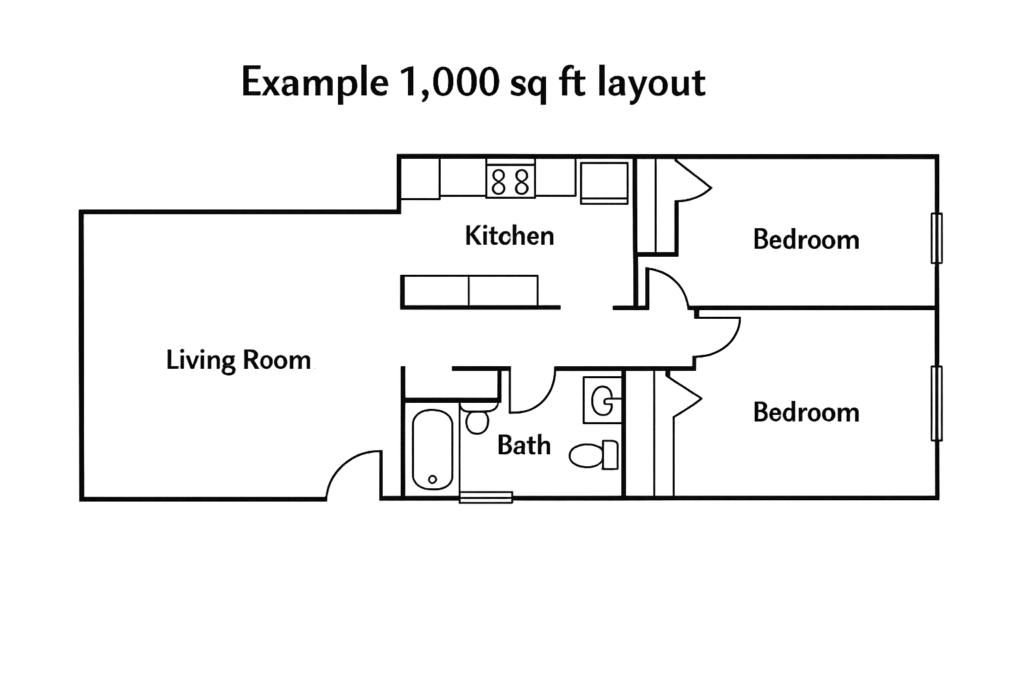
For a typical 1,000 square foot space, the correct size depends on how much moisture the space actually carries.
Mild humidity (50–60% RH)
30 pint unit
Moderate humidity (60–70% RH)
35–40 pint unit
Heavy humidity (above 70% RH or damp surfaces)
40+ pint unit
Most homeowners end up in the 35–40 pint range.
If you have not checked your humidity yet, start by measuring humidity in your home.
Moisture Load Reminder
Square footage assumes average conditions. Real homes rarely behave that neatly.
Moisture load increases when:
- The space is partially or fully below grade
- Windows sweat regularly
- The area smells musty
- You live in a high-humidity region
- Air circulation is poor
If several of these apply, lean toward the higher pint rating.
If you suspect moisture problems beyond normal humidity, it helps to understand what causes high humidity in a house.
When to Size Up
You should consider a larger unit if:
- The space stays above 65% relative humidity
- You want faster dry-down after rainy periods
- The unit will serve multiple connected rooms
- The area has higher ceilings
- You prefer the unit to run less frequently
A slightly larger unit running at a lower setting is often quieter and more efficient than a small unit running constantly.
Basement Adjustment
Basements usually carry more moisture than above-grade rooms.
Even if your basement is 1,000 square feet, it may behave like a larger space because:
- Concrete slowly releases moisture
- Soil temperature differences create condensation
- Air exchange is limited
In most basements, a 40 pint unit is the safer starting point.
Climate Adjustment
Climate matters.
Homes in the Southeast, Gulf Coast, and near large bodies of water naturally experience higher moisture loads.
In dry or high-altitude climates, the lower end of the sizing range may work fine.
Climate influences indoor humidity more than marketing labels on equipment boxes.
Ceiling Height Note
Standard sizing guidance assumes 8-foot ceilings.
If your ceilings are 9–10 feet or higher, the unit must manage more air volume. That usually pushes you toward the higher pint rating.
For a broader explanation of how sizing works across different homes, start with how big of a dehumidifier you need for your home.
Portable vs Whole-House
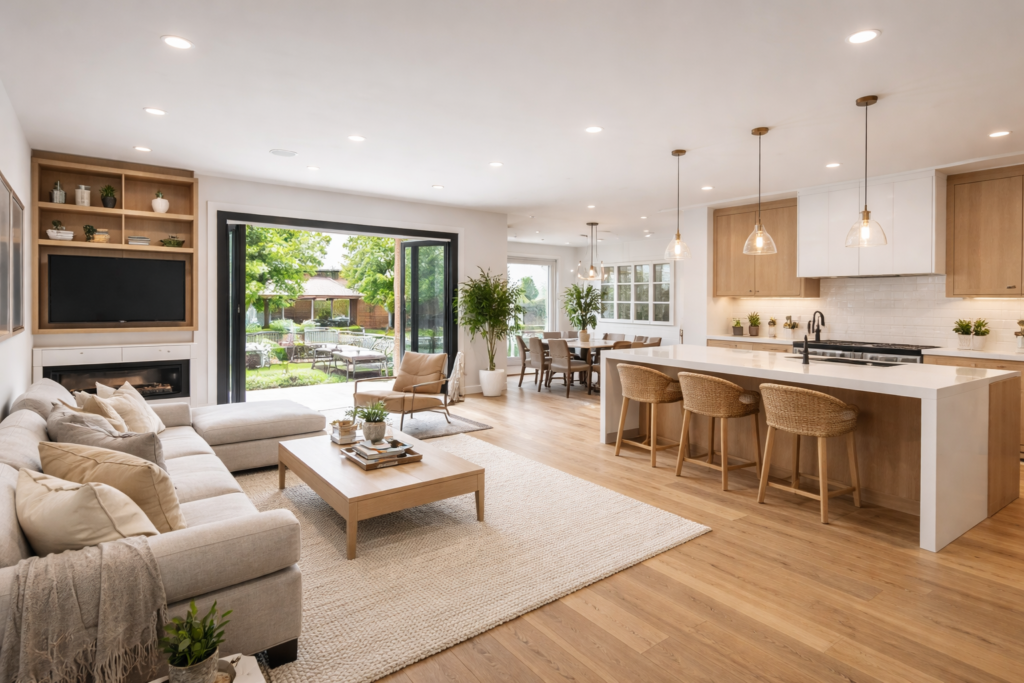
For a 1,000 square foot room, basement, or apartment-sized area, a portable unit is usually the correct choice.
Whole-house dehumidifiers connect to HVAC ductwork and are sized very differently. They are not based strictly on room square footage.
Most homeowners at this size are looking for a portable Energy Star dehumidifier.
Practical Recommendation
For most 1,000 square foot spaces:
Start with a 35–40 pint Energy Star unit.
Verify humidity with a hygrometer and adjust the unit to maintain around 50% relative humidity.
Avoid buying the smallest machine that technically “covers” the space. You want margin, not struggle.
Reality Check
A dehumidifier cannot fix bulk water intrusion, foundation leaks, or drainage problems.
If humidity stays high even when the unit runs continuously, the issue may not be capacity. The real problem could be air leakage, outside moisture infiltration, or a water source that needs to be addressed.
Dehumidifiers manage moisture. They do not eliminate its source.