
Winter dry air does not always show up as one obvious problem. It may show up as static shocks, dry-feeling skin, scratchy throats, irritated noses, wood movement, or bedrooms that feel harsh overnight.
The important part is not guessing. These symptoms can point toward low indoor humidity, but they do not prove it by themselves. Use them as clues, then confirm the room with a humidity meter.
Fast answer:
Common winter dry air problems include static shocks, dry-feeling skin, dry lips, scratchy throats, irritated noses, dry bedrooms, and seasonal wood movement. These problems are often linked to low indoor humidity, but the only way to know is to measure the room before adding moisture.

Why Winter Air Causes Dry Air Problems
Cold outdoor air brought indoors and heated can produce lower relative humidity, even when the heating system adds no moisture or removes none directly. Check a room humidity reading before attributing dry-feeling skin, eyes, or air to RH alone, and watch for condensation on cold windows if you add moisture. Technical references: EPA indoor humidity guidance EPA humidifier care.
Cold outdoor air usually carries less moisture than warm indoor air. When that cold air gets into the house and is heated, the temperature rises but the amount of moisture may not rise with it.
That is why a home can feel warm by temperature but still feel dry, sharp, static-heavy, or uncomfortable. The heating system may make the dryness easier to notice, but the deeper issue is usually cold, low-moisture outdoor air being warmed indoors.
For the full explanation, see why your house is dry in winter.
Common Winter Dry Air Problems
Dry air usually shows up as a pattern. One symptom may not mean much. Several symptoms happening during cold weather are a better clue.
| Problem | What it may suggest | Where to go next |
|---|---|---|
| Static shocks | Indoor humidity may be very low. | Measure the room and check dry air patterns. |
| Dry feeling skin or lips | Dry air may be contributing to comfort problems. | Check whether the room is actually dry. |
| Scratchy throat or dry nose | Dry bedroom air may be part of the issue. | Measure overnight areas first. |
| Wood gaps, creaks, or movement | Wood may be reacting to seasonal moisture loss. | Track humidity over several days. |
| Dry houseplants or dry rooms | The home may be losing moisture faster than it replaces it. | Compare rooms and connected spaces. |
| Low humidity meter reading | Dry air is no longer just a guess. | Consider the dry air or humidifier-sizing path. |
Static Shocks
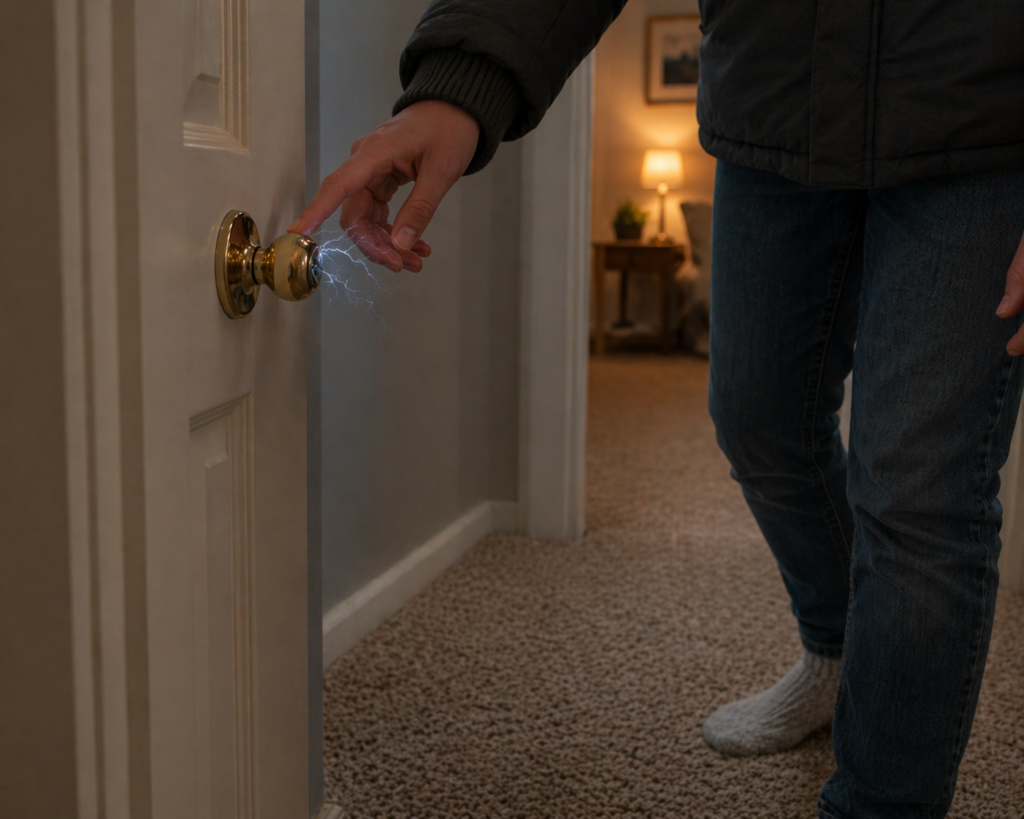
Static shocks are one of the more obvious winter dry air clues. They often show up around carpet, furniture, blankets, doorknobs, and electronics.
Low humidity allows electrical charges to build up more easily on surfaces. When you touch metal or another object, that charge can discharge as a small shock.
Static alone does not prove the whole house is too dry, but if it appears along with dry skin, dry lips, and low humidity readings, dry air is likely worth checking.
Dry Skin, Lips, and General Discomfort
Dry indoor air may contribute to skin that feels tight, dry, or uncomfortable, especially during winter heating season. Lips may also feel dry or chapped more often indoors.
Humidity is only one possible factor. Soaps, hot showers, detergents, fabrics, skin conditions, medications, allergies, and other health factors can also matter. This page is about the home environment, not medical diagnosis.
For the cautious skin-comfort guide, see why skin feels dry or itchy at home.

Dry Nose, Scratchy Throat, and Overnight Irritation
Some people notice dry noses, scratchy throats, mild hoarseness, or general irritation more during winter. Bedrooms often show this first because you spend several hours in one closed space overnight.
Dry air may be part of that pattern, especially if the bedroom humidity is low. But illness, allergies, dust, air quality problems, and other factors can create similar symptoms.
Use humidity as one clue, not the whole answer. Measure the bedroom before deciding that a humidifier is needed.
Caution:
A humidifier can change room humidity, but it is not a medical treatment. If symptoms are severe, persistent, unusual, painful, or concerning, get medical advice instead of relying on humidity changes alone.
Wood Floors, Furniture, Doors, and Trim
Wood reacts to moisture. When indoor humidity drops, wood floors, furniture, doors, trim, and cabinets may shrink slightly.
That can show up as small gaps, creaks, sticking changes, or seasonal movement. These changes are common in winter and are often reversible when seasonal humidity returns.
Large cracks, structural movement, or sudden damage should not be dismissed as normal dry air. But small seasonal movement can be one sign that the house is running dry.
Dry Bedrooms and Harsh Overnight Air
Bedrooms often feel worse than the rest of the home because people spend long stretches there with the door partly closed, heat running, and little fresh moisture being added.
A bedroom can feel dry even if the main living area seems acceptable. That is why measuring only one room can be misleading.
Check the bedroom, the main living area, and any rooms where symptoms are strongest. If only one room is low, a room-sized humidifier may be enough. If the connected living area is dry, the sizing decision changes.
Measure Before You Fix Anything
The symptoms matter, but the meter decides the next step. Without a humidity reading, dry air is still a guess.
Place a humidity meter in the room where the problem is most noticeable. Keep it away from heat registers, exterior doors, windows, bathrooms, kitchens, and humidifiers. Let the reading settle, then check it again at different times of day.

Measurement path:
Start with how to measure humidity in your home. If the reading is low, move into the dry air path. If the reading is normal, the problem may not be mainly humidity.
When It May Not Be Dry Air
Not every winter comfort problem is caused by low humidity. Adding moisture when humidity is already reasonable can create condensation or damp surfaces.
Look beyond dry air if you see:
- symptoms that continue year-round
- visible dust or strong air-quality issues
- musty odors or known moisture problems
- condensation forming on windows
- humidity readings that are already moderate
- symptoms that are severe, unusual, or not tied to the home
In those cases, a humidifier may not help and may make the house harder to manage.
Do Not Trade Dry Air for Damp Air
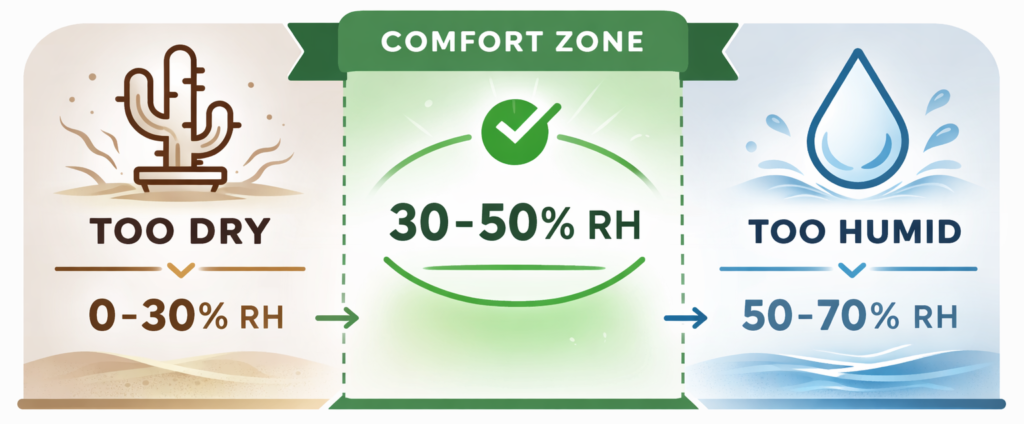
The goal is balanced humidity, not maximum humidity. If you add too much moisture during cold weather, windows may sweat, sills may stay damp, and musty areas may appear.
That is a different problem. Dry air is uncomfortable. Damp air can damage materials and encourage mold or mildew conditions.
If you are not sure whether your humidifier is the wrong size, compare what happens if a humidifier is too large with what happens if a humidifier is too small.
What to Do Next
Use this page as a symptom map. If several winter dry air problems match your home, measure the rooms where they happen most.
If the readings are low, move to the dry air guide. If the whole space is dry and you need equipment, size the humidifier by the room, layout, and connected air space.
| Your situation | Best next guide |
|---|---|
| You need to confirm the humidity level | How to measure humidity in your home |
| The whole home feels dry, harsh, or static-heavy | Air that is too dry at home |
| You want to know why it happens in winter | Why your house is dry in winter |
| You are deciding whether a humidifier makes sense | Do you need a humidifier? |
| You already know the air is dry and need equipment sizing | Humidifier sizing guide |
Treat Winter Dry-Air Symptoms as Clues and Confirm With a Meter
Common winter dry air problems include static shocks, dry-feeling skin, dry lips, scratchy throats, irritated noses, dry bedrooms, and seasonal wood movement.
These are clues, not proof. Measure indoor humidity before buying or running a humidifier. If the home is truly dry, controlled humidification may help comfort. If the humidity reading is already reasonable, look beyond dry air.
Related Guides
Measure first
Confirm whether the air is actually dry before choosing equipment.
Dry air path
Use this if the whole home feels dry, harsh, or static-heavy.
Winter cause
Learn why cold outdoor air becomes dry indoor air after heating.
Choose the right size
If humidity is truly low, size the humidifier by space and layout.