
Quick answer: You probably need a dehumidifier if your home feels damp or clammy, humidity stays above the comfortable range for long periods, musty odors return, windows or cold surfaces collect moisture, or a basement, crawlspace, garage, or lower level stays humid. A dehumidifier helps when the problem is moisture in the air. It does not fix leaks, standing water, poor drainage, wet building materials, or water entering the structure.
Not every home needs a dehumidifier, and not every moisture problem is solved by adding equipment.
A dehumidifier helps when the issue is excess moisture in the air. It can make damp rooms feel more comfortable, reduce lingering musty odors, and help stabilize humidity in basements, lower levels, enclosed storage areas, and humid seasonal conditions.
It is the wrong first fix when water is actively entering the home. If the real problem is a leak, standing water, wet building materials, poor exterior drainage, or foundation seepage, solve that water problem first. A dehumidifier can support drying afterward, but it should not be used as a bandage for water intrusion.
The best first step is simple: measure the humidity, look for the strongest moisture clues, and decide whether the problem is air moisture or a building-water problem.
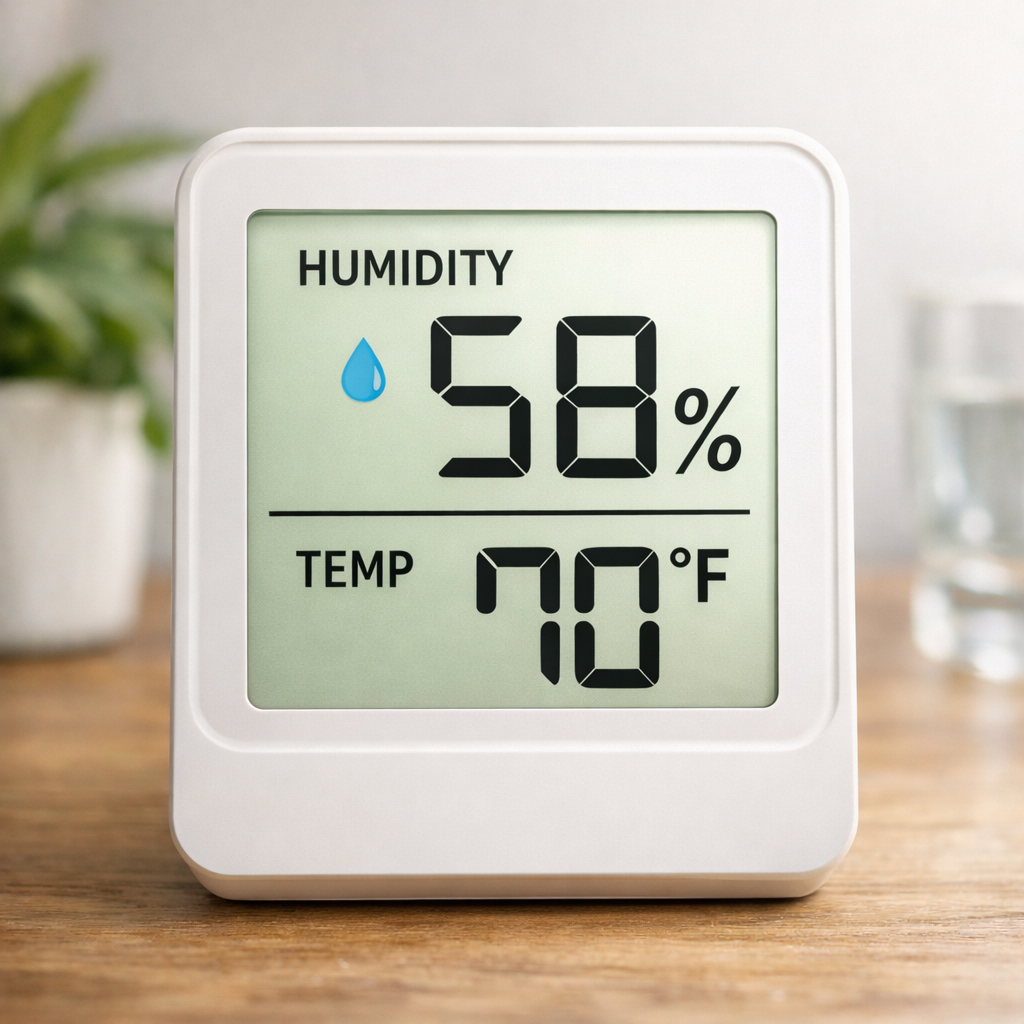
Quick check: signs you may need a dehumidifier
A separate humidity reading helps show whether dampness is persistent or temporary. Before buying a dehumidifier, check for plumbing leaks, rainwater entry, poor drainage, or other liquid-water sources; drying the air does not repair those problems. If moisture remains after the source is addressed, use the measured pattern and the room conditions to guide equipment selection. Technical references: EPA moisture and mold.
A dehumidifier is more likely to help when several damp-air clues show up together.
A dehumidifier may help if you notice:
- Air that feels damp, sticky, or clammy even when the temperature is normal
- A musty or stale smell that keeps coming back
- Windows, pipes, or cold surfaces collecting moisture
- Towels, laundry, or stored items taking too long to dry
- A basement, crawlspace-adjacent room, garage, or lower level that feels humid
- Indoor humidity readings staying high for hours or days
- Humidity that rises after rain, warm weather, cooking, showers, or poor ventilation
These signs point toward excess moisture in the air. They do not automatically prove that a dehumidifier is the right answer, but they are strong reasons to start measuring.
If you are still figuring out whether humidity is actually the problem, start with too much moisture in your home. If you need the measurement process first, use how to measure humidity in your home.
Measure before you buy
A room can feel uncomfortable for more than one reason. Heat, poor airflow, stale air, sun load, insulation problems, and humidity can all make a home feel wrong.
That is why a humidity meter is useful. It separates a real moisture problem from a comfort problem that only feels like humidity.
Measurement rule: Do not decide from one reading. Check the room when it feels normal, when it feels damp, after rain or showers, and after HVAC has been running. A pattern matters more than one number.
For most homes, indoor humidity is usually more comfortable around the middle range, not extremely dry and not persistently damp. Short spikes can be normal. Long periods of high humidity are the better reason to consider a dehumidifier.
| What you measure or notice | What it may mean | Best next step |
|---|---|---|
| One short high reading after showering, cooking, or opening windows | Temporary moisture spike | Ventilate, wait, and measure again. |
| Humidity stays high for hours or days | Likely air-moisture problem | Consider dehumidifier sizing. |
| Basement is humid while upstairs is normal | Localized lower-level moisture problem | Use basement-specific sizing guidance. |
| Whole home feels damp | Large-area humidity or HVAC/ventilation issue | Diagnose the whole-home pattern before buying. |
| Water is visible, standing, dripping, or entering during rain | Water source problem | Fix the water source first. |
| Humidity reading is normal but the room still feels bad | May not be a humidity problem | Check temperature, airflow, HVAC, and heat gain. |
When a dehumidifier makes sense
A dehumidifier makes sense when the home is structurally dry enough, but the indoor air is holding too much moisture.
That often happens in basements, lower levels, enclosed rooms, humid climates, coastal homes, garages, storage spaces, and older houses with limited airflow. It can also happen seasonally when outdoor air brings in more moisture than the home can comfortably manage.
A dehumidifier is a good fit when:
- The problem is damp air, not active water entry.
- Humidity stays high after normal short-term spikes should have cleared.
- The dampness is strongest in a room, basement, garage, or lower level.
- The space feels clammy even when the temperature is reasonable.
- Musty odors return even after cleaning and ventilation.
- You can place the unit safely with enough airflow and drainage access.
If you confirm high humidity and want to move forward, the next step is learning how big of a dehumidifier you need for your home.
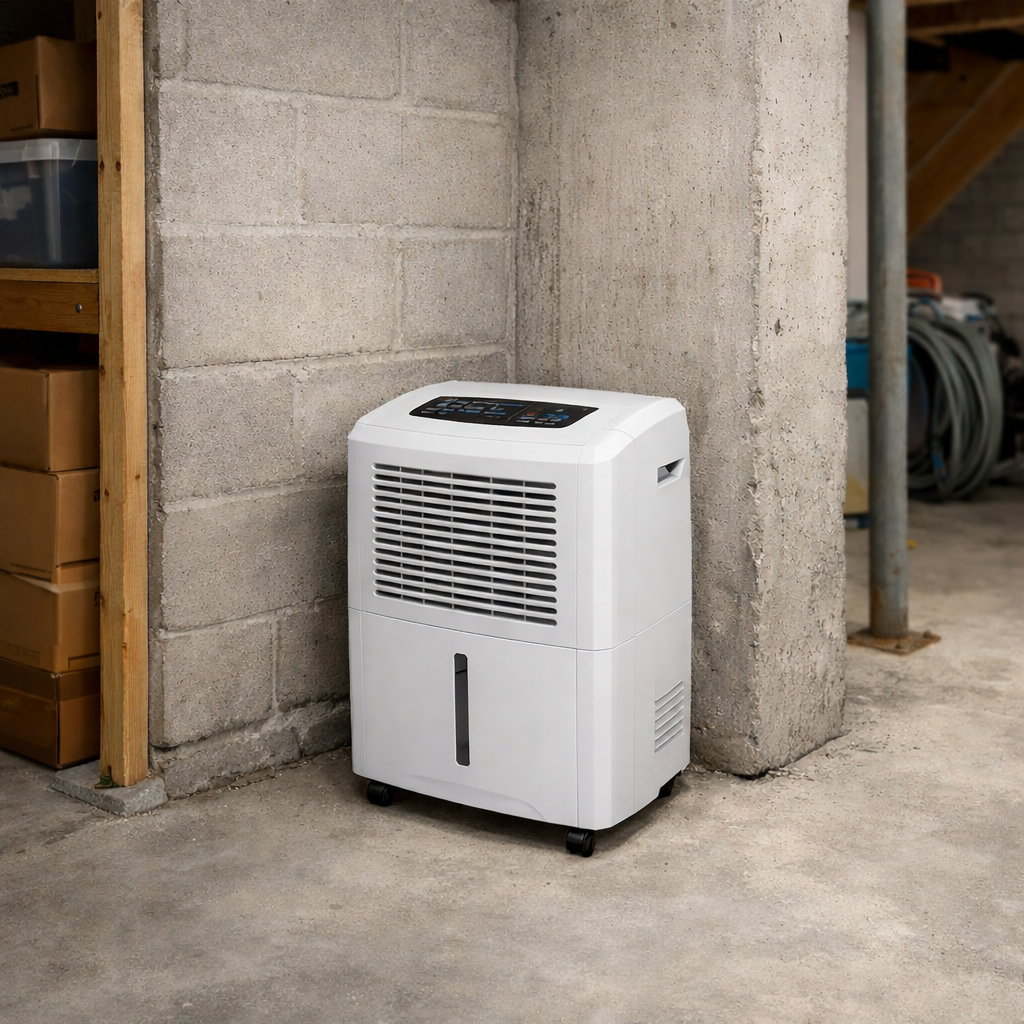
When a dehumidifier is not enough
A dehumidifier removes moisture from air. It does not stop water from entering the home.
If water is coming in faster than the unit can remove moisture from the air, the dehumidifier may run constantly while the real problem continues.
Fix water first: Do not rely on a dehumidifier to solve active leaks, standing water, foundation seepage, roof leaks, plumbing leaks, wet flooring, or drainage problems. Control the water source first, then use dehumidification if the air still stays damp.
- Active plumbing leaks need repair.
- Standing water needs removal and source control.
- Poor exterior drainage needs correction.
- Foundation seepage during rain needs a water-entry solution.
- Roof, siding, or flashing leaks need repair.
- Crawlspaces with exposed soil or missing vapor control may need crawlspace-specific work first.
If you are unsure why the house feels damp, review what causes high humidity in a house or humidity problems a dehumidifier will not fix.
Room problem or whole-home problem?
Before choosing equipment, decide whether the moisture problem is isolated or widespread.
A single damp bathroom, basement, crawlspace-adjacent room, laundry area, or garage may need a targeted solution. A whole home that feels humid in several rooms may need a larger sizing decision, HVAC review, ventilation review, or whole-home moisture diagnosis.
| Problem pattern | Likely path | Useful guide |
|---|---|---|
| One bathroom stays damp after showers | Ventilation and small-space moisture control | Small bathroom dehumidifier |
| Basement or lower level stays humid | Basement sizing and drainage | Basement dehumidifier size |
| Apartment feels damp | Apartment/room-size dehumidifier path | Dehumidifier for apartment |
| Several connected rooms feel damp | Whole-area sizing | Main dehumidifier sizing guide |
| Windows are wet but the room does not feel damp | Condensation diagnosis | Why are my windows wet? |
| Humidity readings vary by room | Measurement and sensor placement | How to measure humidity |
How big of a dehumidifier do you need?
Dehumidifiers are usually rated by how many pints of water they can remove from the air per day. Bigger areas, damper rooms, basements, and spaces with ongoing humidity load need more capacity.
Do not size only by square footage. A mildly damp 1,000 square foot living area does not need the same approach as a very damp 1,000 square foot basement.
Size after diagnosis: First confirm the problem is air moisture. Then identify the room or area. Then judge how damp it is. Only after that should you choose a pint range.
| Space type | Typical sizing concern | Next guide |
|---|---|---|
| Small room or apartment area | Do not oversize for one small space | 500 sq ft dehumidifier |
| Medium room or connected area | Match square footage and dampness level | 1000 sq ft dehumidifier |
| Large damp area | Capacity, drainage, and airflow matter more | Dehumidifier size chart |
| Basement | Dampness level and drain setup matter | Basement dehumidifier size |
| Unknown area size | Use calculator-style sizing | Dehumidifier size calculator |
Where a dehumidifier works best
Placement matters almost as much as size. A dehumidifier needs access to damp air and enough open space for airflow.
- Place the unit where humidity is strongest.
- Keep airflow clear around the intake and outlet.
- Keep doors open if you want to treat connected rooms.
- Use a drain hose or pump path if the unit will run often.
- Do not hide the unit in a tight corner or behind furniture.
- Keep the unit on a stable surface and follow the manufacturer’s instructions.
Basements, lower levels, crawlspace-adjacent rooms, garages, and enclosed storage areas are often better starting points than a random hallway. If the moisture is strongest in one room, start there.
Is a dehumidifier worth it?
A dehumidifier is worth considering when damp air is making the home uncomfortable or when humidity readings stay high long enough to affect the way rooms feel and dry out.
It may help reduce musty odors, improve comfort during humid seasons, protect stored items in basements or garages, and make damp rooms more livable.
The value drops when the real problem is not air moisture. If the unit is fighting leaks, water entry, poor drainage, or wet materials, it may run hard without solving the source.
Product paths if you are ready to check equipment
Use the product path that matches your stage. If you have not measured yet, start with a humidity meter. If you already know the home is too humid, move to dehumidifier sizing and drainage features.
Disclosure: This page may include affiliate links. If you buy through those links, HumidityAtHome may earn a small commission at no extra cost to you.
Product path: confirm humidity first
Use this if you are not sure whether the home is actually too humid. A simple indoor humidity meter is often the cheapest first step before buying a dehumidifier.
Product path: general home dehumidifiers
Use this after you confirm the problem is damp indoor air. Match the unit to room size, dampness level, and whether you need bucket use, drain hose use, or pump drainage.
Product path: frequent-use basement or lower-level setup
Use this if the unit will run often or in a basement. Drain hose support, pump options, auto restart, filter access, and practical placement matter more than decorative features.
Confirm High RH and the Moisture Source Before Buying
You need a dehumidifier when the home is holding too much moisture in the air and that moisture is lasting long enough to affect comfort, odors, drying, or room conditions.
You do not need a dehumidifier as the first answer when water is actively entering the home. Fix leaks, standing water, drainage, wet materials, and crawlspace water sources first.
Start by measuring humidity. Then identify where the moisture problem is strongest. If the problem is air moisture, choose a dehumidifier sized for that space and dampness level.
Next step: Start with how to measure humidity in your home. Then choose the right capacity using how big of a dehumidifier you need for your home.