
An apartment dehumidifier has to do more than match square footage. It has to fit the way apartment humidity actually behaves: limited ventilation, shared walls, bathrooms without strong exhaust, cooking moisture, closed bedrooms, no floor drain, neighbors below or above you, and a tank you may have to empty by hand.
For most apartments, the practical starting range is 20 to 35 pints. A small studio or one-room problem may be fine with 20 to 30 pints. A damp one-bedroom, ground-floor unit, basement apartment, or larger open layout usually belongs closer to 30 to 40 pints.
What Size Dehumidifier Does an Apartment Need?
Apartment size is a useful starting point, but room separation, outside-air entry, and the actual moisture source can change the selection. Use the dehumidifier size calculator for a capacity estimate and verify RH in the rooms served. A portable unit cannot correct a continuing building leak. Technical references: ENERGY STAR dehumidifiers ASHRAE Psychrometrics.
Most apartments do best with a 20 to 35 pint dehumidifier. Choose the lower end for a studio, bedroom, or mild seasonal humidity. Choose the higher end if the apartment is ground-floor, musty, poorly ventilated, open-layout, or regularly above 55% to 60% relative humidity.
Do not buy the smallest unit just because it looks apartment-friendly. In apartments, tank size, noise, placement, and how often you will empty the bucket matter almost as much as pint rating.
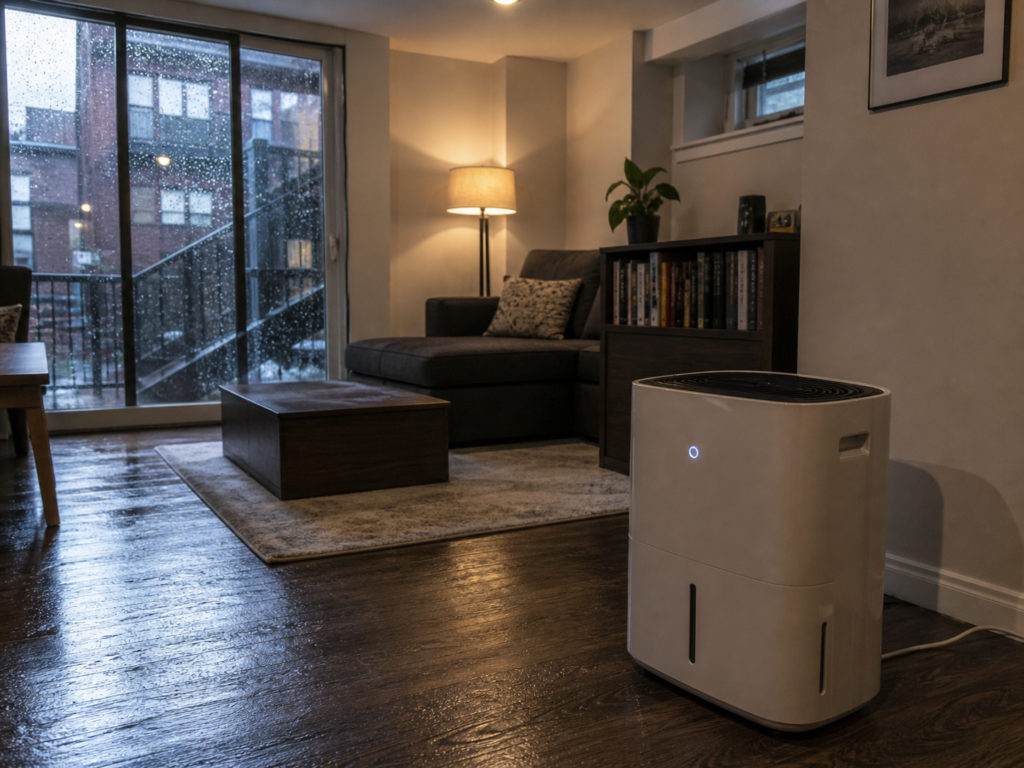
Apartment dehumidifier size chart
Use this as a starting point. Then adjust based on humidity readings, layout, musty smell, floor level, bathroom ventilation, and whether the unit will be drying one room or the whole apartment.
| Apartment situation | Starting size | Best fit |
|---|---|---|
| One bedroom, bathroom area, closet, or small zone | 20 to 30 pints | Use this when the humidity problem is limited to one part of the apartment. |
| Studio or small apartment under about 700 sq ft | 20 to 30 pints | Works when the apartment is mildly humid and not musty. |
| Typical one-bedroom apartment | 30 to 35 pints | Good starting point when the living area, bedroom, and bathroom all share the same damp-air problem. |
| Large one-bedroom, two-bedroom, or open layout | 35 to 40 pints | Use this when the unit must serve connected rooms or a larger open space. |
| Ground-floor, basement, musty, or above 60% RH | 35 to 50 pints | Size up, measure carefully, and watch for building or water-source problems. |
If the apartment falls between two rows, size by the moisture problem, not just the square footage. A damp 650 square foot ground-floor unit can need more help than a dry 1,000 square foot upstairs apartment.
Measure before buying if the answer is not obvious
Put a humidity meter in the main living area for a few days. Then check the bedroom, bathroom hallway, closet, and any room that smells musty or feels clammy.
If readings are usually near 45% to 50% RH, you may only need a smaller unit or better ventilation habits. If readings stay above 55%, or climb above 60%, treat the apartment as a real damp-air problem.
Why apartments are different from houses and basements
An apartment is not just a smaller house. It has fewer places to drain water, fewer places to hide equipment, and more limits on what you can change.
You may not control the bathroom fan, exterior walls, shared hallway air, laundry setup, windows, plumbing, or what is happening in the unit next door. That changes the dehumidifier decision.
| Apartment factor | Why it matters | What to do |
|---|---|---|
| No floor drain | You may rely on the bucket instead of continuous drainage. | Do not ignore tank size and carrying comfort. |
| Shared walls or building systems | Moisture may not be fully inside your control. | Measure first and document recurring high readings. |
| Small floor plan | The unit may sit in a living room, bedroom, or hallway. | Noise, footprint, and display brightness matter. |
| Bathroom moisture | Showers can raise RH quickly if exhaust is weak. | Measure after showers and ventilate before blaming the whole apartment. |
| Ground-floor or basement location | Cool surfaces and nearby soil can raise moisture load. | Size up sooner and watch for water-source problems. |
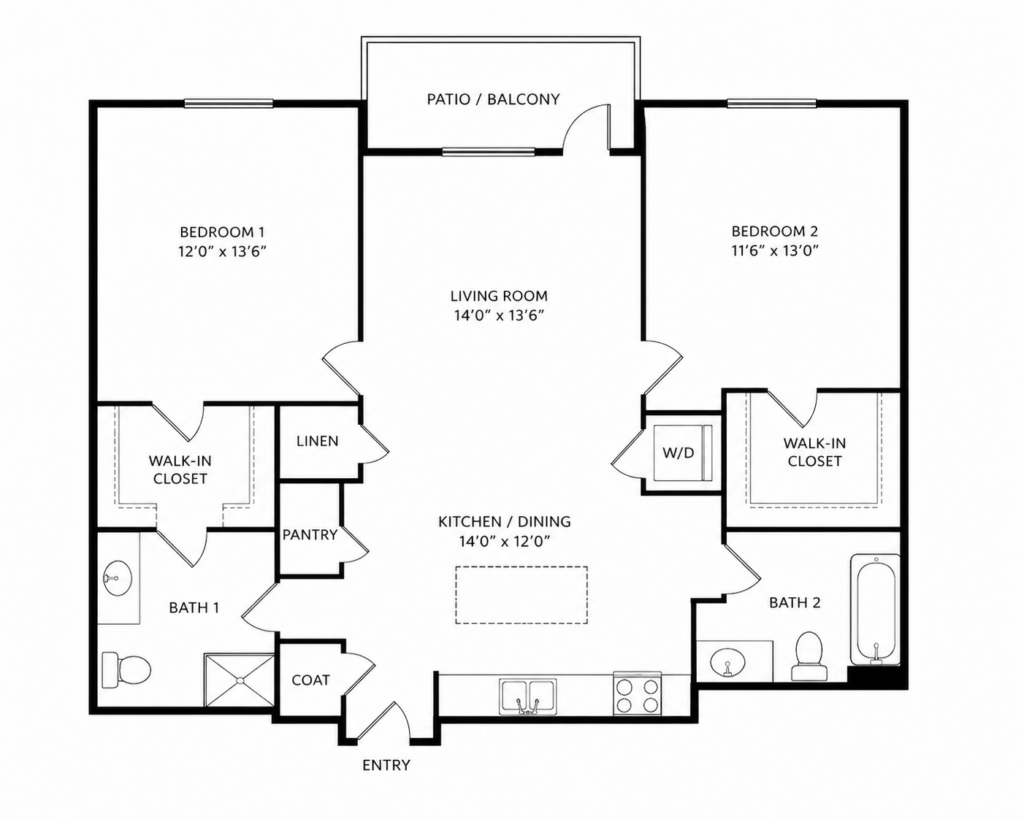
One room or the whole apartment?
This is the apartment sizing question that matters most. Are you drying one problem room, or are you trying to control humidity across the whole unit?
| Problem pattern | Likely approach | Why |
|---|---|---|
| Only one bedroom feels damp | Smaller unit near that room | You may not need to treat the full apartment. |
| Bathroom humidity spreads into hallway | Small to mid-size unit plus ventilation habits | The source may be shower moisture, not the whole apartment. |
| Living room and bedroom both stay humid | 30 to 35 pint unit | The problem is more apartment-wide. |
| Open layout stays humid everywhere | 35 to 40 pint unit | The unit is serving a larger connected air volume. |
| Bedroom stays damp with door closed | Open doors, improve airflow, or use a second smaller unit | Closed rooms can defeat one central unit. |
One larger unit is not magic. If the bedroom door stays closed all night, the living room dehumidifier may be doing honest work in the wrong air.
When a 20 to 30 pint dehumidifier is enough
A smaller apartment dehumidifier makes sense when the humidity problem is mild, local, or seasonal.
- The apartment is a studio or small one-bedroom.
- The problem is mostly one room or one end of the unit.
- Humidity only rises slightly above comfort range.
- RH usually returns near 45% to 50% after the unit runs.
- There is no strong musty smell.
- You are willing to empty the bucket regularly.
This is the light-duty apartment case. It is common, but it is not the same as a musty ground-floor apartment or a damp two-bedroom with poor airflow.
When to move up to 30 to 40 pints
For many apartments, 30 to 40 pints is the safer range. It gives the unit enough capacity to lower humidity without running nonstop, while still staying manageable in a living space.
- The apartment is around 700 to 1,200 square feet.
- More than one room feels damp.
- The apartment has an open living and kitchen area.
- The bathroom fan is weak or rarely used long enough.
- Windows show condensation.
- The apartment smells musty after rain or humid weather.
- RH stays above 55% or reaches 60% for long periods.
A slightly stronger unit that cycles is usually less annoying than a tiny unit that runs all day, fills the bucket, and still leaves the apartment feeling sticky.
Ground-floor and basement apartments need extra caution
Ground-floor and basement apartments can need more capacity than square footage suggests. Cooler surfaces, nearby soil, lower airflow, concrete, and building moisture can all raise the moisture load.
If your apartment behaves more like a basement than a normal upstairs unit, do not size it like a normal upstairs unit. Start closer to 30 to 40 pints, and consider 40 to 50 pints if the space is musty, partly below grade, or regularly above 60% RH.
Apartment reality check
A dehumidifier can control moisture in the air. It cannot fix a leaking window, plumbing problem, roof leak, wet wall, bad exterior drainage, or building-wide moisture issue.
If humidity stays high even with a properly sized unit, document RH readings, dates, weather, visible dampness, and musty odor. In a rental, that record is more useful than guessing.
Tank size matters more than people think
In a basement, continuous drain is often the clean answer. In an apartment, you may not have a floor drain, utility sink, or safe place to run a hose. That makes the bucket part of the buying decision.
A compact unit with a tiny tank may look perfect online. Then it fills every afternoon and becomes one more chore sitting in the corner.
| Feature | Why it matters in an apartment | What to look for |
|---|---|---|
| Tank size | Small tanks fill quickly in damp apartments. | Choose a tank you can realistically empty. |
| Auto shutoff | Prevents overflow when the bucket fills. | Non-negotiable for apartment use. |
| Bucket handle | You may carry the bucket to a sink daily. | Look for a stable handle and easy removal. |
| Noise level | The unit may sit where you live or sleep. | A lower fan setting can matter more than max capacity. |
| Auto restart | Useful after brief power interruptions. | Helpful if humidity control matters while you are away. |
| Drain hose option | Useful only if you have a safe place to drain. | Do not pay extra for a feature you cannot use. |
Where to place a dehumidifier in an apartment
Place the unit where it can pull damp air from the problem area and push dry air back into the apartment. Avoid hiding it behind furniture, inside a closet, or behind laundry baskets.
- For whole-apartment humidity, start near the main living area or hallway.
- For bedroom humidity, place it near the bedroom door or inside the room when needed.
- For bathroom moisture, run the bath fan first and place the dehumidifier outside the splash zone.
- For closet mustiness, improve airflow before assuming a dehumidifier inside the closet is the answer.
- Keep clearance around the air intake and exhaust.
If one room stays humid while the rest of the apartment improves, the issue may be closed doors and poor airflow, not just dehumidifier size.
Apartment dehumidifier buying paths
Disclosure: This page may include affiliate links. If you buy through those links, HumidityAtHome may earn a small commission at no extra cost to you.
Use these as buying paths, not automatic answers. Match the unit to the moisture pattern, not just the apartment label.
Product Path: small apartment or one-room humidity
Use this path for a studio, bedroom, bathroom-adjacent area, or mild seasonal humidity. Prioritize low noise, easy bucket handling, auto shutoff, and a size you can live with in the room.
Typical range: 20 to 30 pints.
Product Path: most one-bedroom apartments
Use this path when humidity affects the living room, bedroom, and bathroom area. Look for a compressor-based unit with a usable bucket, clear humidistat, auto restart, and enough capacity that it does not run constantly.
Typical range: 30 to 35 pints.
Product Path: budget compressor dehumidifier
Use this path when upfront price matters, but you still need a real compressor-based dehumidifier instead of a tiny thermoelectric unit. Watch bucket size, noise, warranty expectations, and real-world capacity.
Product Path: ground-floor, large, or musty apartment
Use this path when the apartment is ground-floor, partly below grade, musty, open-layout, or often above 60% RH. Prioritize capacity, bucket size, auto restart, washable filter, and noise on normal fan speed.
Typical range: 35 to 50 pints.
When a dehumidifier may not be the whole answer
A dehumidifier is useful when the apartment air is too humid. It is not a repair for every moisture problem.
- If windows leak, report the leak.
- If plumbing is dripping, fix the plumbing issue first.
- If bathroom ventilation is weak, run the fan longer and document the problem.
- If a wall, ceiling, or floor is wet, do not treat that as normal humidity.
- If humidity stays high across the apartment no matter what you do, the building may be part of the problem.
In apartments, the goal is often control, not perfection. Lower the humidity, reduce musty air, protect belongings, and know when the issue belongs to the building rather than the bucket.
Related apartment and humidity guides
How to Measure Humidity in Your Home
Start here if you do not know whether the apartment is actually above target humidity.
Too Much Moisture in Your Home
Use this if the apartment feels damp across several rooms.
How Big of a Dehumidifier Do I Need for My Home?
Use this for broader dehumidifier sizing logic.
What Size Dehumidifier for a Small Basement?
Use this if your apartment is ground-floor, below grade, or behaves more like a basement.
Why Are My Windows Wet?
Use this if window condensation is the main symptom.
FAQ
What size dehumidifier do I need for an apartment?
Most apartments need a 20 to 35 pint dehumidifier. A studio, bedroom, or mild humidity problem may only need 20 to 30 pints. A damp one-bedroom, larger apartment, ground-floor unit, or musty apartment often needs 30 to 40 pints or more.
Is a 20 pint dehumidifier enough for an apartment?
A 20 pint dehumidifier can work for a small apartment, bedroom, or mild humidity problem. It may be too small if the whole apartment is damp, the unit is ground-floor, or RH stays above 55% to 60%.
Is a 35 pint dehumidifier too big for an apartment?
No. A 35 pint dehumidifier is often a practical size for a one-bedroom apartment, open layout, or apartment with regular dampness. The bigger question is whether the noise, bucket size, and footprint fit the space.
Where should I put a dehumidifier in an apartment?
Place it near the main humidity problem while keeping airflow open around the unit. For whole-apartment humidity, a central living area or hallway often works better than a closed bedroom or closet.
Can I use a drain hose in an apartment?
Only if you have a safe and allowed place to drain the water. Many apartments rely on the bucket, so tank size and easy emptying matter more than they would in a basement.
What humidity level should an apartment stay at?
A practical target for many apartments is around 45% to 50% RH. If the apartment regularly stays above 55% or reaches 60% for long periods, treat it as a damp-air problem.