
A house can feel damp even when the humidity reading looks normal. A room can also feel clammy while a hallway thermostat reports a perfectly reasonable number.
That does not automatically mean the meter is wrong or that the whole house needs a dehumidifier. Cool surfaces, poor air movement, room-to-room differences, damp materials, HVAC operation, and sensor placement can all make one part of the house feel wetter than the central reading suggests.
The first step is to measure the room that actually feels damp and compare it with the rest of the house.
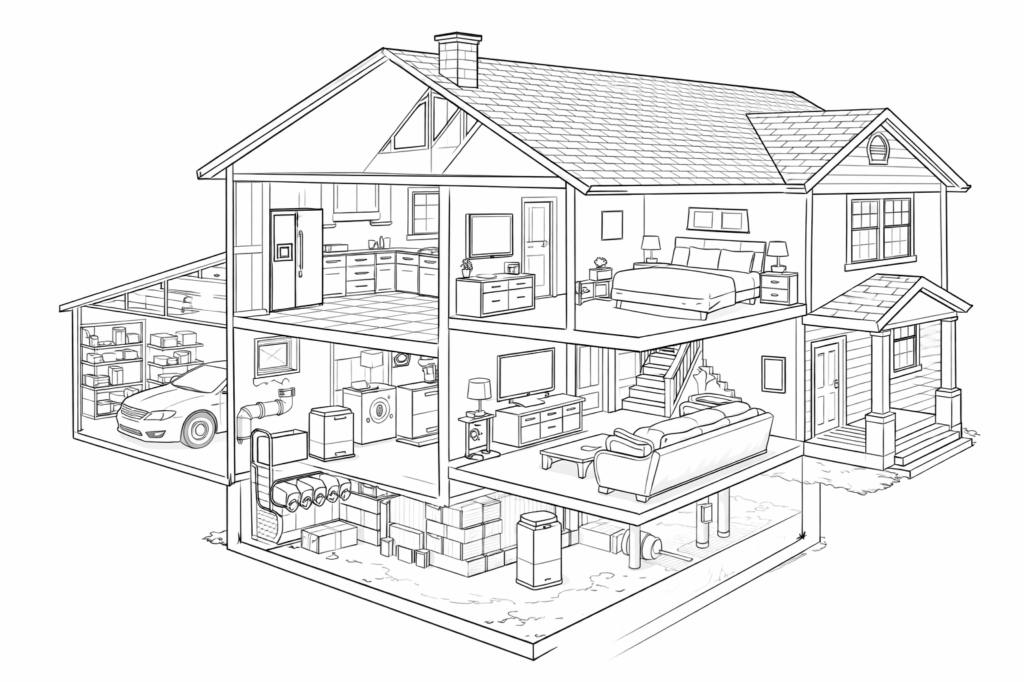
Quick Answer: Why Normal Humidity Can Still Feel Damp
If your house or one room feels damp at normal humidity, check four things before buying equipment:
- Measure the room itself. Do not rely only on a thermostat or sensor across the house.
- Compare temperature as well as RH. A cooler room can feel clammy at the same relative humidity as a warmer room.
- Check airflow and HVAC behavior. Closed doors, blocked vents, short cooling cycles, and poor circulation can leave one area uncomfortable.
- Inspect nearby surfaces and materials. Concrete, carpet, furniture, stored fabric, and cold windows can remain damp after the open air looks normal.
If several rooms repeatedly measure above about 55% to 60% RH, move to the broader too much moisture in your home diagnostic path.
What “Normal Humidity” Really Means
Normal indoor humidity is a useful range, not a guarantee that every room will feel comfortable.
Relative humidity changes with temperature. Two rooms can both show 45% RH while feeling completely different. A warm living room with moving air may feel comfortable. A cooler basement room with concrete walls and still air may feel clammy at the same reading.
A central reading can also hide local conditions. The thermostat may be in a dry hallway while a closed bedroom, basement corner, laundry room, or bathroom-adjacent area is cooler or wetter.
Use how to measure humidity in your home to compare stabilized readings from the room, the main living area, and the lowest level.
Why a Room Can Feel Damp Even When RH Looks Fine
Relative humidity alone does not determine whether a room feels comfortable. Air temperature, nearby cold or warm surfaces, air movement, and activity all affect comfort. If the room feels clammy while the meter shows an ordinary RH reading, look at those conditions before assuming that more dehumidification is the answer. Technical references: ASHRAE Psychrometrics EPA moisture and mold.
Use this table to separate a local comfort problem from genuinely high whole-house humidity.
| What you notice | Likely explanation | What to check next |
|---|---|---|
| Cool or clammy walls, floors, or windows | Surface temperature is lower than the open room air | Check exterior walls, glass, basement walls, and floor temperature |
| Room feels stale or heavy | Air movement is weak | Check supply vents, returns, closed doors, and furniture placement |
| Only one room feels damp | Humidity, temperature, or moisture is localized | Measure that room separately for several days |
| Damp feeling is worse overnight or early morning | The room cools while moisture remains | Compare morning and evening temperature and RH |
| Carpet, furniture, boxes, or fabric feel damp | Materials are releasing stored moisture slowly | Improve airflow and inspect materials near walls or floors |
| Thermostat says normal but room feels wrong | The central sensor does not represent the room | Move a separate meter into the problem area |
| Windows are wet | Cold glass is below the air’s dew point | Use the Why Are My Windows Wet? guide |
Cool Surfaces and Dew Point Can Make a Room Feel Clammy
Walls, windows, floors, and furniture can be cooler than the air in the center of the room. Air touching those surfaces cools too. As that local air gets closer to its dew point, the surface area can feel damp even though the meter several feet away still shows a normal room reading.
This is common in basements, north-facing rooms, rooms over garages, spaces with uneven insulation, and rooms with large exterior-wall areas.
Window condensation is the most visible example. The house may not feel broadly humid, but the glass is cold enough for moisture to collect. See Why Are My Windows Wet? for the window-specific diagnosis.
Caution: A dehumidifier can lower moisture in the air. It cannot repair a leak, warm a poorly insulated wall, correct drainage, or dry standing water. If the damp feeling follows one wall, corner, or floor area, inspect that location before treating it as a general humidity problem.
Poor Air Movement Can Make Normal Humidity Feel Wetter
Still air often feels heavier and clammy compared with gently moving air. Closed bedrooms, basement corners, closets, laundry areas, and rooms with blocked vents can feel damp without changing the whole-house reading much.
Check for simple airflow restrictions:
- A closed door separating the room from the return-air path
- A supply vent covered by furniture, curtains, or storage
- A return grille blocked by furniture or dust buildup
- Packed boxes, clothing, or furniture against cool walls
- A room that receives less conditioned air than nearby rooms
As a short test, open the door and improve gentle circulation for several hours. If the room feels better while the RH stays similar, airflow and temperature may be more important than moisture removal.
HVAC Operation Can Leave a House Cool but Damp-Feeling
Air conditioning removes moisture while the cooling coil is cold and the system is running. A house can reach the thermostat temperature before the system has run long enough to remove much moisture.
Short cooling cycles
If the system starts and stops frequently, it may cool the air near the thermostat without running long enough to dry the house evenly. Rooms farther from the thermostat may remain warmer, stiller, or damper-feeling.
Oversized air conditioning
An oversized system can lower temperature quickly and shut off. Fast temperature control is not always the same as good moisture removal. The result can be a cool house that still feels sticky or clammy.
Fan set to On instead of Auto
With some systems, continuously running the blower after the compressor stops can move moisture left on the cooling coil back into the house. The effect varies by equipment and climate, but it is worth comparing the Auto setting with continuous fan operation when the house feels damp.
Uneven duct or room airflow
A central thermostat cannot correct a room that receives too little supply air or has no clear return path. Temperature differences between rooms can change how the same RH reading feels.
If the air conditioner is running heavily but the house still feels damp, use Can a Dehumidifier Help When Your AC Can’t Keep Up? before assuming a larger dehumidifier is automatically the answer.
Moisture May Be Localized Instead of Whole-House
Humidity does not spread evenly through every home. One room can feel damp because moisture is being added nearby or because that room is cooler and less ventilated than the rest of the house.
Common localized sources and conditions include:
- Frequently used bathrooms
- Laundry areas and drying clothing
- Basements and crawlspace-adjacent rooms
- Rooms with cool exterior walls
- Closed bedrooms with weak airflow
- Storage packed against masonry or exterior walls
- Minor plumbing, roof, window, or foundation leaks
If one room repeatedly measures higher, stays cooler, or dries more slowly than the rest of the house, treat it as a local problem first.
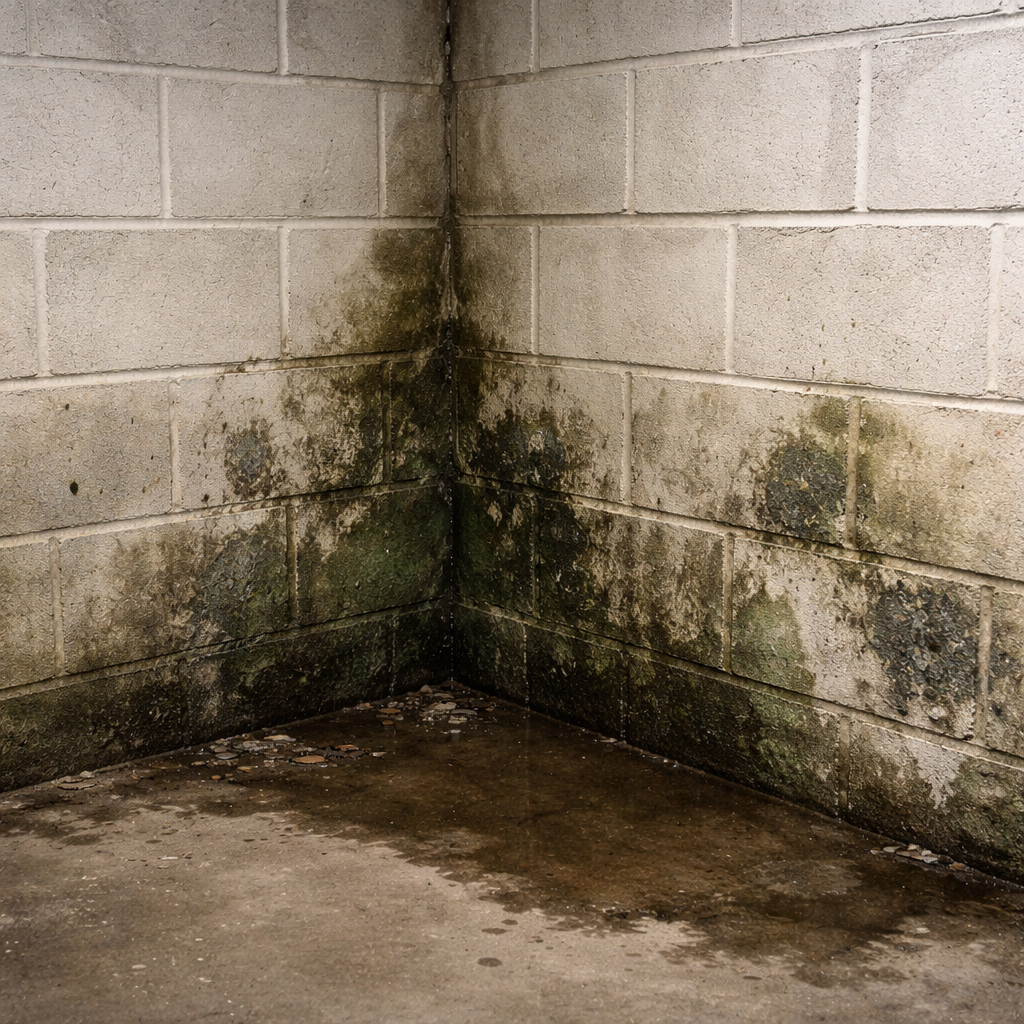
Fabrics and Building Materials Can Stay Damp After the Air Improves
Concrete, masonry, carpet, rugs, cardboard, stored fabric, upholstered furniture, and wood can absorb moisture during humid weather. They can continue releasing that moisture after the room-average RH starts moving back toward normal.
This is why a basement or closed room may still feel damp after a rainy stretch even when the meter shows improvement.
Improve airflow around damp materials, move storage away from cool walls, dry wet items separately, and watch whether the room returns to the same pattern after each rain or seasonal change.
Your Humidity Reading May Not Represent the Problem Area
A hallway thermostat, smart speaker, wall control, or meter in a sunny room may not describe the room that feels damp.
Readings can be biased by:
- Distance from the problem room
- Supply or return-air movement
- Direct sunlight
- Windows and exterior walls
- Nearby bathrooms, kitchens, or appliances
- Moving the meter without allowing it to stabilize
- Normal differences between consumer sensors
Measure the Room That Feels Damp
Place a humidity meter in the problem room about 4 to 5 feet above the floor and away from vents, windows, exterior doors, and direct sunlight. Allow the reading to stabilize before recording it.
Check morning and evening for at least three days. Compare the room with the main living area and lowest level.
Use How to Measure Humidity in Your Home for the full method. For meter types and features, use Best Indoor Humidity Meters for Home Use.
A Measure-First Decision Path
| What the readings show | Likely situation | Next move |
|---|---|---|
| The problem-room reading changes after better placement or stabilization | The original reading was not representative | Continue measuring from the corrected location |
| One room is cooler or more humid than the rest | Local airflow, surface, or moisture issue | Inspect that room before choosing whole-house equipment |
| Readings rise during rain, mild weather, or seasonal HVAC gaps | Seasonal or weather-driven condition | Track the pattern and improve ventilation or drying as appropriate |
| Several rooms repeatedly stay above 55% to 60% RH | Genuine broader moisture problem | Use Too Much Moisture in Your Home |
| The AC runs but the house remains cool and clammy | Cooling and moisture removal may not be matching the load | Use Can a Dehumidifier Help When Your AC Can’t Keep Up? |
| Windows are wet while the house otherwise feels normal | Cold glass and dew point are driving local condensation | Use Why Are My Windows Wet? |
What to Do Next
- If only one room feels damp: check that room’s temperature, airflow, surface conditions, nearby moisture sources, and meter placement.
- If the room reads higher than the rest of the house: treat it as localized humidity and find the source before sizing equipment.
- If the basement is the main problem: measure the basement separately and use the basement sizing path only after ruling out leaks or water entry.
- If several rooms stay damp: use the whole-house moisture diagnostic.
- If the AC runs but comfort remains poor: compare temperature, RH, cycle length, fan setting, and room airflow before adding equipment.
Not sure the reading is accurate?
Use the complete room-placement and tracking method.
The AC is running but comfort is poor?
Check whether cooling and moisture removal are mismatched.
Normal RH but a Damp-Feeling Room: What to Check Next
A damp-feeling house or room does not always mean the whole home has high humidity. One area may be cooler, stiller, wetter, or measured differently from the central thermostat location.
Measure the room that feels damp, compare it with the rest of the house, and watch the pattern for several days. If multiple rooms repeatedly measure high, move toward whole-house moisture diagnosis. If the readings look normal but the room still feels clammy, check temperature, airflow, HVAC operation, cool surfaces, and moisture-holding materials before blaming the meter or buying a dehumidifier.