
A dehumidifier removes moisture from indoor air. That is all it does.
That sounds obvious, but it is the mistake behind a lot of bad purchases. Some home moisture problems are caused by water entering the structure, cold surfaces creating condensation, trapped moisture inside materials, poor drainage, or weak ventilation at the source.
A dehumidifier may lower the humidity reading. It cannot repair the condition that keeps feeding the problem.
This page is about knowing when a dehumidifier is the wrong first fix.
Quick Answer
A dehumidifier can help when the problem is moisture in the air. It will not solve the problem when water is entering as liquid, forming on cold surfaces, trapped inside wet materials, or being produced faster than the space can vent.
The simple test is this: would the problem continue even if the air felt drier?
If the answer is yes, the dehumidifier may only be treating the symptom.
Check the Pattern Before You Buy
Before buying or upsizing a dehumidifier, look at the pattern. A broad, seasonal, measured humidity problem is different from a leak, stain, cold wall, wet window, or water problem that returns after every storm.
Use a humidity meter in the problem area and compare it with another part of the home. If the readings are high across the space and there is no active water source, a dehumidifier may help. If the problem is localized, wet, stained, or tied to rain, start with the source.
The Main Rule
A dehumidifier is an air-control tool. It is not a building repair, a leak repair, a drainage fix, an insulation upgrade, or a mold remediation tool.
That does not mean dehumidifiers are useless. It means they work best after the source problem is understood.
| Problem pattern | Will a dehumidifier fix it? | Better first step |
|---|---|---|
| High humidity across a basement or room | Often, if no active water source exists | Measure RH, then size correctly |
| Water enters during rain | No | Find and stop the water path |
| Window or pipe condensation | Maybe partly | Check humidity and cold surface temperature |
| Wet carpet, drywall, or insulation | Not by itself | Remove or dry wet materials properly |
| Bathroom steam trapped after showers | Only after the fact | Improve exhaust or source ventilation |
| Old musty odor from stored items | Maybe slightly | Remove odor source and improve airflow |
Bulk Water Intrusion
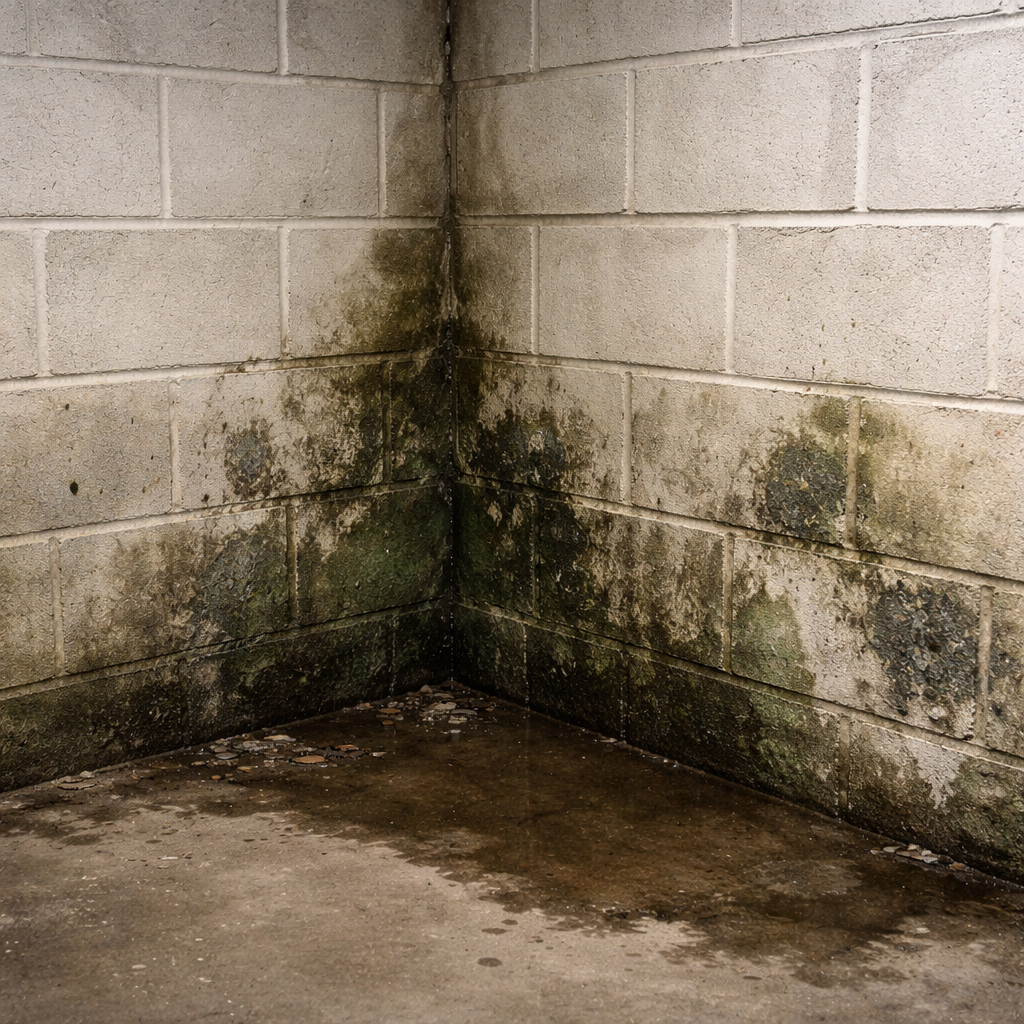
If water is entering the home as liquid, humidity control is not the solution.
Common examples include foundation leaks, wall seepage during heavy rain, standing water after storms, plumbing leaks, and water entering around doors, windows, or utility penetrations.
A dehumidifier can help dry the air after water shows up, but it cannot stop water from entering. If the source is still active, the space will keep getting wet.
Do not size a dehumidifier around active water entry. Liquid water needs a source fix first. A dehumidifier can support drying after the source is controlled.
Roof, Siding, or Flashing Leaks
Moisture stains on ceilings or walls are often blamed on indoor humidity. In many cases, they come from outside.
Localized staining, bubbling paint, drywall damage after rain, wet spots near rooflines, and stains that show up in one specific area often point to a leak path instead of a whole-room humidity problem.
Indoor humidity usually affects broad areas. A leak often affects one path, one wall, one ceiling area, or one seam.
A dehumidifier will not fix failed flashing, damaged siding, roof leaks, or water moving through the building envelope.
Condensation on Cold Surfaces
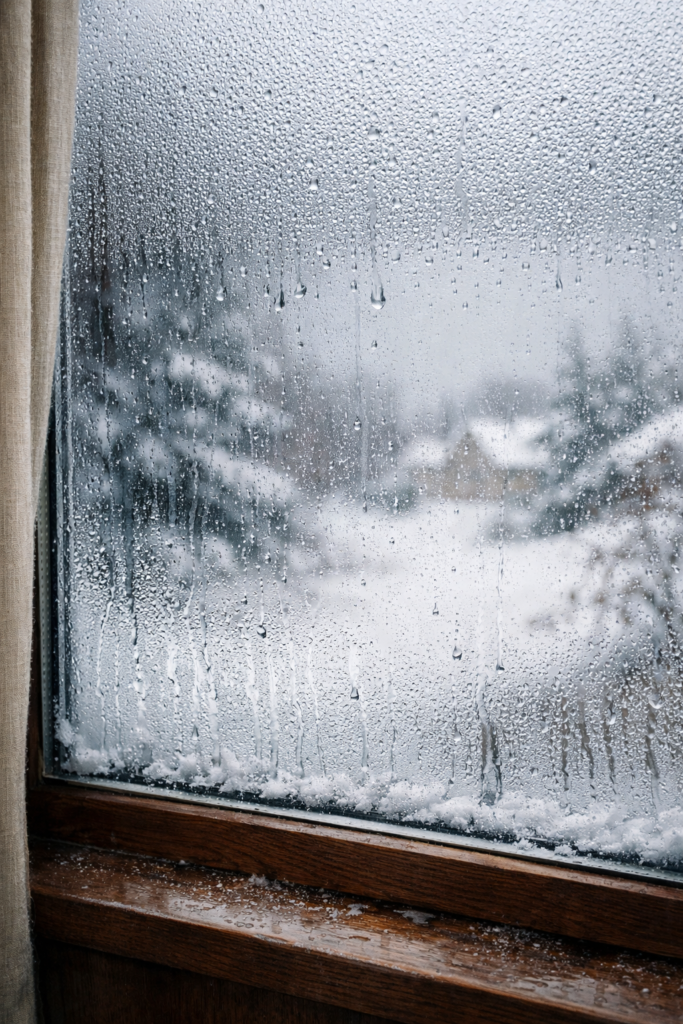
Water on windows, pipes, or walls is often blamed on high humidity alone.
Condensation happens when warm indoor air touches a surface cold enough for moisture to drop out of the air. Lowering humidity can reduce how much water forms, but it does not fix the cold surface.
Typical examples include sweating windows in winter, condensation on uninsulated pipes, cold basement walls collecting moisture, damp spots behind furniture, and moisture on poorly insulated surfaces.
A dehumidifier may reduce the amount of condensation, but the real issue may be insulation, air leakage, surface temperature, or window performance.
Poor Drainage Around the Home
If water collects around the foundation, indoor moisture problems will continue.
Common contributors include clogged gutters, missing gutters, downspouts discharging near the house, soil sloping toward the foundation, low spots that hold water after storms, and poor drainage near basement or crawlspace walls.
A dehumidifier can remove moisture after it reaches the indoor air. It cannot move water away from the house.
If the outside drainage keeps feeding moisture into the structure, the indoor humidity problem will keep coming back.
Ventilation Problems
Some moisture problems happen because damp air is not being removed where it starts.
Typical situations include bathrooms without working exhaust fans, showers that leave moisture in the room, cooking moisture trapped in the kitchen, laundry areas with poor airflow, clothes drying indoors, and crawlspaces or basements with stale air pockets.
A dehumidifier can remove moisture after it spreads through the space. That is less effective than exhausting moisture near the source.
This matters most in bathrooms, kitchens, laundry rooms, and tight spaces where moisture is produced in short bursts.
Moisture Trapped in Building Materials
Wood, concrete, drywall, carpet, insulation, and masonry can hold moisture internally.
When those materials are wet, they can release moisture back into the air over time. That makes the room feel like it never dries out, even when the humidity reading improves for part of the day.
This can happen after basement seepage, a plumbing leak, a flood, long-term condensation, wet carpet, damp framing, wet drywall, or moisture held in concrete and block walls.
A dehumidifier can help dry the surrounding air, but it cannot instantly dry saturated materials. If wet materials remain in place, the room may keep reloading the air with moisture.
Mold or Damage From Past Moisture Events
A dehumidifier cannot undo existing damage.
If mold, staining, swollen trim, soft drywall, or damaged materials came from an earlier leak or flood, lowering humidity may help reduce future moisture stress. It will not remove what is already there.
A room can have two separate problems at the same time: a current humidity problem and damage left behind by an older water problem. A dehumidifier may help with the first. It does not erase the second.
Odors That Are Not Driven by Humidity
Not every musty or stale smell is caused by high humidity.
Old building materials, stored items, damp cardboard, fabric, dry plumbing traps, poor air circulation, old carpet, or hidden contamination from a past leak can all create odor problems that a dehumidifier will not remove.
Lowering humidity can make some odors less noticeable, especially when damp air is part of the issue. But if the odor source is still present, a dehumidifier will not remove it.
When a Dehumidifier Does Make Sense
A dehumidifier works best when the moisture problem is mainly in the air and the space is reasonably controlled.
It is more likely to help when indoor humidity is consistently high, the space is enclosed enough to dry, there is no active water entry, the temperature is stable enough for the unit to operate, wet materials are not reloading the room, and the problem improves when air moisture is reduced.
In that situation, a dehumidifier can be the right tool. It lowers the moisture load in the air and helps the space feel drier.
But it should come after the source problem is understood.
Quick Diagnostic Check
If the problem gets worse after rain, appears in one location, leaves stains, forms on cold surfaces, or returns quickly after drying, the issue may not be indoor humidity alone.
If the problem is broad, seasonal, measured on a humidity meter, and not tied to a leak or visible water source, a dehumidifier is more likely to help.
The point is not to avoid dehumidifiers. The point is to avoid asking one to fix a building problem.
Bottom Line
A dehumidifier is an air-control tool, not a building repair.
It can lower indoor humidity when moisture is in the air. It cannot stop water intrusion, fix leaks, warm cold surfaces, repair drainage problems, remove existing damage, or dry saturated materials instantly.
If you are unsure whether your issue is actually humidity, start by measuring the room. If you already know the air is too damp and there is no active water problem, then move on to dehumidifier sizing.
Last reviewed: PH4 July 1, 2026.