
High indoor humidity can have different causes depending on the home, the season, and the local climate. In many houses, it is the result of several small factors working together rather than one single problem.
Humidity problems often start gradually. A home may feel slightly damp, windows may collect moisture, or certain rooms may begin to smell musty. Understanding where moisture comes from is the first step toward deciding whether you may need a dehumidifier for your home.
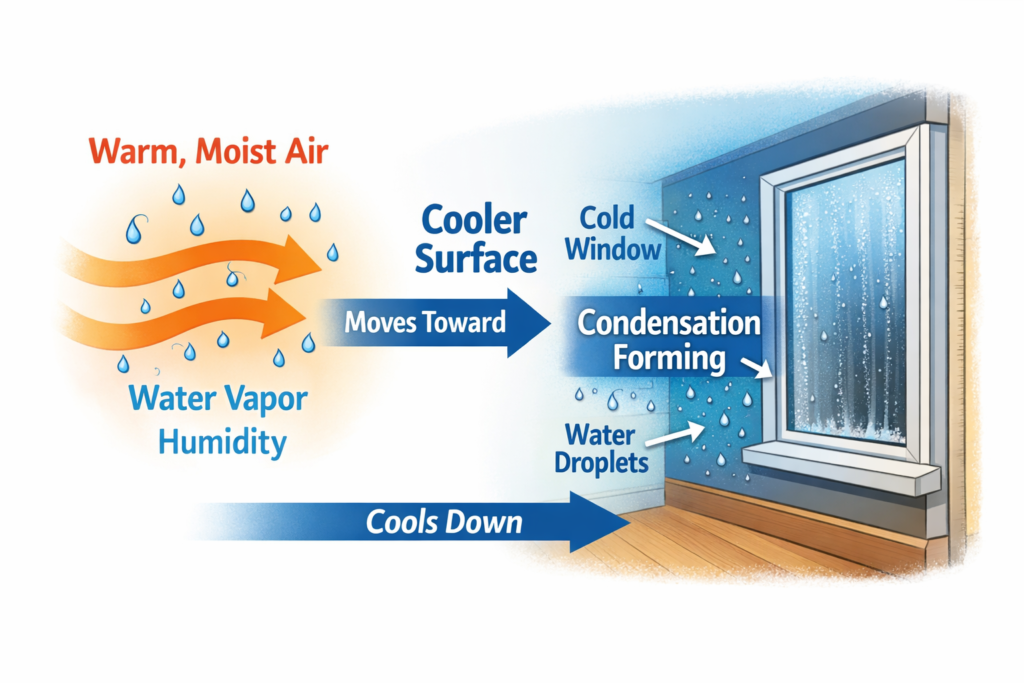
What High Humidity Means Indoors
Humidity refers to the amount of moisture in the air. When indoor humidity rises above normal levels, the air can begin to feel damp, heavy, or stale.
In many homes, moisture comes from everyday living combined with how the house is built and ventilated. Air movement, building materials, and temperature differences all influence how moisture behaves indoors.
If you are unsure whether humidity levels are actually elevated, start by measuring humidity in your home.
Outdoor Air and Weather Conditions
Outdoor air often plays a larger role than homeowners expect.
Warm air can hold more moisture than cool air. During humid weather, outside air entering the home may already contain a large amount of moisture.
Common contributors include:
- Warm air holding more moisture than cooler air
- Humid outdoor air entering through windows and doors
- Small air leaks around the building envelope
- Rainy or muggy weather raising moisture levels over time
In humid climates or during certain seasons, outdoor air alone can contribute significantly to indoor humidity.
Everyday Household Activities
Normal daily activities also add moisture to the air.
Activities that commonly release moisture include:
- Cooking, especially boiling or simmering food
- Showering and bathing
- Washing dishes
- Drying clothes indoors
Individually these activities may seem minor, but together they can add surprising amounts of moisture to indoor air.
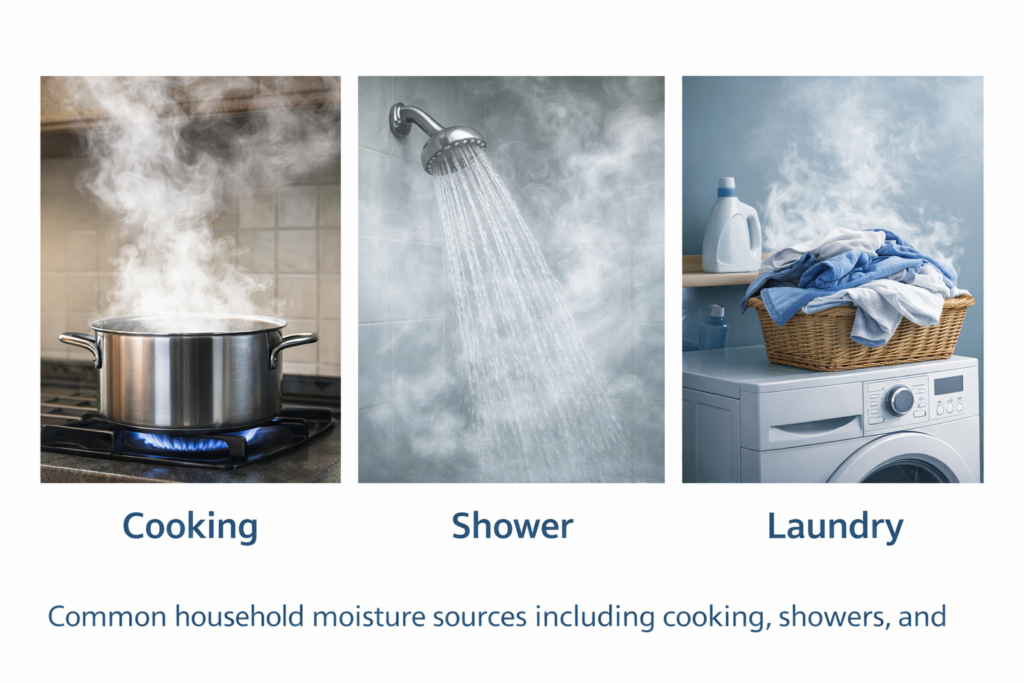
Bathrooms, Kitchens, and Laundry Areas
Rooms that regularly use water tend to be the most common moisture sources.
Bathrooms without working exhaust fans can allow steam to linger long after showers end. Kitchens where cooking vapors are not vented outdoors can slowly raise humidity levels throughout the house. Laundry rooms may add moisture if warm air cannot circulate or vent properly.
Moist air from these spaces often spreads beyond the room where it was created.
Basements and Crawl Spaces
Lower areas of a home frequently contribute to indoor humidity.
Moisture may move through concrete or masonry surfaces even when they appear dry. Damp soil beneath the home can release moisture upward, and cooler temperatures in lower levels may cause moisture to linger longer.
Because of these factors, basements often become a major source of indoor humidity even without visible water problems.
If your home feels damp despite moderate humidity readings, it may help to read why your house feels damp even at normal humidity.
Air Leaks and Poor Sealing
Small openings in a house can allow humid outdoor air inside.
These may include:
- Gaps around doors and windows
- Leaks in ductwork
- Unsealed pipe or wiring penetrations
During humid weather, these openings allow moisture to enter the home continuously.
Ventilation and Airflow Issues
Air movement strongly affects how humidity behaves indoors.
Limited fresh air exchange can trap moisture inside the home. Poor circulation may allow damp air to settle in certain rooms. Closed-off spaces may remain humid long after other areas have dried out.
In many homes, moisture builds up simply because it has nowhere to go.
Seasonal Changes and Temperature Differences
Humidity levels often shift with the seasons.
Summer warmth can raise indoor moisture levels because warm air holds more moisture. Cooler surfaces inside the home can cause moisture to linger in the air or lightly collect on walls and windows.
Transitional seasons such as spring and fall may combine mild temperatures with high humidity, making homes feel damp even without obvious water problems.
A Reality Check
High humidity in a house is often caused by a mix of weather, daily living, and how air moves through the home. In many cases there is no single source of moisture, just several smaller contributors adding up over time.
If humidity levels stay high or begin affecting comfort, the next step is deciding whether you need a dehumidifier for your home.