
Dry indoor air is common in many homes, especially during colder months. It often changes with the season, weather, and how a house is used, so the experience can vary widely from one home to another.
In most houses, dry air develops gradually. You may notice static electricity, dry skin, irritated sinuses, or wood floors and furniture shrinking slightly. These symptoms usually reflect how outdoor air, heating systems, and everyday household conditions interact.
If you want to understand whether dryness is affecting your home, it helps to start by recognizing air that’s too dry in your home and how it typically appears.
IMAGE PLACEMENT
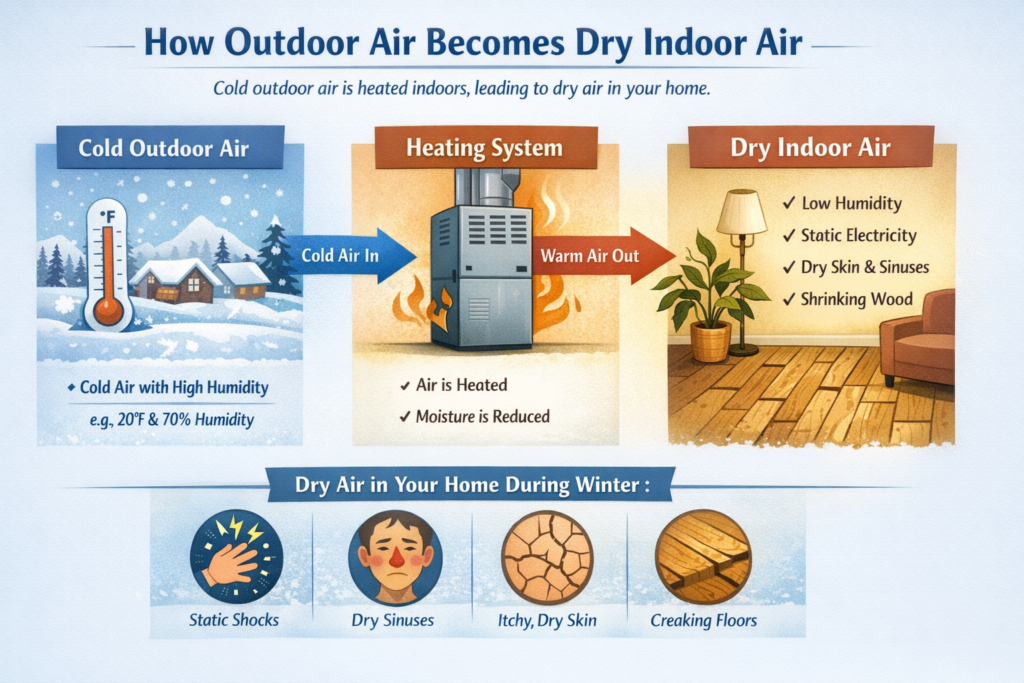
Common Reasons Indoor Air Feels Dry
Dry air usually does not come from a single cause. In many homes, it results from several small factors working together.
Seasonal weather, heating systems, air leaks, and household habits all influence how much moisture remains in the air inside a home.
Cold Outdoor Air and Heating
Cold outdoor air naturally holds less moisture than warm air. When that air enters a home and is heated, its relative humidity drops further.
This is why indoor air often feels driest during winter. The heating system is not removing moisture directly, but warming the air reduces the relative humidity level.
This process happens in almost every home during colder weather.
Heating Systems Running for Long Periods
Furnaces, heat pumps, and baseboard heaters warm the air but do not add moisture.
When heating systems run continuously during cold weather, indoor air can gradually become drier over time.
Long heating cycles during cold snaps often make dryness more noticeable.
Air Leaks and Drafts
Small gaps around doors, windows, attics, and basements allow outdoor air to move in and out of the house.
In winter, incoming air often contains very little moisture. As this air enters the home and warms up, it can contribute to dry indoor conditions.
Air leaks do not always cause noticeable drafts, but they can still affect humidity levels.
Low Natural Moisture Sources
Some homes simply produce less indoor moisture than others.
This can happen when:
- Fewer people live in the home
- Cooking is minimal
- Showers are short or well ventilated
- Houseplants are limited
In these situations, the home may not generate enough moisture to offset what is lost through ventilation or air exchange.
IMAGE PLACEMENT
Ventilation and Exhaust Fans
Bathroom fans, kitchen range hoods, and clothes dryers remove air from the home.
While ventilation is necessary for indoor air quality, it also carries moisture outside. When the replacement air entering the home is cold and dry, indoor humidity levels can drop.
This is especially noticeable during winter when outdoor air contains very little moisture.
Home Design and Construction
Even newer or well-sealed homes can experience dry air.
Modern construction reduces uncontrolled air leaks, but indoor air can still dry out when heating systems run steadily and outdoor air remains cold for extended periods.
In these situations, dryness is usually related to seasonal conditions rather than a flaw in the building.
Weather Patterns and Climate
Regional climate plays a role in indoor humidity.
Homes in colder or naturally dry climates often experience more noticeable winter dryness than homes in warmer or more humid regions.
Short-term weather patterns can also influence how dry the air feels from week to week.
If dry air symptoms begin to affect comfort, the next step may be deciding whether you need a humidifier for your home.
Reality Check
Dry indoor air is usually a comfort issue rather than a defect in the home.
In many houses, winter dryness reflects normal seasonal conditions combined with everyday heating and ventilation. Understanding what contributes to dry air helps homeowners decide whether any adjustments or humidity control solutions are necessary.