
Quick answer: Air that is too dry at home usually shows up as static shocks, dry-feeling rooms, cracking wood, irritated comfort, and low humidity readings during heating season. Do not guess from symptoms alone. Measure indoor relative humidity first, then decide whether a humidifier, better room control, or no equipment is the right answer.
Dry indoor air is not always dramatic. Most of the time, it shows up as a collection of small winter problems that keep repeating.
You may notice more static shocks, dry-feeling rooms, scratchy air, shrinking wood trim, gaps in flooring, or rooms that feel uncomfortable even when the temperature is normal. Those signs can point toward dry air, but they do not prove it by themselves.
The number that matters is indoor relative humidity. Once you know that number, the rest of the decision gets much easier.
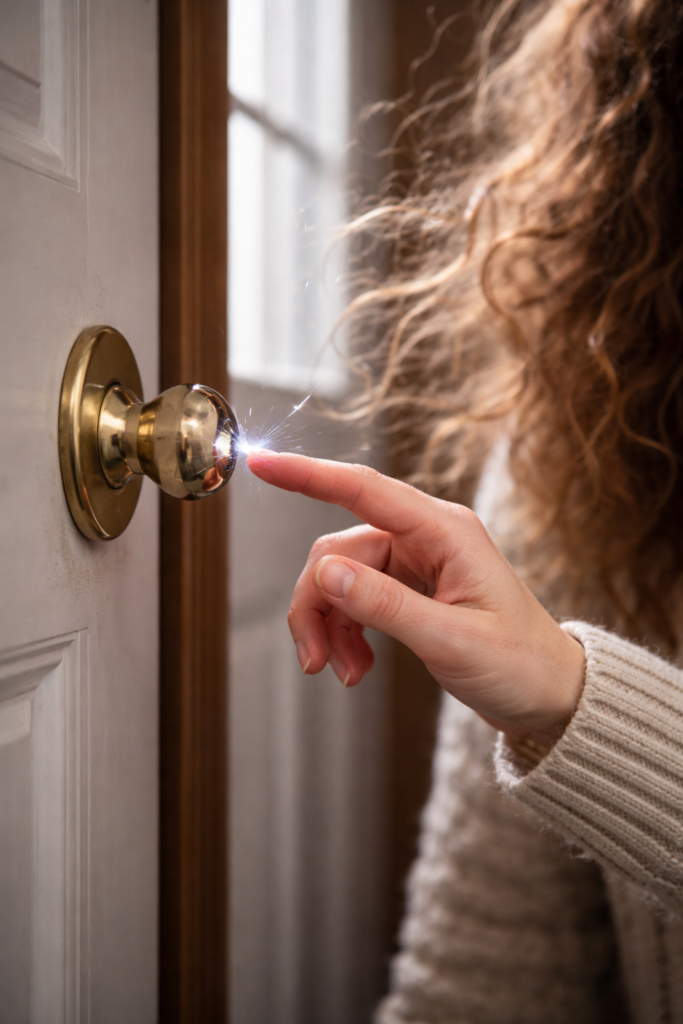
Common signs of air that is too dry
A room can feel dry without proving its relative humidity is unusually low. Measure RH where you spend time and consider the indoor temperature; in cold weather, higher indoor moisture can also produce condensation on windows and other cold surfaces. Use measurements and signs of condensation together rather than pursuing one number in every home. Technical references: EPA indoor humidity guidance EPA humidifier care.
Dry air usually becomes noticeable when several symptoms happen together, especially during cold weather.
- Static shocks when touching switches, doorknobs, blankets, or furniture.
- Air that feels sharp, dusty, or uncomfortable.
- Wood floors, trim, furniture, or doors shrinking, cracking, or changing fit.
- Plants drying out faster than usual.
- Bedrooms feeling dry overnight during heating season.
- Low humidity readings on an indoor humidity meter.
Some people also notice dry-feeling skin, throat, or nasal passages in dry homes. Those symptoms can have many causes, so use them as clues, not proof. The humidity reading should guide the equipment decision.
Measure first: Put a humidity meter in the room that feels driest. Check it in the morning, evening, and during heating system runtime. One reading is useful. A pattern over a few days is better.
What humidity range should you look for?
There is no single perfect indoor humidity number for every home. Outdoor temperature, window quality, insulation, air leakage, and the heating system all change what is practical.
| Indoor RH reading | What it usually means | What to do |
|---|---|---|
| Below 25% | Very dry indoor air | Humidification may help if the reading is consistent. |
| 25–30% | Dry enough to notice | Measure more rooms and consider targeted humidification. |
| 30–40% | Often a practical winter range | Usually reasonable if windows stay dry. |
| 40–50% | May be fine, but watch cold surfaces | Do not add moisture blindly. |
| Above 50% | Often too high for winter homes | Stop adding moisture and check for condensation risk. |
If your home is below 30% RH for long stretches during winter, dry air is probably part of the comfort problem. If the home is already near 40% RH, a humidifier may not be the right first move.
Why homes get dry in winter
Cold outdoor air starts with very little moisture. When that air leaks into the house and gets warmed, the relative humidity drops. The air is warmer, but it is still carrying very little moisture.
That is why dry air often gets worse during cold snaps, windy weather, and long heating cycles. The heating system is not usually “drying out” the air by itself. It is warming already-dry winter air and moving it around the house.
For a deeper explanation, see why your house is dry in winter and what causes dry air in a house.
When dry air is normal
Some winter dryness is normal, especially in colder climates. A few static shocks or a short dry spell does not automatically mean the house needs a humidifier.
Dry air becomes more worth addressing when the readings stay low, the same rooms feel dry every day, or wood and comfort problems repeat through the heating season.
Simple rule: Do not humidify because winter feels dry once. Humidify because measured indoor humidity is consistently low and the added moisture can be controlled safely.
When humidifiers can make things worse
A humidifier is helpful only when the house actually needs more moisture. Adding too much moisture in winter can create a different problem.
- Condensation on windows.
- Damp window sills or trim.
- Moisture collecting on cold surfaces.
- Musty smells near windows, closets, or exterior walls.
- Humidifier output that stays too high for the room.
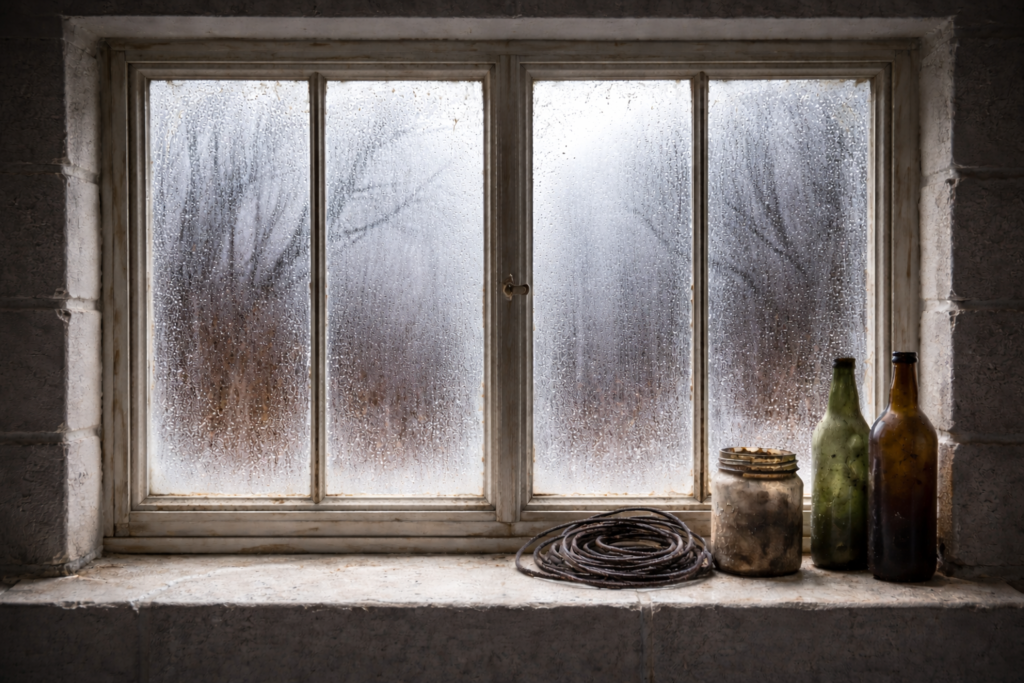
If your windows begin to sweat regularly, do not keep raising the humidifier. The goal is comfortable dry-air relief without creating visible moisture on cold surfaces.
What to do before buying a humidifier
Before choosing equipment, separate a whole-home dry-air problem from a room-specific problem.
- Measure humidity in the room that feels driest.
- Measure a main living area.
- Check whether the problem is worse during heating system runtime.
- Look for window condensation before adding moisture.
- Decide whether the problem is one room, several rooms, or most of the house.
If only one bedroom or office is dry, a small room humidifier may make more sense than treating the whole house. If most rooms are dry, compare larger portable units with a whole-house humidifier.
For sizing, start with the humidifier size calculator or the humidifier size chart by square footage.
When a humidifier makes sense
A humidifier is worth considering when low humidity is measured and the dry space is clear.
| Situation | Better starting point |
|---|---|
| One small bedroom feels dry | Small room humidifier |
| Open living area is dry | Large room humidifier |
| Apartment feels dry | Portable humidifier sized to the main zone |
| Most of the house is dry | Compare portable vs whole-house humidifier |
| Windows already sweat | Do not add moisture until the cause is understood |
For equipment decisions, use do I need a humidifier for my home first. Then move to what size humidifier do I need for my home.
Disclosure: This page may include affiliate links. If you buy through those links, HumidityAtHome may earn a small commission at no extra cost to you.
Helpful tool: indoor humidity meter
A humidity meter is the simplest way to avoid guessing. It tells you whether the air is actually dry enough to justify a humidifier and helps you avoid adding too much moisture.
Product Path: Digital Humidity Meter
Use this before buying a humidifier if you do not know the actual RH in the rooms that feel dry. Look for a clear RH display, temperature display, compact size, and high/low memory if available.
Confirm Low RH Before Adding Moisture
Air that is too dry at home is usually a winter pattern, not a one-day event. Static shocks, dry-feeling rooms, wood movement, and low humidity readings all point in the same direction.
Measure first. If the home is consistently below about 30% RH, a humidifier may help. If the home is already in a reasonable range or windows are sweating, adding more moisture can create new problems.