
Buying a basement dehumidifier is different from buying one for a bedroom, office, or normal living room.
A basement is usually cooler, closer to ground moisture, more enclosed, and more likely to need long runtime. The right unit is not just the one with the biggest pint number. It is the one that can handle the moisture load, drain without becoming a daily chore, and keep working in the basement you actually have.
If you are still figuring out size, start with Basement Dehumidifier Size. If you already know you need a basement unit and are comparing what to buy, this page is the practical buying guide.
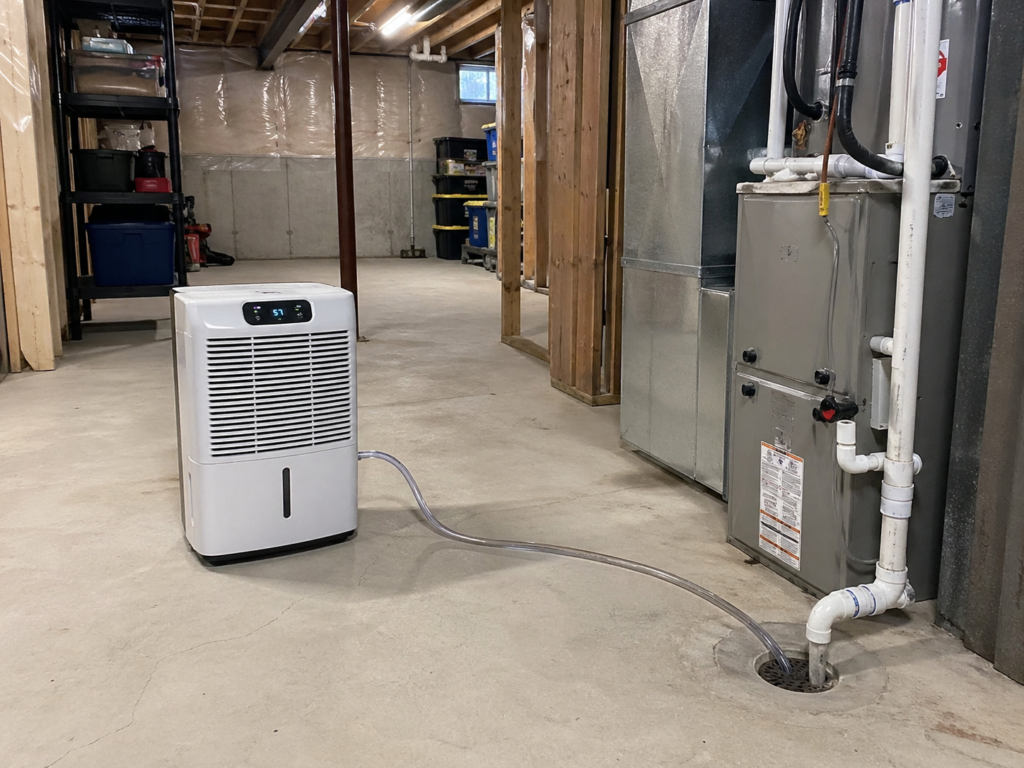
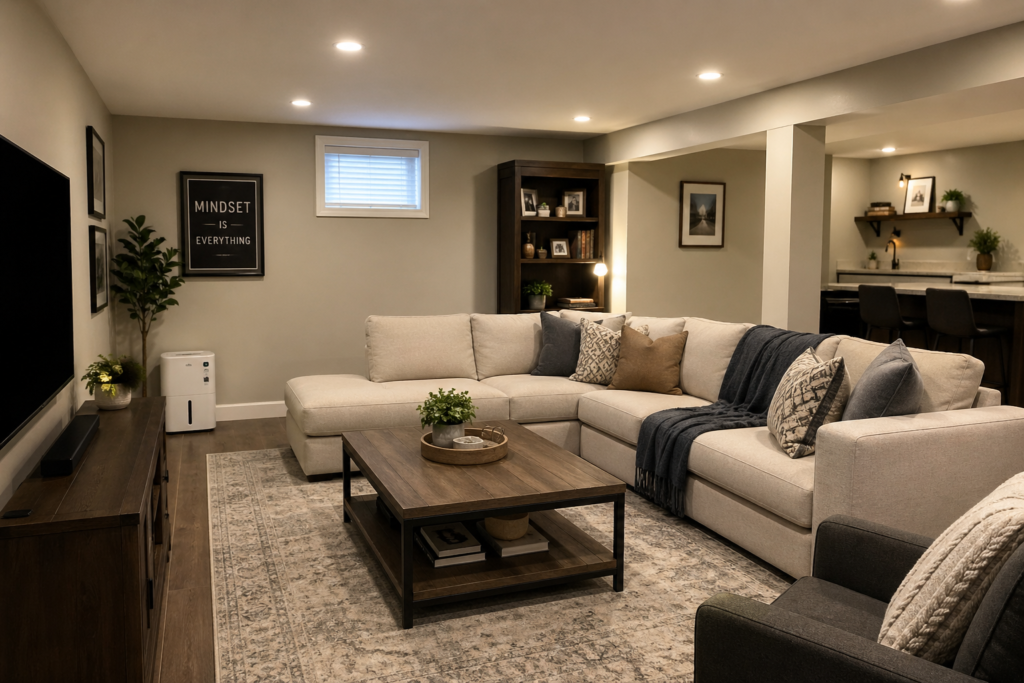
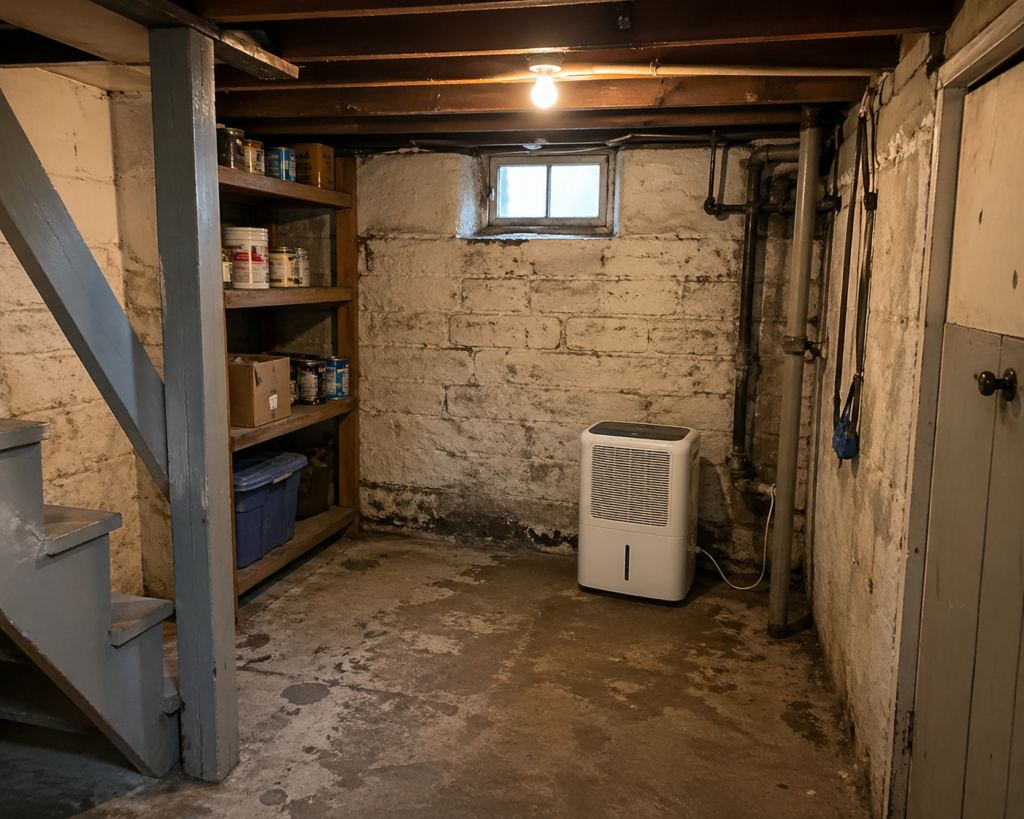
Quick Answer: Choosing a Basement Dehumidifier
For most residential basements, start in the 30-to-50-pint dehumidifier range and prioritize continuous drainage when the unit will run regularly.
The right end of that range depends on basement size, measured humidity, temperature, airflow, laundry, musty conditions, and how quickly moisture returns.
A small, mildly damp basement may need less. A musty, below-grade, laundry-adjacent, or persistently damp basement usually belongs toward the upper end of the portable range. For very large, heavily divided, crawlspace-connected, or fast-rebounding basements, stop solving the problem by adding pint capacity and review whether multiple units or basement-focused equipment makes more sense.
What to Check Before You Buy
Before buying a basement dehumidifier, confirm that gutters, foundation drainage, plumbing, and sump arrangements are not continuing to introduce liquid water. Check where the unit can drain and whether the selected space can circulate air past it. A larger pint rating does not substitute for repairing an active water source. Technical references: UMN basement moisture EPA moisture and mold.
Before comparing models, confirm what job the dehumidifier has to do. Basement buying goes wrong when the decision is based only on square footage or price.
| Check this first | Why it matters | Where to go next |
|---|---|---|
| Basement size | Capacity still matters, especially in larger or open basements. | Basement Dehumidifier Size |
| Finished or unfinished space | Finished basements add noise, placement, appearance, and comfort concerns. | Finished Basement Dehumidifier Size |
| Small basement | A compact basement may not need a large unit if the moisture problem is mild. | What Size Dehumidifier for a Small Basement? |
| Actual humidity reading | A meter prevents guessing and helps you avoid buying too small or too large. | How to Measure Humidity in Your Home |
| Drain location | A good dehumidifier becomes annoying if you have to empty the bucket every day. | Decide between gravity drain, pump, or bucket use. |
Do not buy by square footage alone
Two basements with the same square footage can need different dehumidifiers. A finished basement with light humidity, an unfinished basement with musty air, and a laundry-adjacent basement with steady moisture are not the same buying problem.
Start With Capacity, Then Adjust for Basement Conditions
Most basement buyers should start by comparing units in the 30 to 50 pint range, then adjust for the actual moisture load, temperature, airflow, drainage, and basement layout.
A small basement with mild seasonal humidity may need less. A musty, below-grade, laundry-adjacent, or persistently damp basement usually belongs toward the upper end of the portable range. For very large, heavily divided, crawlspace-connected, or fast-rebounding basements, stop solving the problem by adding pint capacity and review whether multiple units or basement-focused equipment makes more sense.
| Basement condition | Buying direction |
|---|---|
| Small basement, mild humidity | Consider a smaller portable unit if humidity readings confirm the problem is light. |
| Average damp basement | Start around the 30-to-40-pint range, moving toward 50 pints as moisture load and basement conditions increase. |
| Musty unfinished basement | Favor the stronger end of the portable range and plan for drainage. |
| Finished basement | Balance capacity with noise, placement, and drain routing. |
| Large, divided, or hard-to-dry basement | Check sizing carefully before assuming one unit will dry every area evenly. |
If you have not sized the space yet, use How Big of a Dehumidifier Do I Need for My Home? before choosing a unit.
Drainage Matters More Than Bucket Size
A basement dehumidifier that depends on bucket emptying can become annoying fast.
A bucket is fine for occasional use or a mildly damp space. But if the basement is truly damp, the bucket may fill every day or even more often during humid weather.
Basement drainage rule
If the basement is damp enough that you would empty the bucket every day, buy for drainage before you buy for convenience features.
Use gravity drain when:
- A floor drain is nearby
- The unit can sit higher than the drain
- The hose can slope downward
- You do not need to move water across the room or upward
Use a pump when:
- Water must go up to a sink
- The drain is across the room
- There is no floor drain nearby
- You want more placement flexibility
- The basement is used often and bucket emptying will be a problem
A pump-equipped unit usually costs more, but it can be the better buy if it prevents daily maintenance.
Finished vs Unfinished Basement Buying Priorities
An unfinished basement is mostly about moisture control, drainage, durability, and long runtime.
A finished basement adds comfort issues. Noise, placement, warm discharge air, and how visible the unit is all matter more when the basement is used as living space.
| Basement type | Buying priority | Watch out for |
|---|---|---|
| Unfinished basement | Capacity, drainage, airflow, durability | Buying too small or relying on bucket emptying |
| Finished basement | Noise, placement, drain routing, comfort | Putting a loud unit near seating, sleeping, or work areas |
| Small basement | Right-size the unit without overbuying | Assuming every basement needs the largest portable unit |
| Divided basement | Air movement between rooms | Expecting one unit to dry closed-off rooms evenly |
For finished spaces, read Finished Basement Dehumidifier Size before buying too small or placing the unit badly.
Features Worth Paying For
The best basement dehumidifier is usually the one that combines enough capacity with simple water removal and dependable operation.
| Feature | Worth it? | Why |
|---|---|---|
| Continuous drain connection | Yes | Usually one of the most important basement features. |
| Built-in pump | Sometimes | Worth it when gravity drain is not practical. |
| Auto-restart | Yes | Useful after power interruptions. |
| Adjustable humidistat | Yes | Lets the unit cycle based on target humidity. |
| Washable filter | Yes | Basements are often dusty, so filter access matters. |
| Defrost or low-temperature operation | Yes, for cooler basements | Important if the basement stays cool. |
| WiFi/app control | Optional | Useful for remote checking, but not more important than capacity and drainage. |
| Decorative design | Usually less important | Only matters much in finished living space. |
Placement and Airflow
A dehumidifier needs room to breathe. Poor placement can make a good unit behave like an undersized one.
Avoid placing it tight against a wall, behind storage bins, inside a closet, in a dead corner, or in a room that stays closed off from the rest of the basement.
Better placement usually means an open floor area, clear intake and exhaust space, access to the filter, and a drain route that does not create a trip hazard.
If the basement is divided into rooms
One dehumidifier may not dry every area evenly. You may need open doors, better airflow, a small fan, or a separate solution for the dampest room.
Basement Dehumidifier Options by Capacity and Drainage
Disclosure: This page may include affiliate links. HumidityAtHome may earn a commission if you buy through those links, at no extra cost to you.
These are starting points, not a claim that one model is best for every basement. Check the current listing details, drain setup, pump option, dimensions, warranty, and return policy before buying.
All-around basement starting point
Frigidaire 50 Pint Dehumidifier with WiFi
Use this kind of unit when the basement needs a stronger portable dehumidifier and you want a mainstream starting point for normal basement moisture control.
Good fit for medium basements, damp lower levels, utility areas, and homes where a stronger portable unit makes more sense than a small room model.
Pump version to compare
Frigidaire 50 Pint Dehumidifier with Pump
Use the pump version when water needs to move up to a sink, across the room, or to a drain that gravity cannot reach.
Budget option for mild basement moisture
Use this kind of unit when the basement is smaller, only mildly damp, and price matters more than maximum performance.
Do not buy a budget unit expecting it to solve a basement with heavy moisture, musty odor, wet walls, or repeated water problems.
Browse by capacity range
Browse 30 to 50 pint dehumidifiers on Amazon
This is the better path when you want to compare price, pump options, drain setup, controls, dimensions, and reviews across several basement-capable models.
Serious basement equipment
If the basement is very large, cool, persistently damp, heavily divided, connected to a crawlspace, or difficult to drain, compare basement-focused equipment rather than assuming a larger portable unit will solve the problem.
Compare low-temperature performance, drainage and pump options, filter access, serviceability, ducting capability, and how the equipment will move dry air through the basement.
When a Portable Basement Dehumidifier Is Not Enough
A portable dehumidifier can manage damp air. It cannot fix every basement moisture problem.
Look beyond the dehumidifier if you have standing water, active leaks, wet foundation walls, repeated flooding, bad grading outside, clogged gutters, storm water entry, or mold growth that needs professional attention.
A dehumidifier can help control humidity after the source is reduced. It should not be used as a cover-up for water entry.
For that distinction, read Humidity Problems a Dehumidifier Will Not Fix.
Buy Basement Capacity and a Practical Drainage Setup
Basement dehumidifiers should be selected based on moisture load, drainage, placement, and how the basement is used.
For most residential basements, start in the 30-to-50-pint range. Smaller, mildly damp basements may need less, while musty, below-grade, laundry-adjacent, or persistently humid basements generally belong toward the upper end of the portable range.
If the basement is damp enough that you will empty the bucket every day, buy for drainage first.