
A portable humidifier treats one room or a defined area. A whole-house humidifier is built to treat most or all of a home, either through the HVAC system or with a larger multi-room unit.
For apartments, bedrooms, offices, nurseries, and one-room dry-air problems, a portable humidifier usually makes more sense. For a house where dry air affects most rooms, a whole-house or large multi-room humidifier may be the better path.
Fast answer:
Choose portable if the problem is local. Choose whole-house if the dry air affects most of the home and you can support the installation, maintenance, and moisture control. Measure indoor humidity first so you are not solving a problem you do not actually have.
Before choosing either option, check the actual indoor humidity. The guide on how to measure humidity in your home explains how to confirm whether the air is actually too dry.
Portable vs Whole-House Humidifier: Quick Comparison
Brian has used both portable humidifiers and a historical ducted whole-house setup in his own home. That experience supports practical comparisons of tank refills, water supply, controls, and maintenance, but it is not an endorsement of his former ducted equipment design. Choose based on the rooms needing moisture, the available control method, and the work required to maintain the system. Technical references: EPA humidifier care ASHRAE Psychrometrics.
| Feature | Portable humidifier | Whole-house humidifier |
|---|---|---|
| Best for | One room, apartment, bedroom, office, nursery, or small living area | Multiple rooms or full-home dry air |
| Installation | Plug in, fill, and place in the room | Often connects to HVAC ductwork or uses a larger console setup |
| Water supply | Manual tank refill | Plumbed water supply or larger tank, depending on type |
| Coverage | Local or room-sized | Whole-home or large multi-room coverage |
| Maintenance | Frequent refilling and cleaning | Seasonal service, pad/filter replacement, and system checks |
| Control | Simple, local control | More centralized control |
| Rental-friendly | Usually yes | Usually no for HVAC-installed systems |
| Best buying path | Choose by room size and tank convenience | Choose by home size, HVAC setup, installation limits, and maintenance needs |
The simple version: portable humidifiers are easier. Whole-house humidifiers are more integrated.
Start With the Problem Area
The right humidifier type depends on where the dry-air problem is happening.
| Dry-air problem | Better starting point | Why |
|---|---|---|
| Only the bedroom feels dry | Portable humidifier | There is no reason to humidify the whole house for one room. |
| Apartment feels dry | Portable humidifier | Most renters cannot modify HVAC equipment. |
| Living room and nearby open space feel dry | Portable or large multi-room humidifier | One larger portable unit may cover the connected area. |
| Most rooms feel dry in winter | Whole-house humidifier | The problem is distributed across the home. |
| Dry air returns quickly after portable units run | Whole-house or larger multi-room option | The home may need more even moisture distribution. |
| Windows already show condensation | Measure and correct settings first | Adding more moisture may create new problems. |
Measurement path:
Use a humidity meter before buying. If the home is already in a reasonable humidity range, a larger humidifier will not fix comfort problems caused by temperature, airflow, drafts, or poor room balance.
What a Portable Humidifier Does
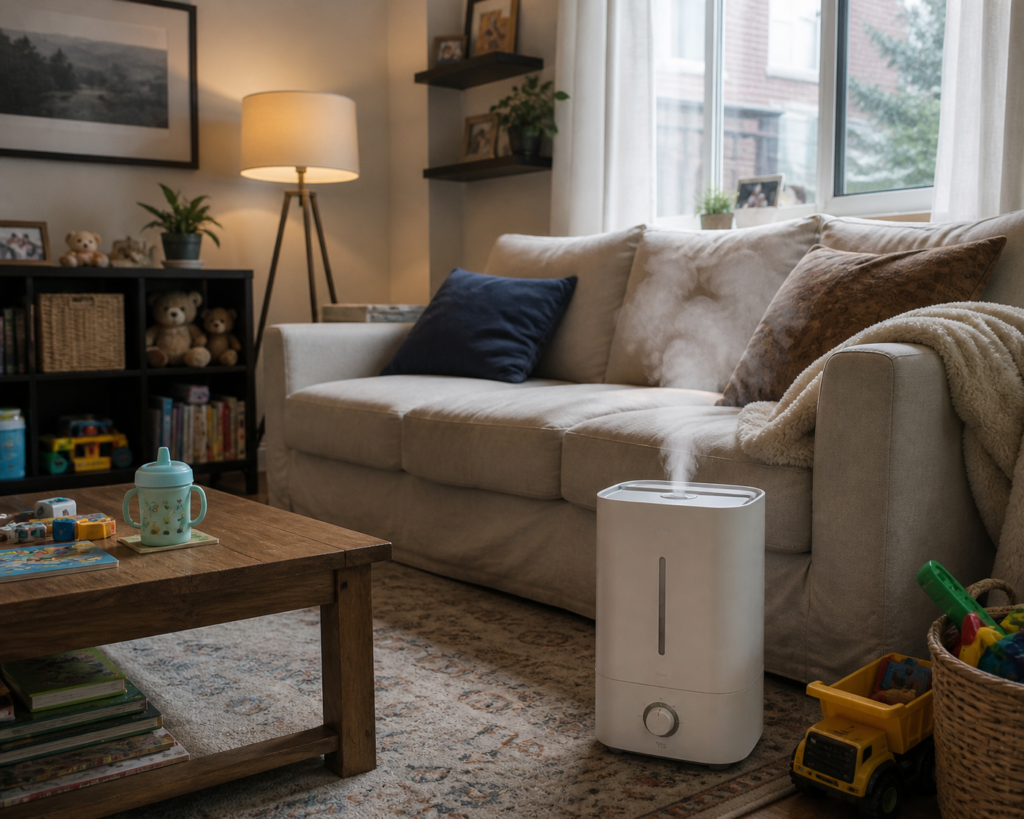
A portable humidifier adds moisture near the unit. It sits in a room, plugs into an outlet, and uses a tank you refill by hand.
Portable humidifiers are commonly used in:
- Bedrooms
- Apartments
- Nurseries
- Home offices
- Living rooms
- Small homes
- Single-room dry-air problems
The advantage is flexibility. You can move the humidifier where the dry air bothers you most.
The limitation is coverage. A portable unit may help nearby areas if doors stay open and air moves freely, but it will not evenly humidify a divided house.
What a Whole-House Humidifier Does
A whole-house humidifier is built to add moisture across more than one room.
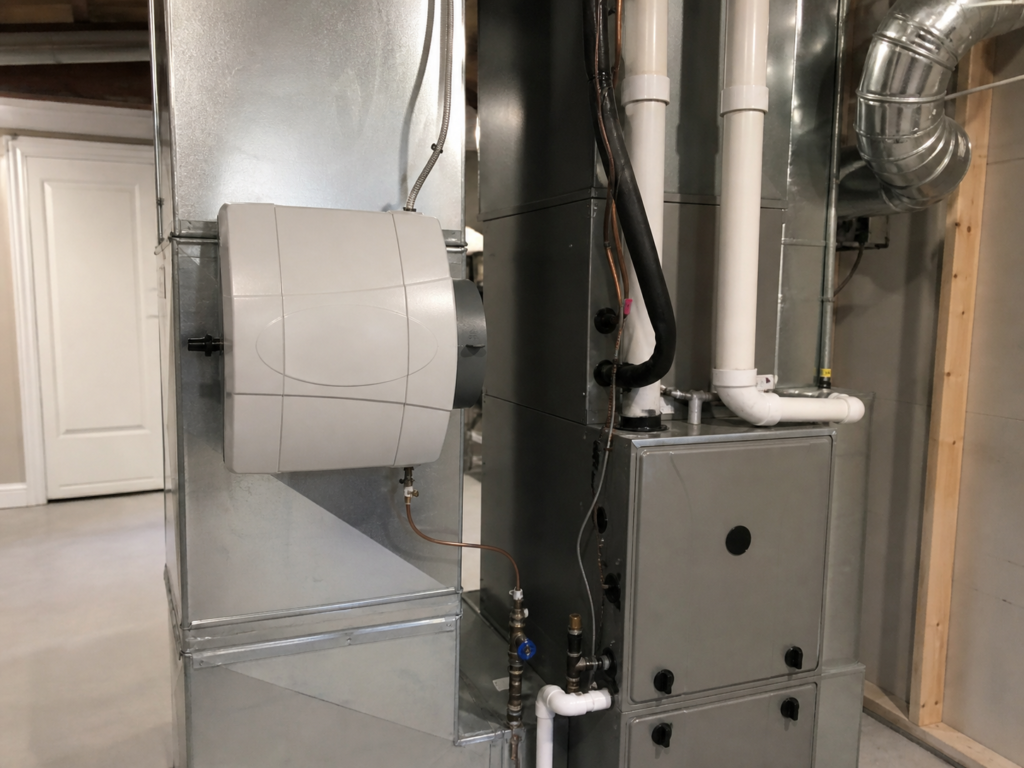
Some whole-house humidifiers connect to the HVAC system and distribute moisture through ductwork. Larger console-style humidifiers may also be marketed for large multi-room or whole-home coverage, but they still need placement, refilling, airflow, and maintenance.
Whole-house humidifiers make more sense when:
- Dry air affects most of the home
- The home has central forced-air heating
- You want more even humidity distribution
- You are tired of refilling multiple portable tanks
- Portable humidifiers are not keeping up
- You own the home or can modify the mechanical system
Coverage Is the Main Difference
Coverage is where portable and whole-house humidifiers separate.
A portable humidifier works best in the room where it sits. It may help an adjacent hallway or nearby room if the layout is open, but it usually cannot solve dry air behind closed doors.
A whole-house humidifier is built for wider distribution. When installed and controlled properly, it can help bedrooms, hallways, and main living areas more evenly than one portable unit.
| Home layout | Portable humidifier fit | Whole-house humidifier fit |
|---|---|---|
| Apartment | Usually best | Usually not practical |
| One dry bedroom | Best fit | Usually more than needed |
| Open living area | Good if sized correctly | Possible, but may be unnecessary |
| Two-story home with dry rooms throughout | May require multiple units | Often better fit |
| Central forced-air home with winter dryness | Works locally | Strong candidate |
| Home without ductwork | Better fit | Limited unless using console-style equipment |
For apartments, the practical choice is usually portable. See what size humidifier for an apartment for that path.
Maintenance Differences
Portable humidifiers need frequent hands-on maintenance.
That usually means refilling the tank, cleaning the reservoir, checking for buildup, and replacing filters or wicks if the unit uses them.
Whole-house humidifiers need less daily attention, but they are not maintenance-free. Depending on the system, they may need seasonal inspection, water panel replacement, drain checks, humidistat adjustment, and HVAC service access.
| Maintenance item | Portable humidifier | Whole-house humidifier |
|---|---|---|
| Water refill | Often daily during dry weather | Usually plumbed or larger capacity |
| Cleaning | Frequent tank and reservoir cleaning | Seasonal system cleaning or inspection |
| Filters / pads | Depends on unit type | Water panel or pad replacement is common |
| Access | Easy room access | Requires access to HVAC or utility area |
| Neglect risk | Dirty tank, odor, mineral buildup | Over-humidification, pad buildup, drain or control issues |
Installation and Control
Portable humidifiers require almost no installation. You place the unit, fill the tank, plug it in, and set the control.
That makes portable units practical for renters, bedrooms, apartments, dorms, offices, and anyone who does not want to modify HVAC equipment.
Whole-house humidifiers may require:
- Access to ductwork
- Access to water supply
- Drainage or water management
- Humidistat wiring or control setup
- HVAC service access
- Professional installation in many homes
This is the main reason apartment residents usually use portable humidifiers. Most renters cannot modify the building’s heating or duct system.
When Portable Makes Sense
Choose a portable humidifier when the dry-air problem is local.
Portable is usually the better first choice when:
- You only need one bedroom or living area
- You live in an apartment
- You want lower upfront cost
- You want something easy to move
- You do not control the HVAC system
- You want to test whether humidification helps
- You do not want an installed mechanical system
If you are sizing a portable unit, start with what size humidifier you need for your home.
When Whole-House Makes Sense
Choose whole-house when dry air is spread across the home.
A whole-house humidifier is worth considering when:
- Multiple rooms feel dry
- The home has central forced-air heat
- Portable humidifiers are not keeping up
- You want more even distribution
- You do not want to refill several tanks
- You plan to stay in the home long enough to justify installation
- You can maintain the system properly
Whole-house systems are not casual plug-in appliances. They are part of the home’s moisture-control and mechanical system.
Cost and Convenience
Portable humidifiers usually cost less upfront. They are easy to buy, easy to place, and easy to replace.
The tradeoff is daily involvement. During dry weather, you may need to refill the tank often, clean the unit regularly, and move it from room to room.
Whole-house humidifiers usually cost more upfront because installation, controls, and mechanical access matter.
The tradeoff is convenience. Once installed and adjusted correctly, a whole-house humidifier can manage dry air more evenly with less daily work.
Buying Direction
Disclosure: This page may include affiliate links. If you buy through those links, HumidityAtHome may earn a small commission at no extra cost to you.
For a bedroom, apartment, nursery, office, or single-room problem, start by comparing portable and room-sized humidifiers at Sylvane.
For larger homes, HVAC-connected systems, or dry air across multiple rooms, compare whole-house humidifier options at Sylvane.
Use this as a decision path, not a reason to buy the biggest unit. The right humidifier is the one that matches the area you actually need to humidify.
| If your problem is… | Start here |
|---|---|
| One bedroom feels dry | Portable bedroom humidifier |
| Apartment feels dry | Portable apartment-sized humidifier |
| Open living area feels dry | Larger portable or multi-room humidifier |
| Most of the home feels dry | Whole-house humidifier |
| Portable units are not keeping up | Large multi-room or HVAC-connected option |
| Windows are wet | Reduce humidity before buying more equipment |
Do not over-humidify.
In cold weather, too much indoor humidity can show up as window condensation, damp frames, and musty areas near cold surfaces. Measure first and adjust slowly.
Reality Check
Humidifiers add moisture gradually. Neither portable nor whole-house humidifiers instantly fix dry indoor air.
Performance depends on square footage, ceiling height, air leakage, heating type, layout, outdoor weather, and how dry the home is before the unit starts.
Too much humidity can create problems. If windows fog or water forms on frames, the humidity level may be too high for the outdoor temperature and home conditions.
Measure first. Adjust slowly. Watch the windows.
Choose Portable or Whole-House Humidification by Coverage and Upkeep
Portable humidifiers are better for targeted dry-air problems. Whole-house humidifiers are better when dry air affects most of the home.
For apartments, bedrooms, offices, and small spaces, start portable. For larger homes with central forced-air heat and dry air throughout the house, a whole-house humidifier may provide better coverage and less daily hassle.
The best choice is not the largest humidifier. It is the humidifier that matches the space, layout, maintenance level, and measured humidity problem.
Related Guides
- What size humidifier do I need for my home?
- Humidifier size chart by square footage
- What size humidifier for an apartment?
- Air that’s too dry at home
- Why is my house dry in winter?
- What happens if a humidifier is too large?