
Crawlspace dehumidifier sizing depends on more than square footage. A crawlspace is usually colder, tighter, lower, and more exposed to ground and outdoor moisture than a basement.
For many sealed or encapsulated crawlspaces, 40 to 50 pints is a practical starting range around 1,000 to 1,500 square feet. Smaller, cleaner spaces may need less. Larger or consistently damp crawlspaces may move into the 50-to-70-pint range or justify crawlspace-specific equipment.
Before increasing capacity, check temperature, sealing, drainage, ground moisture, and whether the unit can actually move air through the space. A larger pint number cannot compensate for standing water, open vents, or a dehumidifier operating outside its temperature range.
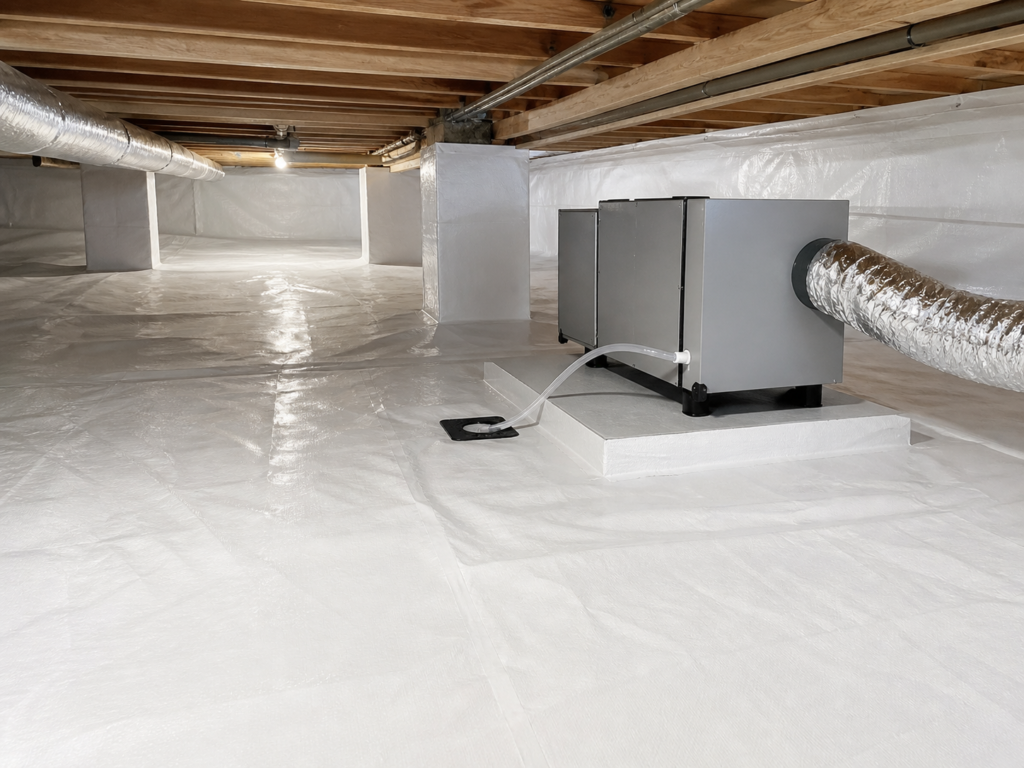
Quick Answer: What Size Dehumidifier for a Crawlspace?
| Crawlspace condition | Practical starting class |
|---|---|
| Small sealed crawlspace under 1,000 sq ft with mild humidity | 30 to 40 pint |
| Sealed crawlspace around 1,000 to 1,500 sq ft | 40 to 50 pint |
| Larger sealed or consistently damp crawlspace | 50 to 70 pint |
| Large, low-access, cool, or hard-to-serve crawlspace | Review crawlspace-specific equipment |
| Wet, vented, poorly sealed, or standing-water crawlspace | Fix moisture conditions before sizing equipment |
These are homeowner starting ranges, not engineering rules. The unit still has to operate correctly in the actual crawlspace and drain reliably without regular bucket service.
Crawlspace Dehumidifier Size Chart
Use square footage only after you have checked the basic moisture conditions. A clean encapsulated crawlspace and a damp vented crawlspace with the same floor area are not the same dehumidification job.
| Crawlspace size | Mild and sealed | Damp or recurring humidity | Wet, leaky, or vented |
|---|---|---|---|
| Under 500 sq ft | 20 to 30 pint | 30 to 40 pint | Fix moisture source first |
| 500 to 1,000 sq ft | 30 to 40 pint | 40 to 50 pint | Seal, drain, or correct ground moisture first |
| 1,000 to 1,500 sq ft | 40 to 50 pint | 50 to 70 pint | Consider crawlspace-specific equipment after moisture correction |
| 1,500 to 2,000 sq ft | 50 to 70 pint | 70 pint or crawlspace-specific unit | Do not treat as a simple portable-unit problem |
| Over 2,000 sq ft | 70 pint or crawlspace-specific unit | Crawlspace-specific or larger-capacity approach | Moisture correction and system planning come first |
For ordinary room and basement comparisons, use the Dehumidifier Size Chart by Square Footage. The crawlspace adjustments on this page take priority when the equipment is actually going below the house.
For low-temperature spaces, see cold-weather crawlspace dehumidifier guidance before choosing a unit, because frost protection and operating range can matter as much as capacity.
Temperature Comes Before Pint Size
Crawlspace square footage is not enough to establish the moisture load. Inspect groundwater and drainage, ground vapor, outside-air openings, and the enclosure condition before relying on dehumidification. Encapsulation and building-envelope decisions should follow qualified building-science guidance; HaH’s related experience is limited to equipment, drainage, and value assessment, not encapsulation installation expertise. Technical references: NC State moisture checklist EPA moisture and mold.
A standard portable dehumidifier is designed around an operating-temperature range. A crawlspace may be much colder than a normal occupied room.
When temperatures fall, a refrigerant dehumidifier can remove less moisture and may spend more time managing frost or defrost cycles. If the crawlspace falls below the unit’s listed operating range, buying a larger version of the same type does not solve the problem.
Do Not Skip the Temperature Check
Before buying, check the manufacturer’s minimum operating temperature, automatic-defrost behavior, clearance requirements, drain configuration, and whether the unit is intended for crawlspace use.
If the crawlspace regularly becomes colder than the equipment can handle, solve the equipment-class problem before worrying about another 10 or 20 pints of rated capacity.
Measure the Crawlspace Before Buying
Do not use the upstairs thermostat as the crawlspace humidity reading. Treat the crawlspace as its own moisture zone.
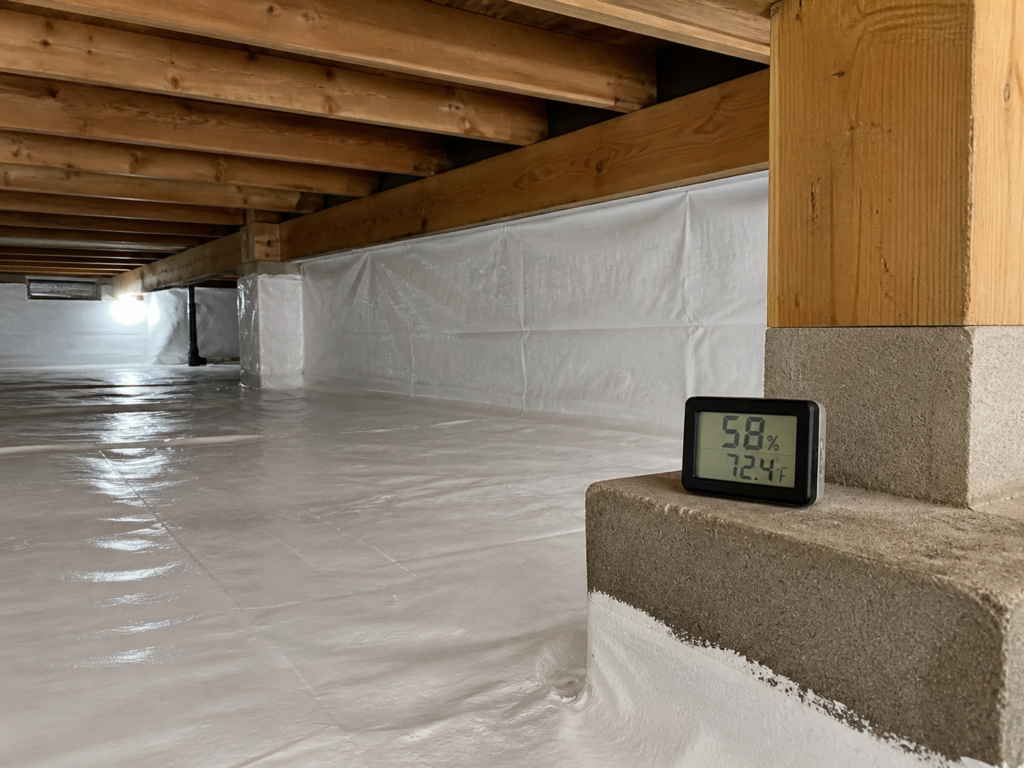
Measure the Space the Unit Must Control
- Place one meter in a representative central crawlspace location.
- Add a second sensor in a known damp area when the crawlspace is large or uneven.
- Do not place the sensor against soil, masonry, standing water, a vent opening, or the dehumidifier discharge.
- Record conditions over several days.
- Pay attention to rain, outdoor humidity, and temperature changes.
Use How to Measure Humidity in Your Home and the Humidity Meter Placement Guide for the full measurement method.
Moisture Load Can Change the Size
A dry encapsulated crawlspace and a damp vented crawlspace should not be sized the same way just because they have the same square footage.
A heavier moisture load may show up as:
- Humidity that drops while the unit runs and climbs quickly again
- Musty air entering the house from below
- Damp insulation, joists, or subflooring
- Condensation on ducts, pipes, or framing
- A dehumidifier that runs continuously without reaching its setpoint
- Conditions that become much worse after rain or humid outdoor weather
When those symptoms continue, verify the moisture source before moving automatically to a larger machine.
When a Dehumidifier Is Not the First Fix
A dehumidifier controls moisture in the air. It should not be used to hide an active water problem or compensate for a crawlspace that is continuously open to humid outdoor air.
| What you find | What it may mean | What to do before sizing |
|---|---|---|
| Standing water or puddles | Drainage or intrusion problem | Correct water entry first. |
| Wet soil or exposed ground | Large ground-vapor load | Review vapor barrier or encapsulation needs. |
| Open foundation vents during humid weather | Outside moisture entering continuously | Review the crawlspace sealing strategy. |
| Wet plumbing, drain, or roof-related area | Active water source | Repair the source before relying on dehumidification. |
| Cold crawlspace for long periods | Standard portable equipment may struggle | Check low-temperature and crawlspace suitability. |
| Humidity rebounds immediately after shutoff | Continuing moisture source or air leakage | Diagnose the moisture load before buying bigger. |
Reality check: Do not spend more money asking a dehumidifier to dry the outdoors, pump standing water, or replace a missing ground-vapor barrier. Correct the bulk moisture problem first. Then size the machine for the moisture that remains in the air.
Drainage Is Part of Crawlspace Sizing
A crawlspace dehumidifier normally makes the most sense with continuous drainage. Bucket operation means regularly crawling under the house to empty water, and the machine may stop whenever the bucket fills.
| Drainage setup | Best fit | What to check |
|---|---|---|
| Gravity drain | Drain, sump, or discharge point below the unit | Maintain continuous downward slope without kinks or traps. |
| Built-in condensate pump | Water must be lifted to a higher drain point | Verify lift height and drain-hose limits. |
| External condensate pump | Preferred unit only supports gravity drainage | Allow service access for both the dehumidifier and pump. |
| Sump connection | Existing crawlspace or basement drainage system is available | Route condensate according to equipment and local requirements. |
Drainage does not increase pint capacity. It determines whether the machine can keep operating unattended long enough to use that capacity.
Access and Service Matter More Than They Do Upstairs
A crawlspace unit still needs filter cleaning, drain inspection, and occasional service. Measure the access opening before buying, not after a large box arrives on the porch.
- Confirm the machine physically fits through the crawlspace opening.
- Leave the manufacturer-required intake and discharge clearance.
- Make sure the filter can be removed without dismantling the installation.
- Keep electrical connections and drainage accessible.
- Do not place the machine where occasional water intrusion can submerge it.
Portable Unit or Crawlspace-Specific Dehumidifier?
Not every crawlspace needs an expensive specialty machine. A normal portable unit can make sense in a smaller, clean, sealed crawlspace that stays within the unit’s operating-temperature range and has a practical drain path.
A Portable Unit Can Fit When
- The crawlspace is sealed or encapsulated.
- The area is small to moderate in size.
- Temperatures remain within the equipment’s operating range.
- The moisture load is mild or moderate.
- Gravity drainage or a practical pump setup is available.
- The machine can be accessed for routine maintenance.
Review Crawlspace-Specific Equipment When
- The crawlspace is large or difficult to serve from one location.
- Low clearance makes normal portable equipment awkward.
- Temperature is a recurring concern.
- The space needs dependable continuous drainage.
- Air distribution or ducting would materially improve control.
- Humidity remains high after the major ground, drainage, and air-leak problems are corrected.
The higher-cost route belongs here only when the crawlspace actually needs it. A clean 700-square-foot encapsulated space does not automatically need commercial-grade equipment simply because the machine sits under the house.
Disclosure: This guide may include affiliate links to products that fit the crawlspace sizing guidance below. If you buy through those links, HumidityAtHome may earn a small commission at no extra cost to you.
As an Amazon Associate I earn from qualifying purchases.
Crawlspace Dehumidifier Product Paths
Choose the product class after checking sealing, measured humidity, temperature, drainage, access, and actual square footage.
30 to 40 Pint Portable Dehumidifiers
Use this class when: The crawlspace is smaller, sealed, relatively mild, warm enough for normal operation, and has a dependable drain path.
Look for continuous drain capability, auto restart, accessible filtration, a built-in humidistat, and operating-temperature specifications that fit the space.
40 to 50 Pint Portable Dehumidifiers
Use this class when: The sealed crawlspace is around 1,000 to 1,500 square feet or carries a moderate recurring moisture load.
Prioritize continuous drainage, suitable operating temperature, auto restart, useful humidistat control, and practical filter access.
50 to 70 Pint Portable Dehumidifiers
Use this class when: The crawlspace is larger or consistently damp but still suitable for normal portable equipment.
Do not move into this range merely because the crawlspace is below the house. Use the larger class when measured humidity, moisture load, and size justify it.
Crawlspace-Specific and Serious Dehumidifiers
Use this path when: The crawlspace is large, difficult to access, cool, persistently humid after moisture correction, or would materially benefit from specialty drainage or ducted air distribution.
Compare operating-temperature range, continuous drainage, pump options, filter access, serviceability, physical dimensions, ducting capability, warranty, and installation requirements.
This is intentionally the high-dollar exit. It belongs after the ordinary portable paths, not before them.
Crawlspace Sizing Examples
| Example crawlspace | Likely direction | Why |
|---|---|---|
| 700 sq ft, sealed, mild humidity | 30 to 40 pint | Small area with lower moisture load |
| 1,200 sq ft, encapsulated, humidity regularly above target | 40 to 50 pint | Common middle range for a sealed crawlspace |
| 1,500 sq ft, sealed but musty after rain | 50 to 70 pint | Higher recurring moisture load |
| 1,800 sq ft, open vents and damp soil | Fix crawlspace conditions first | Ground vapor and outdoor air can overwhelm ordinary sizing |
| Large low-access crawlspace needing ducted air distribution | Crawlspace-specific equipment review | Installation and airflow requirements exceed a simple portable-unit decision |
| Cold crawlspace with seasonal moisture trouble | Check low-temperature suitability first | A larger normal portable unit may still perform poorly |
Basement and Crawlspace Sizing Are Related but Not Interchangeable
Basements and crawlspaces share below-grade moisture issues, but crawlspaces add tighter access, lower temperature, ground vapor, encapsulation, and serviceability concerns.
If the damp area is actually a basement or connected lower level, use Basement Dehumidifier Size. If both spaces are connected, measure each one rather than automatically adding the square footage together.
What to Do Before Buying
- Measure crawlspace humidity for several days.
- Check the crawlspace temperature during the season when the problem is worst.
- Look for standing water, wet soil, open vents, drainage problems, or missing ground-vapor control.
- Confirm whether the crawlspace is sufficiently sealed for dehumidification to be practical.
- Measure the access opening and planned equipment location.
- Confirm where condensate will drain.
- Choose the pint range or specialty-equipment class only after those checks.
Match Crawlspace Capacity to Temperature and Moisture Load
For many sealed crawlspaces around 1,000 to 1,500 square feet, a 40-to-50-pint dehumidifier is a reasonable starting point.
A smaller sealed crawlspace with mild humidity may fit the 30-to-40-pint range. Larger or consistently damp crawlspaces may move into 50 to 70 pints. Large, low-access, cool, difficult-to-drain, or hard-to-distribute spaces may justify crawlspace-specific equipment.
Do not let the equipment decision outrun the diagnosis. Temperature, sealing, ground moisture, drainage, access, and airflow matter as much as the pint rating. Standing water, open vents, or continuing water entry should be corrected before a larger dehumidifier becomes the answer.