
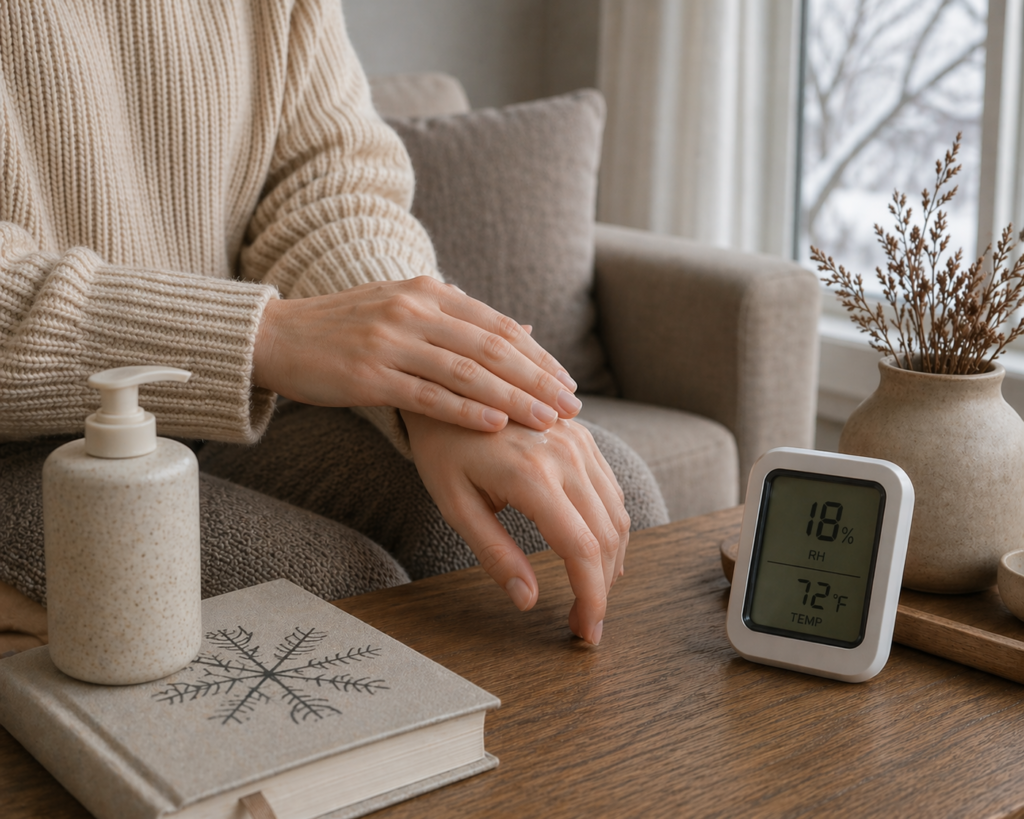
Dry, tight, or itchy-feeling skin at home can have more than one cause. Low indoor humidity is one possible factor, especially during winter, but it is not the only explanation.
This page is about the home environment, not medical diagnosis. If your skin is painful, cracked, bleeding, spreading, suddenly severe, or not improving, it is worth asking a qualified medical professional instead of trying to solve it with humidity alone.
Fast answer:
Dry indoor air may contribute to skin that feels tight, dry, or itchy at home, especially in winter. The first step is not buying a humidifier. The first step is measuring indoor humidity. If your home is consistently dry, improving humidity may help the room feel more comfortable, but it should not be treated as a medical cure.
Why Skin May Feel Drier at Home
Skin that feels dry or itchy does not by itself establish a humidity problem. A humidity reading can help describe the room environment, but discomfort may have causes unrelated to humidity. Do not treat humidification as a medical remedy; seek appropriate health guidance for persistent or significant symptoms. Technical references: EPA indoor humidity guidance EPA humidifier care.
Cold outdoor air usually carries less moisture. When that air leaks into the home and gets heated, the indoor relative humidity can drop. Once indoor air becomes dry enough, moisture may leave exposed surfaces faster, including skin, lips, eyes, and nasal passages.
That is why a room can feel warm enough by temperature but still feel harsh, dry, or irritating.
Signs Low Humidity Might Be Part of the Problem
Dry-feeling skin alone does not prove the air is too dry. Look for a pattern.
| What you notice | What it may suggest |
|---|---|
| Skin feels tighter indoors than outside | The home environment may be contributing. |
| Symptoms are worse in winter | Cold outdoor air and heating may be lowering indoor humidity. |
| Static shocks are common | Indoor air may be very dry. |
| Lips, nose, or eyes also feel dry | The issue may be broader than skin alone. |
| Dryness is worse after hot showers | Warm water plus dry room air may make discomfort more noticeable. |
| A humidity meter reads low | Low indoor RH may be part of the comfort problem. |
The meter matters. Without a humidity reading, dry air is only a guess.
Measure the Room Before You Blame the Air
Place a basic humidity meter in the room where you notice the problem most. Do not place it directly beside a humidifier, bathroom, kitchen, heat register, or exterior door. Give the reading time to settle.
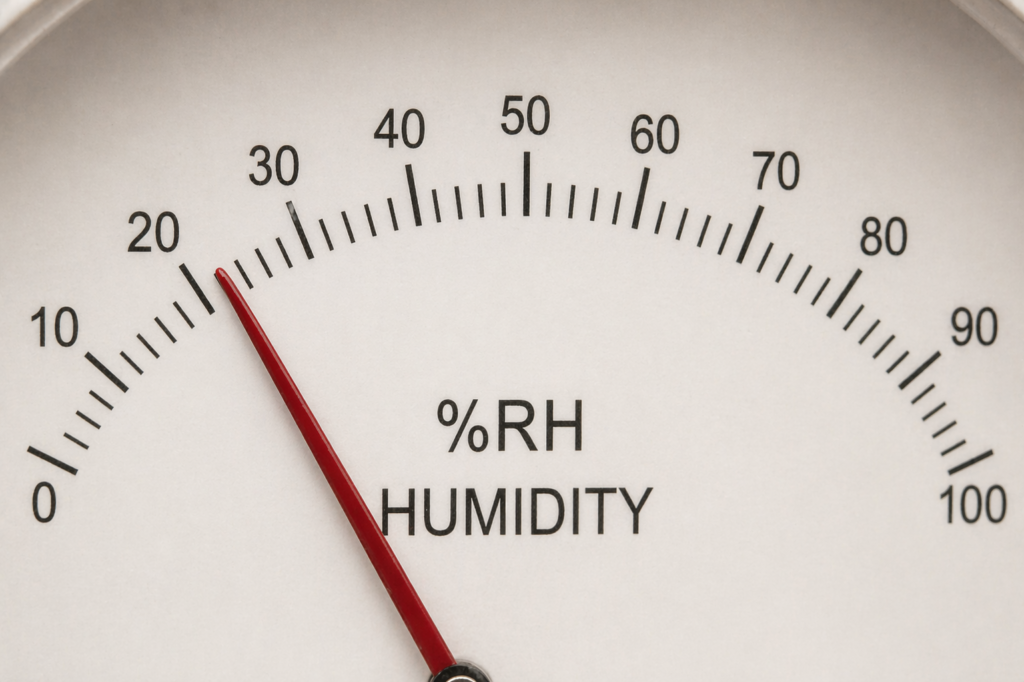
If the room is consistently below a comfortable winter range, dry air may be worth addressing. If the humidity level is already reasonable, the cause may be something else.
Measurement path:
Start with how to measure humidity in your home. If the reading is low, move to the dry-air guides. If the reading is normal, humidity may not be the main issue.
Why Heating Season Makes This More Noticeable
Heating does not have to “burn up” moisture to make a home feel dry. The bigger issue is that cold outside air starts with limited moisture. Once that air is brought indoors and warmed, the relative humidity can fall.
Forced-air heat can make the sensation more obvious because it moves air across rooms and across skin. Other heating systems can still be associated with dry indoor air if the home is leaky, the weather is cold, or humidity is not being added back into the space.
So the heater may not be “causing” a skin problem directly. It may simply be part of the seasonal indoor pattern.
Moisturizer Helps Skin, Not the Room
Lotion or moisturizer may help skin feel better, but it does not change the air in the room.
If the indoor air is very dry, skin may feel dry again after a short time. That does not mean moisturizer is useless. It means the air around you may still be encouraging moisture loss.
Humidity control and skin care are different tools. One changes the room. The other helps the skin surface. They should not be confused.
When a Humidifier Might Help
A humidifier may help the room feel more comfortable if the humidity reading is low and the discomfort lines up with dry-air symptoms.
| Situation | What to do |
|---|---|
| Humidity is low and skin feels dry at home | Improving humidity may help comfort. |
| Humidity is low only in one bedroom | A room-sized humidifier may be enough. |
| The whole apartment is dry | Size for the connected living area, not just one corner. |
| Humidity is already reasonable | Look beyond humidity before adding moisture. |
| Windows start getting wet | Reduce humidity; too much moisture creates a different problem. |
More humidity is not automatically better. If you raise humidity too much in cold weather, you may create window condensation or damp surfaces.
For sizing help, start with what size humidifier you need for your home. For smaller spaces, use what size humidifier for an apartment or humidifier for a one-bedroom apartment.
When Humidity May Not Be the Main Issue
Low humidity is only one possible factor. Dry or itchy-feeling skin may also be affected by soaps, detergents, fabrics, hot showers, personal care products, allergies, medications, skin conditions, or other health factors.
That is why this page should be treated as a home-comfort guide, not a diagnosis. If the skin problem is persistent, severe, painful, spreading, or unusual for you, do not rely on humidity changes as the answer.
Caution:
A humidifier may improve a dry room, but it is not a medical treatment. Measure the air, keep humidity moderate, and get medical advice when symptoms are significant or do not make sense.
Do Not Overcorrect
It is easy to go from “the air feels dry” to “turn the humidifier all the way up.” That can backfire.
Too much humidity can make windows wet, encourage damp surfaces, and make the home feel heavy instead of comfortable. The goal is balanced indoor humidity, not a rainforest bedroom.
If you are not sure whether your humidifier is too large or too small, compare the symptoms in what happens if a humidifier is too large and what happens if a humidifier is too small.
Measure RH Before Attributing Skin Discomfort to Dry Air
Dry indoor air may be one reason your skin feels dry, tight, or itchy at home, especially during winter heating season.
Do not guess. Measure indoor humidity first. If the room is consistently dry, improving humidity may help the space feel more comfortable. If the reading is normal, or if the skin issue is significant, look beyond humidity.
The house may be part of the problem. It should not be treated as the whole diagnosis.
Related Guides
Dry-air path
Use this if the whole house feels dry, static-heavy, or harsh in winter.
Size carefully
Choose a humidifier based on the room, layout, and measured humidity.