
Your house has a humidity problem.
The real question is which one.
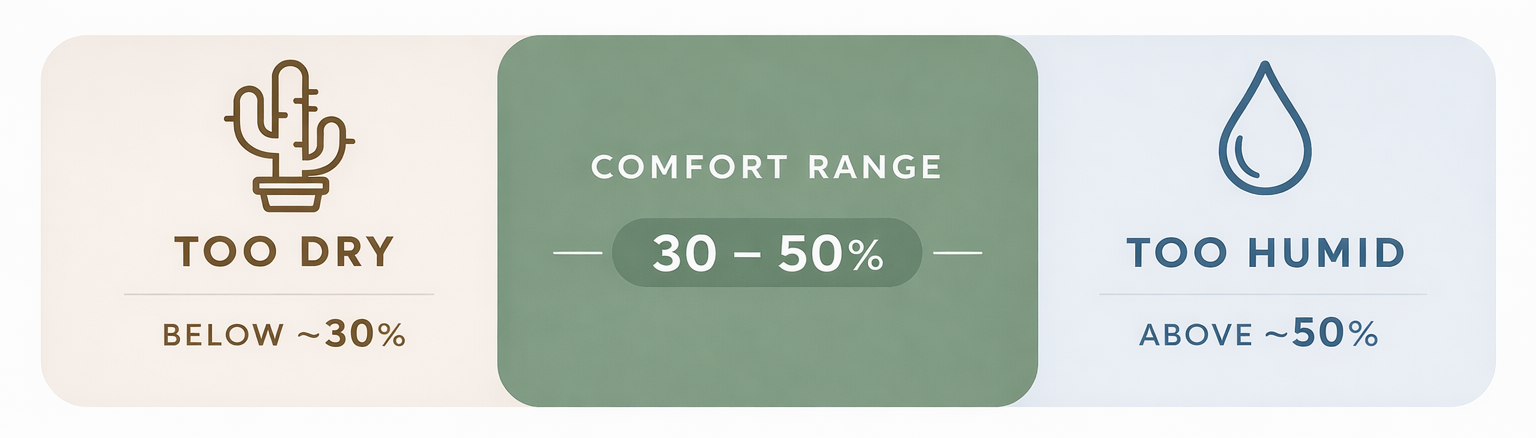
Many homeowners deal with common home humidity problems like damp air, condensation on windows, or that musty basement smell that never quite goes away. Others deal with dry winter air, static shocks, nosebleeds, or wood trim slowly pulling apart.
Both problems come from humidity, but they behave very differently.
Most people guess which one they have.
Guessing is how you end up fixing the wrong thing very confidently.
Humidity At Home exists to explain common home humidity problems in clear, practical language for homeowners. No scare tactics. No contractor funnels. No technical rabbit holes.
My House Feels Dry

Other homes have the opposite problem. Indoor air becomes too dry, especially during colder months when heating systems run constantly.
Common signs include:
• Static shocks when touching switches or doorknobs
• Dry or itchy skin during winter
• Sinuses that struggle during heating season or frequent nosebleeds
• Wood floors or trim shrinking or developing small gaps
• Air that feels sharp or irritating instead of comfortable
• Humidifiers that run constantly or require frequent refilling
If this sounds familiar, start here:
My House Feels Damp

Some homes hold too much moisture in the air. When that happens the house can feel heavy, clammy, or slightly musty even when everything looks clean.
Common signs include:
• A basement or whole house that smells musty
• Mold or mildew appearing in corners or closets
• Windows that sweat during warm or humid weather
• Laundry that never quite dries or smells stale afterward
• Air that feels heavy or sticky
• A dehumidifier that runs constantly but never really quite catches up
If this sounds familiar, start here:
Just want to size equipment?
Already know you need equipment?
Some visitors already know they have a humidity problem and just need help figuring out the right size.
If that’s you, start with the calculator. It gives you a quick estimate based on square footage, moisture level, and space type.
If you prefer a deeper explanation or want to sanity check your result, these guides walk through sizing step by step:
What This Site Covers
This site focuses on practical explanations homeowners can use when dealing with indoor humidity problems, including:
• Clear explanations of common household humidity issues
• How residential humidifiers and dehumidifiers actually work
• When consumer equipment helps and when it doesn’t
• Practical guidance without urgency, hype, or fear
The goal is not to sell equipment.
The goal is an informed homeowner who makes the right decision.
What This Site Does Not Do
Humidity At Home is an educational resource. It does not provide services.
That means:
• no inspections or consulting
• no installation services
• no structural or water intrusion diagnosis
• no claims that a single product fixes every problem
Homeowners use the information here to understand their own homes and decide what makes sense.
How to Use This Site
Start with the side that best matches how your house feels right now.
Most homes move between too wet and too dry at different times of the year, so you do not need to read everything.
Each page stands on its own. If something doesn’t apply to your situation, skip it.
Transparency
Some pages include affiliate links to products that are mentioned. If you choose to purchase through those links, the site may earn a small commission at no additional cost to you.
Affiliate links do not influence what topics are covered or how information is presented.